Tabebuia aurea (Silva Manso) Benth. & Hook.f. ex S.Moore
Summary
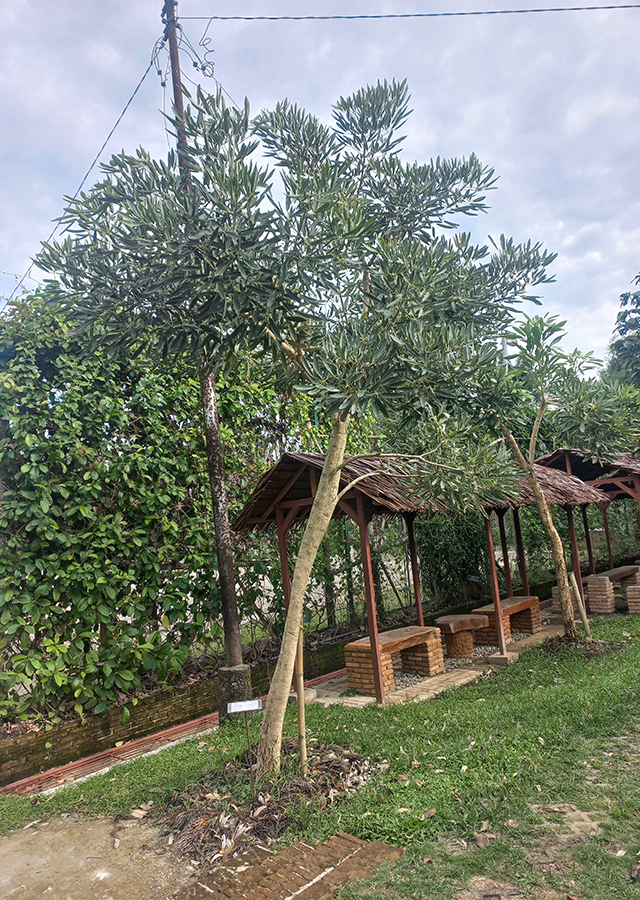
Tabebuia aurea or yellow tabebuia is native to regions of Argentina, Bolivia, Brazil, Paraguay, and Peru, and is now popularly planted along roadsides and in parks thanks to its spectacular flowers that bloom precisely when the tree loses its leaves. Besides its beauty, this tree is also able to absorb harmful carbon compounds, helping to clean the air of pollution, in addition to its reported anti-inflammatory, anticancer properties and ability to treat snake bites.
Agroecology
Grows well in tropical and subtropical regions, in full sunlight. Tabebuia's native habitat in Brazil is in areas with a dry climate, so this plant has high survival resistance in dry weather.
Morphology
- Roots a taproot with fibrous roots underground.
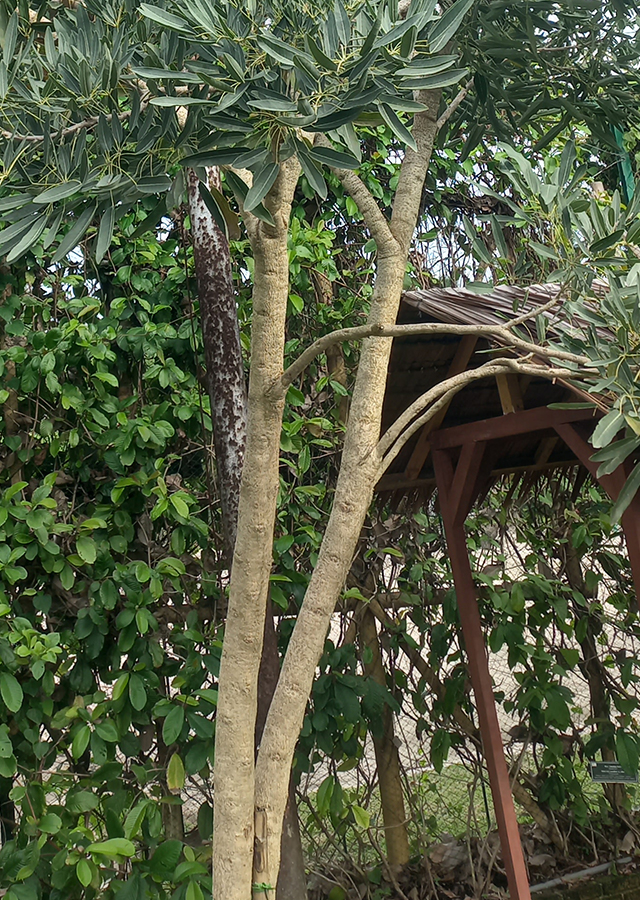
- Trunk woody.
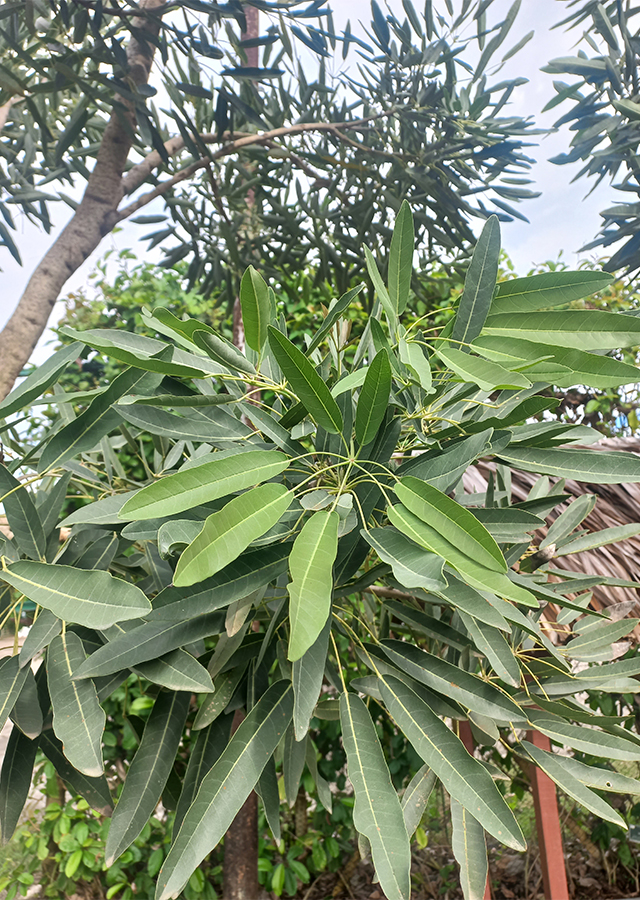
- Leaves palmately compound, with five or seven leaflets, each leaflet 6-18 cm, green with silvery scales above and below.
- Flowers bright yellow, trumpet-shaped, up to 6.5 cm in diameter, producing several flowers together in a loose panicle.
- Fruit a slender capsule 10 cm long.
Cultivation
Propagation can be done generatively using seed and vegetatively by stem cuttings and air layering. Choose mature seeds that have usually fallen from the tree on their own. Open the seed coat and dry under the sun until completely dry. After that, the seed can be stored for 1 month. Stored seed can be sown in a seedbed medium containing soil mixed with compost or manure in a 1:1 ratio. Care for tabebuia seedlings until they grow to a height of 1 meter or more. The seedlings can then be transplanted to a larger area.
Chemical Content
Sterols, alkaloids, flavonoids, 3,4,5-trihydroxy-7-methoxyflavone, 3,4-dimethoxybenzoic acid (veratric acid), methyl cinnamate, β-sitosterol, betulinic acid, 6-O-(p-coumaroyl)-catalpol (specioside).
Benefits
Anti-inflammatory, anticancer, cures influenza, treats snake bites, anti-edematogenic action, antioxidant, and nephroprotective.
Local Names
Lonceng emas, Pohon trompet karibia.
Traditional Recipes
The following recipes reflect traditional knowledge passed down through generations, not a substitute for professional medical diagnosis or advice. Consult a healthcare provider before use.
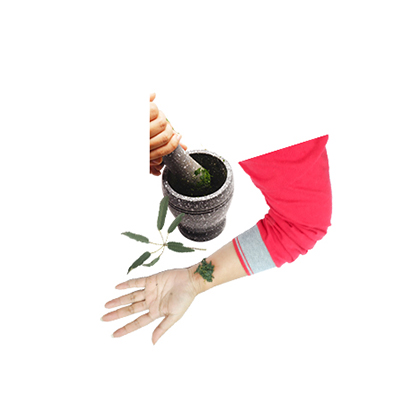
1. Treats snake bite wounds
- Take an adequate amount of yellow tabebuia leaves and wash until clean.
- Grind until it becomes a paste.
- Apply the leaf paste as a poultice on the wound.
Reference Sources
- Royal Botanic Gardens, Kew. Plants of the World Online: Tabebuia aurea (Silva Manso) Benth. & Hook.f. ex S.Moore. https://powo.science.kew.org/taxon/urn:lsid:ipni.org:names:110852-1. 20-08-2022.
- Flora Fauna Web. 2022. Tabebuia aurea (Silva Manso) Benth. & Hook.f. ex S.Moore. https://www.nparks.gov.sg/florafaunaweb/flora/3/1/3167. 20-08-2022.
- Seham S.El-Hawary. dkk. 2021. Genus Tabebuia: A comprehensive review journey from past achievements to future perspectives.Arabian Journal of Chemistry. Volume 14, Issue 4, April 2021, 103046.