Tadehagi triquetrum (L.) H.Ohashi
Summary
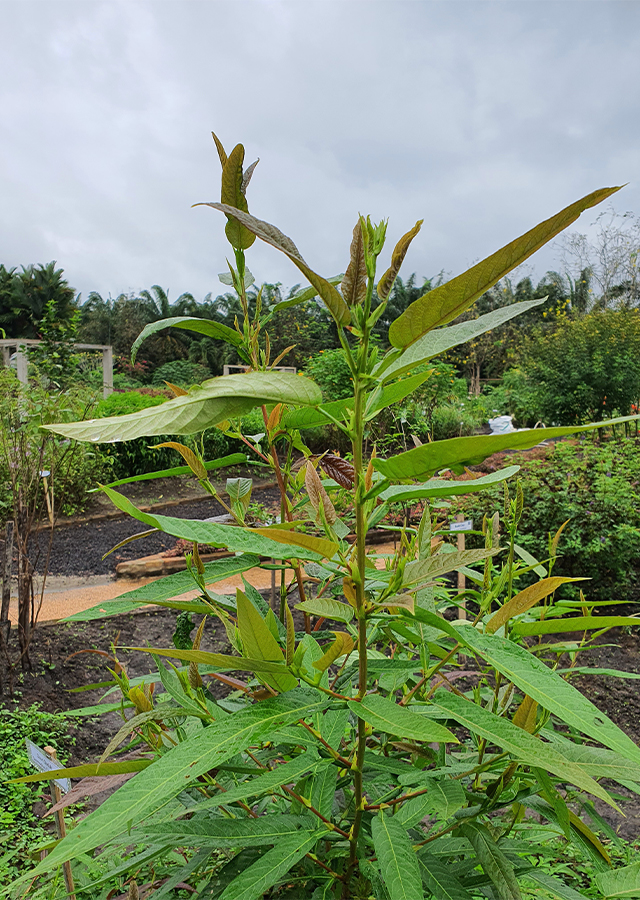
Daun duduk (Tadehagi triquetrum) is an upright shrub up to 3 meters tall of the Fabaceae family, distributed from South Asia to Papua New Guinea and Australia, with distribution in Indonesia covering Java, Madura, and Sumatra. This plant has long been used as traditional medicine as well as an ornamental. Daun duduk is traditionally believed to be antipyretic and to help address acute hepatitis and jaundice.
Agroecology
Grows well in lowlands up to 1,500 m above sea level, grows wild in open places with adequate sunlight or slight shade, and not particularly dry conditions.
Morphology
- Root a light brown taproot.
- Stem round, jointed, rough surface, sympodial branching, 2 cm in diameter, brown in color.
- Leaves single, alternate, with stipules, broadly winged petiole. Leaf blade lance-shaped, tapering tip, flat base, flat edges, pinnate venation. Young leaves brown, mature leaves green.
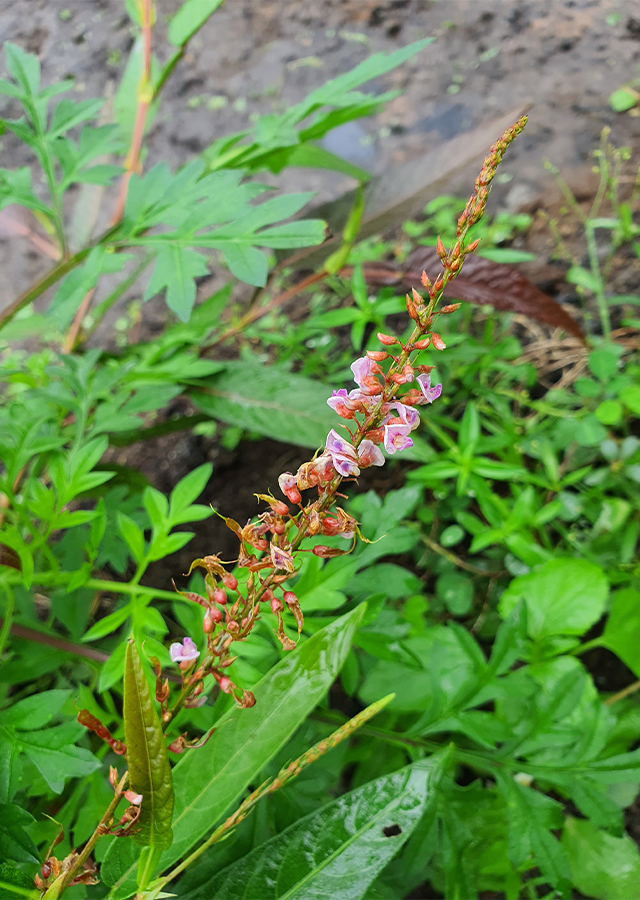
- Flowers compound, panicle, emerging from the stem tip, the corolla of daun duduk is butterfly-shaped and purplish-white.
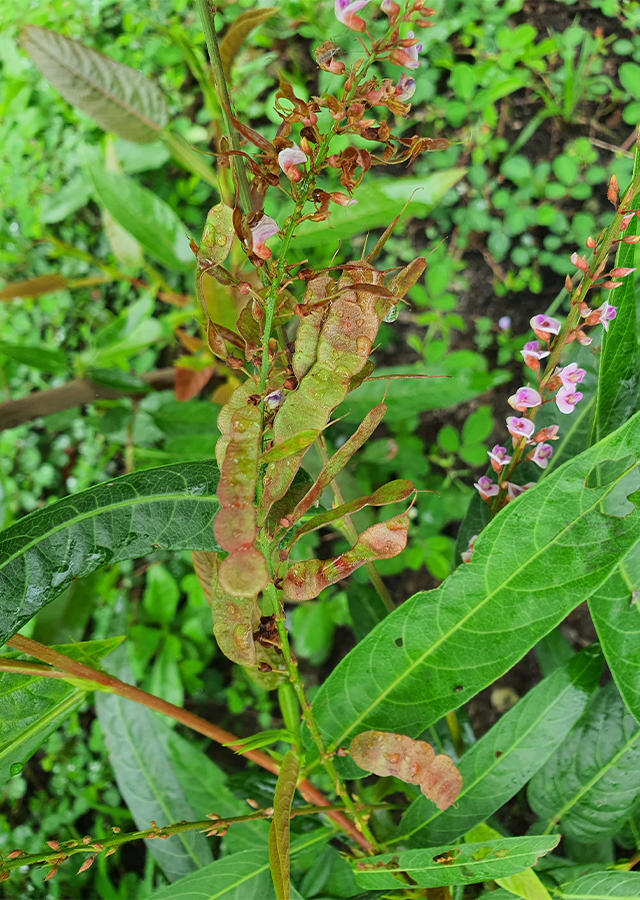
- Fruit a pod, green when young, brown when mature.
- Seeds kidney-shaped, light brown in color.
Cultivation
- Propagated generatively (seed).
- Seeds are taken from healthy, large, ripe fruit, dried until dry, then sown in a nursery.
Chemical Content
- Leaves: tannin, alkaloid, hypaphorine, trigonelline, silicic acid.
- Fruit: saponin, flavonoid.
- Root: saponin, flavonoid, tannin.
Benefits
Has antipyretic (fever-reducing), anti-inflammatory (heals inflammation), parasiticidal (kills parasites), stomachic (appetite-boosting), diuretic (urine-promoting) activity, treats acute kidney inflammation, acute hepatitis, and jaundice.
Local Names
Known by other local names including Genteng cangkeng, Ki congcorang, Potong kujang, Ceneen (Sunda), Gulu walang, Geiji (Java).
Traditional Recipes
The following recipes reflect traditional knowledge passed down through generations, not a substitute for professional medical diagnosis or advice. Consult a healthcare provider before use.
1. Acute kidney inflammation
- Prepare 60 g daun duduk herb.
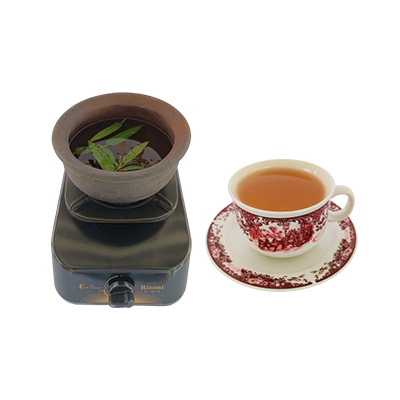
- Boil the daun duduk herb with 3 glasses of water until reduced to 1 glass, once cool, strain.
- Drink the concoction all at once, once a day in the morning.
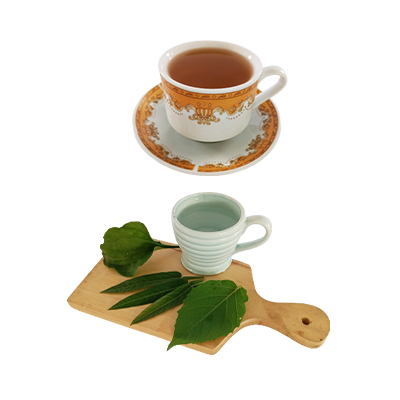
2. Acute hepatitis and jaundice
- Prepare 60 g fresh daun duduk, 30 g fresh plantain leaves, 30 g fresh ciplukan (Physalis).
- Boil all ingredients with 800 ml water until reduced to 400 ml, strain.
- Drink twice a day, 200 ml each time.
Reference Sources
- Haryanto S.2009. Ensiklopedia tanaman obat Indonesia. Palmall, Yogyakarta
- Syamsuhidayat SS, Hutapea JR.1991. Inventarisasi tanaman obat Indonesia 1. Balitbangkes. Departemen kesehatan Republik Indonesia, Jakarta.