Talinum paniculatum (Jacq.) Gaertn.
Summary
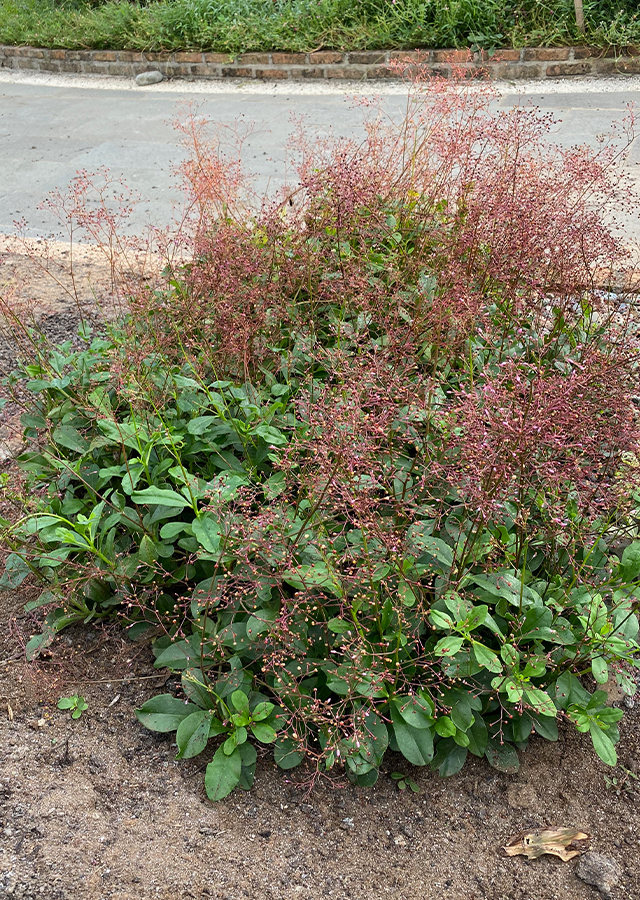
Java ginseng (Talinum paniculatum) is an erect herb up to 1 meter tall of the Talinaceae family, native to the Southeastern United States and Latin America, now cultivated as a vegetable in Southeast Asia and West Africa. Besides being a food and livestock feed source, this plant is popular as a stamina-boosting remedy resembling true ginseng's properties. Traditionally, its root is also believed to promote breast milk production and address diabetes.
Agroecology
Java ginseng can grow in lowlands up to 1,250 m above sea level, rainfall ranging from 2,000-4,000 mm/year. Favors sandy clay soil, rich in organic matter, with light intensity of no less than 75%.
Morphology
- Roots taproot, brown.
- Stem woody, round, grooved, hairy, greenish-brown.
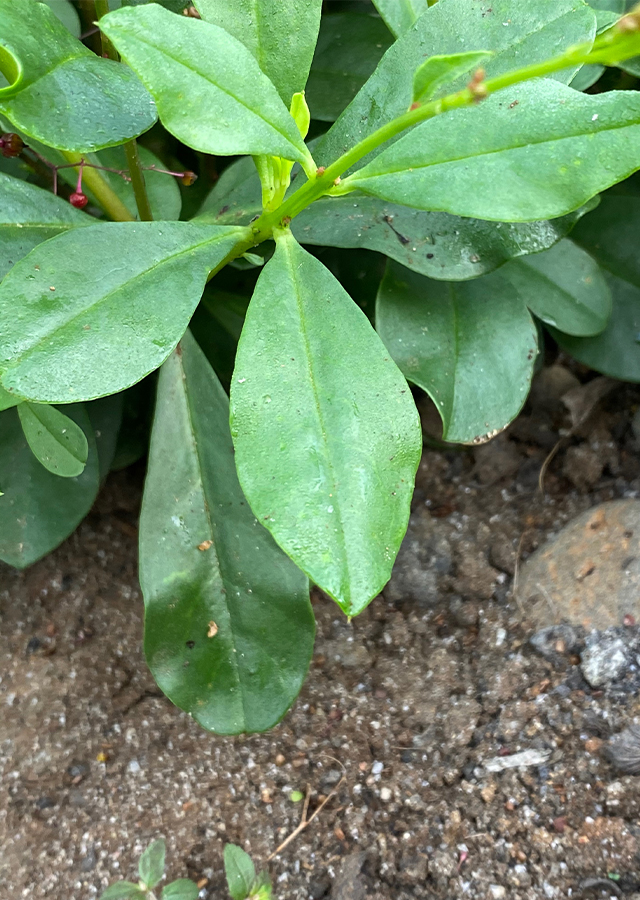
- Leaves positioned opposite, short-stalked, obovate, smooth margins with pointed tip and base, pinnate venation, green. 3-10 cm long, 1.5-5 cm wide.
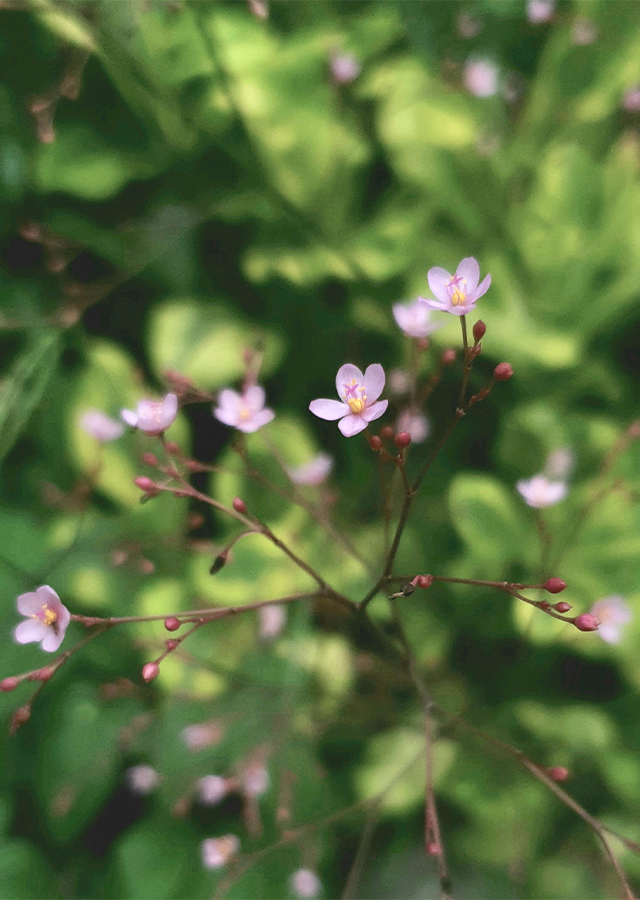
- Flowers compound, forked umbel-shaped, with 5 purplish-red petals.
- Seeds small, round and flat, 0.7-1 mm in size, glossy black.
Cultivation
- Propagated generatively (by seed), vegetatively (by stem/branch cuttings 12 cm long).
- Planted with a spacing of 50 x 40 cm.
- Leaves are harvested after 3-6 months and roots after 7 months.
Chemical Content
Phytosterols, saponins, flavonoids, tannins, potassium nitrate, heneicosanoic acid, nonacosyl nonacosanoate, 3-O-β-D-glucosyl-β-sitosterol, 3-O-acetyl-aleuritolic acid, stigmasterol, pentacyclic triterpene.
Benefits
Has antibacterial and anti-inflammatory activity; promotes breast milk production; treats boils and wounds; acts as a tonic; boosts body fitness; addresses fatigue, cold sweats, dizziness, phlegmy cough, lung inflammation, frequent urination, irregular menstruation; addresses diabetes; helps prevent Alzheimer's disease; treats diarrhea, low libido, stomach pain, and vaginal discharge.
Simplisia
- Cut leaves at the leaf base.
- Wash with clean water.
- Place on a wooden tray or mat.
- Sun-dry until browned and dry.
- Grind with a blender into a powder.
- Store in an airtight, vacuum-sealed container/plastic bag.
Local Names
Kolesom jawa, Som jawa.
Traditional Recipes
The following recipes reflect traditional knowledge passed down through generations, not a substitute for professional medical diagnosis or advice. Consult a healthcare provider before use.
1. Boils
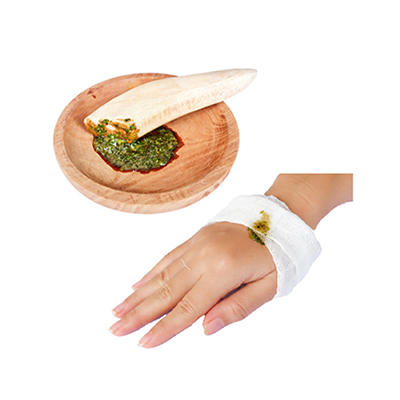
- Wash a sufficient amount of fresh leaves and add a sufficient amount of brown sugar, then grind finely.
- Apply the mixture to the boil, then wrap with a clean cloth.
- Note: fresh root must be steamed first. Direct use of fresh root can cause diarrhea.
Reference Sources
- Fern, Ken. (2019). Useful Tropical Plants Database. Talinum paniculatum (Jacq.) Gaertn. http://tropical.theferns.info/viewtropical.php?id=Talinum+paniculatum on 29-09-2020.
- Mosango, M. (2015). Pl@nt Use. Talinum paniculatum (PROTA). https://uses.plantnet-project.org/en/Talinum_paniculatum_(PROTA) on 29-09-2020.
- Philippines Medicinal Plants. (No date).Talinum paniculatum (Jacq.) Gaertn. http://www.stuartxchange.org/Talinum.html on 29-09-2020.