Tanacetum parthenium (L.) Sch.Bip.
Summary
Feverfew (Tanacetum parthenium) is a herb up to 60 cm tall of the Asteraceae family, native to the Balkan Peninsula and Anatolia in Southeastern Europe, now distributed as far as North America and the Mediterranean. Since the first century, the Greek physician Dioscorides prescribed it for various inflammations, earning it the nickname "medieval aspirin." Traditionally, feverfew is believed to prevent migraines and relieve rheumatism.
Agroecology
Grows along roadsides, fields, waste areas, and along forest edges, growing in moist as well as sandy soil in full sun, pH 6.0-6.7.
Morphology
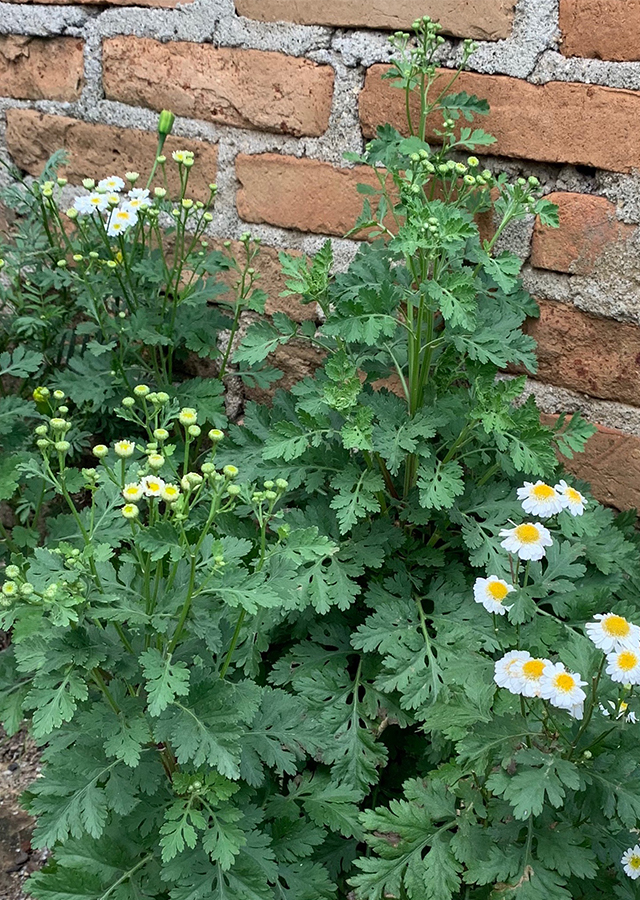
- Stem erect, grooved, and finely hairy.
- Leaves light green, hairless, oblong, toothed margins.
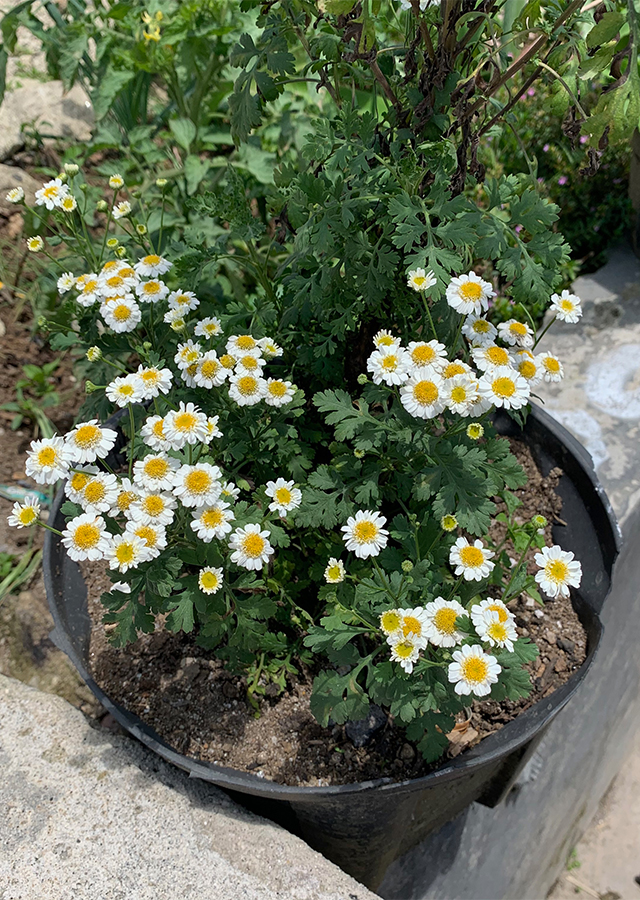
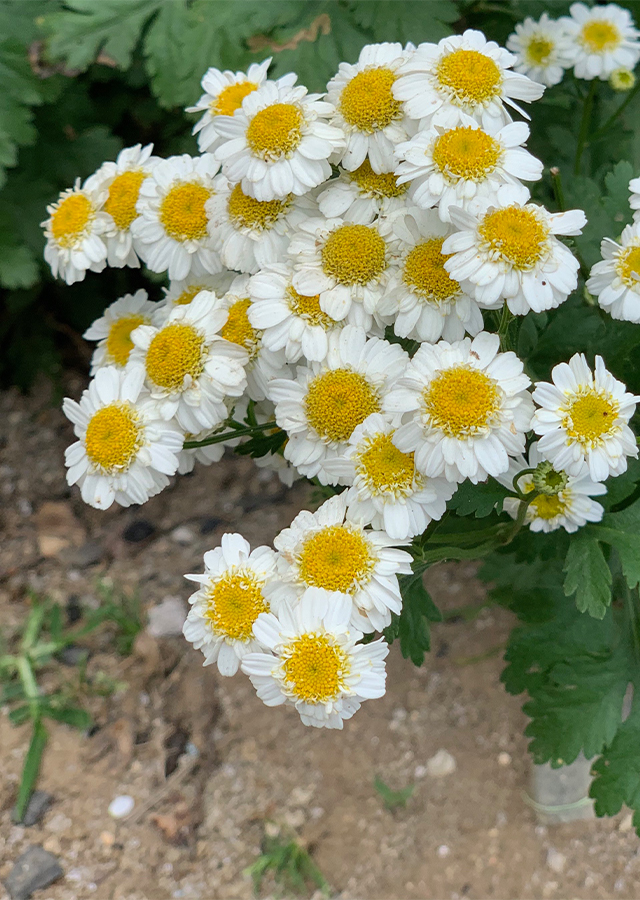
- Flowers small, white/yellow, 2 cm in diameter, usually blooming in May-June.
Cultivation
- Propagated generatively (by seed) or vegetatively (by cuttings, young shoots).
- Seeds can be sown directly in open soil, or first sown after soaking the seed for several hours in room-temperature water.
- Best planted in an area without too much sun, needing regular watering but not waterlogged, in fertile, well-drained soil.
Chemical Content
The compound parthenolide, tanetin, melatonin, flavonoids, sesquiterpene lactones (artecanin, artemorin, balchanin, canin, costunolide, epicanin, epoxyartemorin), coumarin isofraxidin, isofraxidin dimethyl ether, camphor, camphene.
Benefits
Prevents migraines and rheumatism; anticancer; used externally for suppurating skin and insect repellent; helps prevent blood vessel constriction; addresses anemia; promotes menstruation; addresses orthopedic disorders.
Simplisia
- Collect fresh feverfew leaves.
- Wash thoroughly.
- Air-dry for several days until the moisture content is 10%.
- Pound the leaves into a powder.
- Store in a clean, airtight container
Local Names
Information not found. Further research needed.
Traditional Recipes
The following recipes reflect traditional knowledge passed down through generations, not a substitute for professional medical diagnosis or advice. Consult a healthcare provider before use.
1. Preventing Migraines
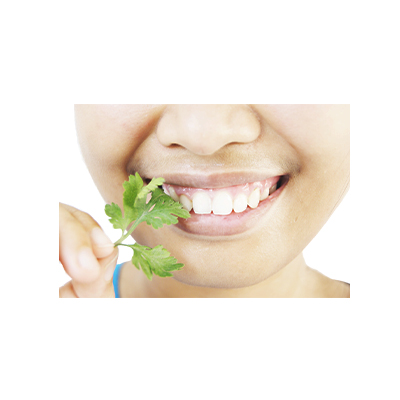
- Prepare 2-3 fresh feverfew leaves.
- Wash the leaves thoroughly under running water.
- Eat the fresh feverfew leaves directly as a side dish, or with a piece of bread, every day.
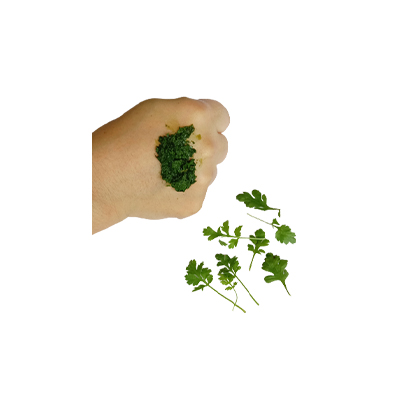
2. Wound Remedy
- Prepare several fresh feverfew leaves.
- Wash the leaves thoroughly.
- Pound the leaves until completely mashed and releasing liquid.
- Apply to the part of the body with an open wound.
Reference Sources
- Detik Health. Herbal: feverfew. http://health.detik.com/obat/d-1343984/herbal-feverfew 12-06-2020.
- Hellosehat. Feverfew. http://hellosehat.com/obatan-suplemen/herbal/feverfew 12-12-2019.
- Naturaldatabase.2019. FeverFew. http://www.naturaldatabase.com/2010/19.