Tecoma stans (L.) Juss. ex Kunth
Summary
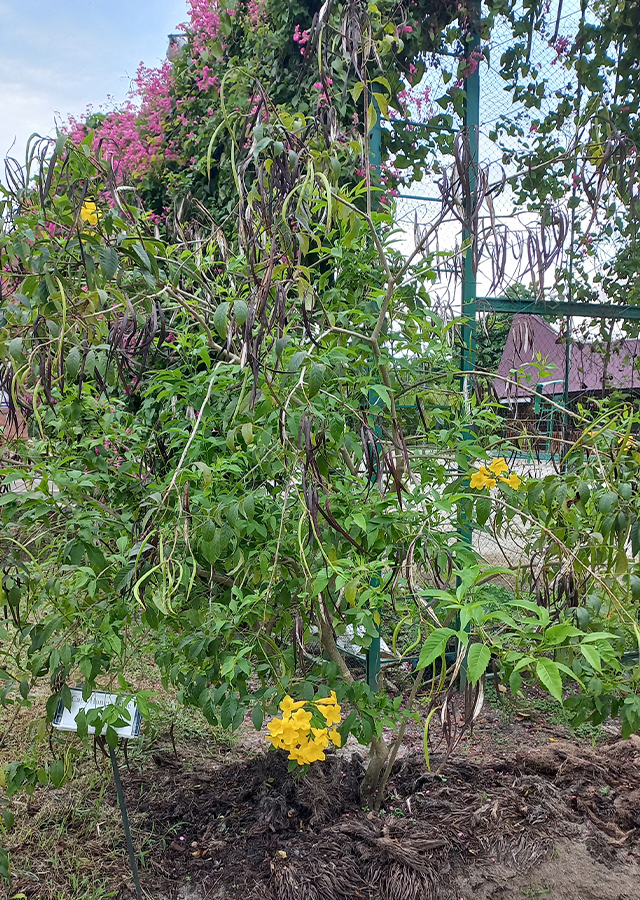
Yellow trumpetbush (Tecoma stans) is a shrub 5-8 meters tall from the Bignoniaceae family native to the southern United States, now the official flower of the US Virgin Islands and the national flower of the Bahamas. Its hard wood is used for making cabinets and building construction. In Mexico and Central America, the leaves of yellow trumpetbush are traditionally used to treat diabetes and urinary disorders.
Agroecology
Yellow trumpetbush habitat is typically dry areas in tropical and subtropical regions and can be found at elevations from sea level to about 2,000 m asl. It can also be found in disturbed areas such as roadsides and relatively undisturbed forests. It grows best in areas where the mean annual daytime temperature is in the range of 15-25°C, but can tolerate 10-35°C, and mean annual rainfall in the range of 500-700 mm, but tolerates 400-800 mm. This plant prefers sunny positions or full sun, and is suited to loamy, alluvial, and calcareous soils, but can tolerate most fertile, well-drained soil types and is tolerant of alkaline conditions. The preferred soil pH range is 6-8.5, but it can tolerate 5.5-9. Mature, established plants are drought-resistant.
Morphology
- Roots taproot.
- Stem branched, slightly hairy or nearly smooth.
- Leaves odd-pinnate compound, opposite, leaflets elliptic-ovate to lanceolate, base acute, apex tapering, margins sharply and irregularly serrate, veins pinnate, bright green above, pale below, slightly hairy on the petiole and in the vein axils beneath. Leaflets number 3-7, though most have 5-7 leaflets.
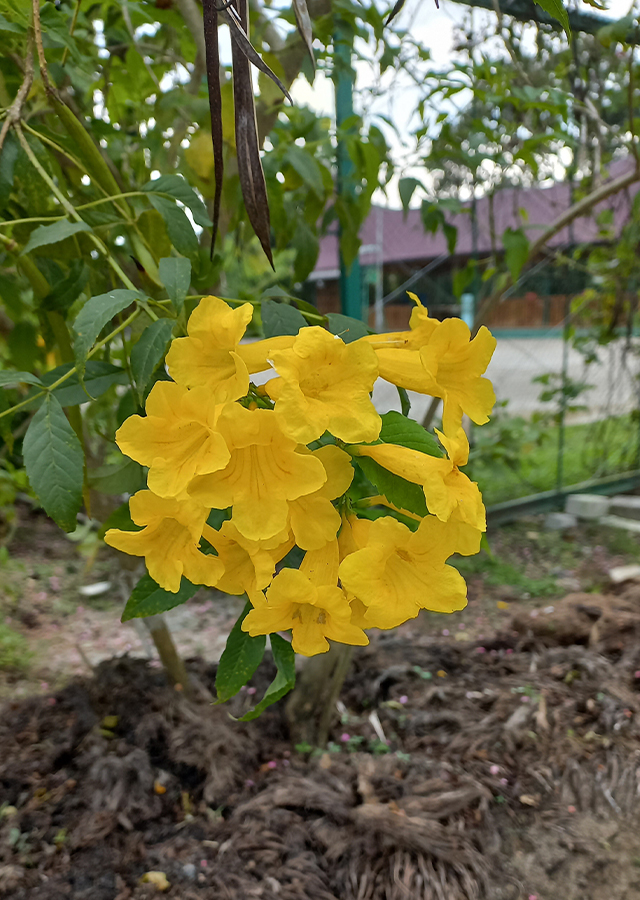
- Flowers bisexual, bell-shaped, fragrant. Corolla bright yellow, with red streaks in the throat, 5-lobed. Calyx green, 5-lobed. Inflorescence terminal, clustered up to 20 flowers.
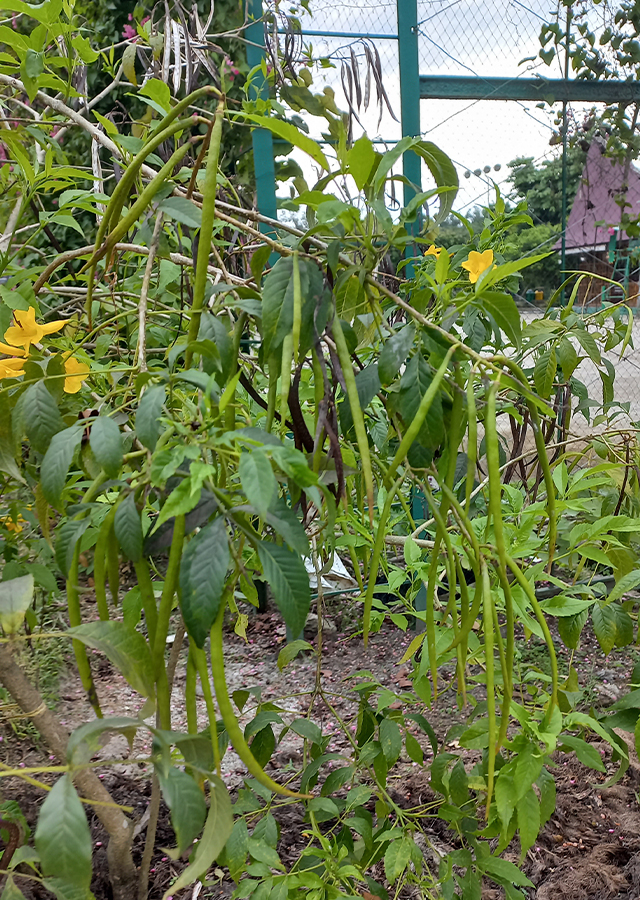
- Fruit a glossy capsule, elongated or linear, tapering at the tip, green and turning brown when ripe, splitting open to release many seeds.
- Seeds numerous, oblong, thin, flat, with a transparent membranous wing at each end.
Cultivation
- Propagation is done generatively (seed) or vegetatively (cuttings or offshoots).
- Seedlings require 3-4 months in the nursery before they can be planted out directly
Chemical Content
Tannins, flavonoids, phenolic compounds, coumarins, glycosides, cardiac glycosides, alkaloids (tecomastamine, tecomine, boschniakine, and 5-hydroxyskitanthine), monoterpene alkaloids, steroids, anthraquinones, saponins, polyphenols, α-linolenic acid, oleate, linoleate, palmitate, stearic acid, γ-tocopherol, sesquiterpene lactones, quinones, phytosterols, triterpenes, iridoids.
Benefits
Treats diabetes, stomach ache, worm infestation, lowers blood pressure, treats pain, syphilis, urinary disorders, gastritis (stomach lining inflammation), treats snake bites, inhibits fungal infection growth, and has diuretic, antiallergic, anti-inflammatory, antimicrobial, and antioxidant properties.
Local Names
Dufa dufa (Ternate).
Traditional Recipes
The following recipes reflect traditional knowledge passed down through generations, not a substitute for professional medical diagnosis or advice. Consult a healthcare provider before use.
1. Diabetes
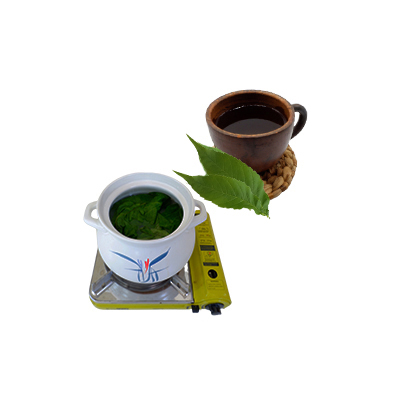
- Take 30 g of yellow trumpetbush leaves.
- Boil the leaves until it boils.
- Once boiled, serve, preferably without sugar.
- Drink while warm.
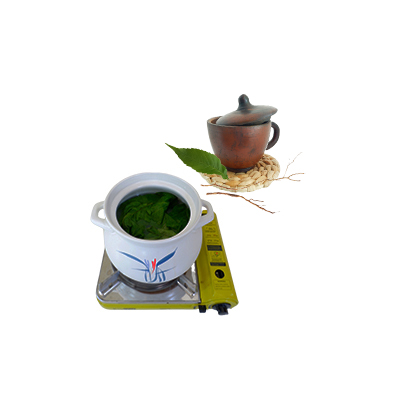
2. Worm infestation
- Take an adequate amount of yellow trumpetbush leaves and roots.
- Boil the leaves until it boils.
- Once boiled, strain.
- Drink while warm.
Reference Sources
- Royal Botanic Gardens. 2021. Plants of the World Online: Tecoma stans (L.) Juss. ex Kunth. http://www.plantsoftheworldonline.org/taxon/urn:lsid:ipni.org:names:111284-1. 12-11-2021.
- Useful Tropical Plants Database. 2021. Tecoma stans. http://tropical.theferns.info/viewtropical.php?id=Tecoma+stans. 12-11-2021.
- PROSEA. 2018. Tecoma stans (PROSEA). https://uses.plantnet-project.org/en/Tecoma_stans_(PROSEA). 12-11-2021.
- CAB International. 2021. Invasive Species Compendium: Tecoma stans (yellow bells). https://www.cabi.org/isc/datasheet/52951#touses. 12-11-2021.
- Flora Fauna Web. 2021. Tecoma stans (L.) Juss. ex Kunth. https://www.nparks.gov.sg/florafaunaweb/flora/3/1/3177. 12-11-2021.
- Stuartxchange. 2018. Philippine Medicinal Plants: Yellow bell. http://www.stuartxchange.org/YellowBell. 12-11-2021.
- Khatak S., Malik D. K., Dahiya R. 2019. Tecoma stans: A noxious weed put to beneficial use. International Journal of Chemical Studies, 7(3): 296-299.