Tectona grandis L.f.
Summary
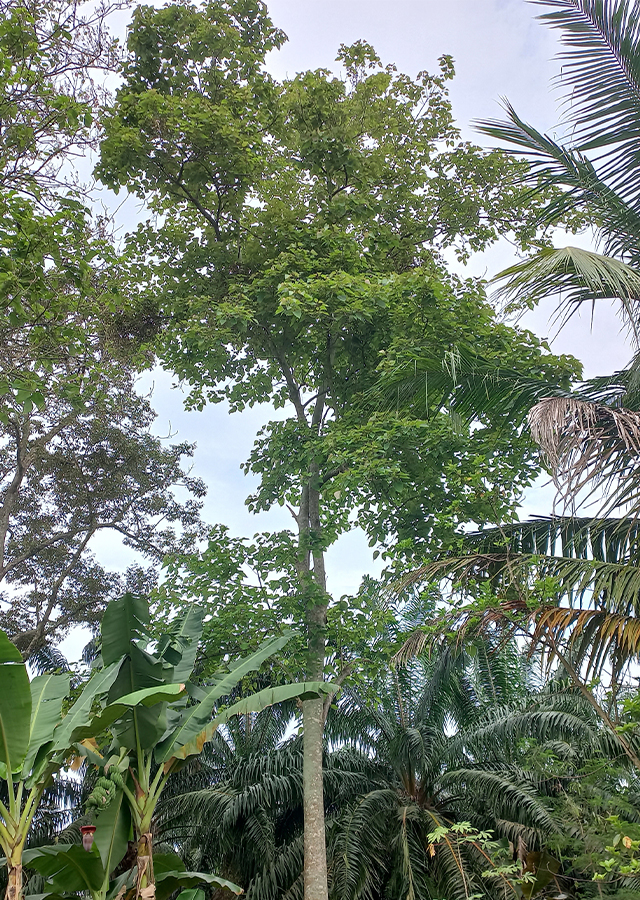
Jati (Tectona grandis) is a large tree up to 40 meters tall from the Lamiaceae family which, according to a number of botanists, originates from Burma, then spread to India, Thailand, and Java. Its strong wood has long been a raw material for VOC ships in the 17th century through to modern furniture. In Ayurvedic medicine, jati is traditionally used as a uterine sedative and to prevent premature birth.
Agroecology
The suitable climate has a distinct but not overly long dry season, with rainfall between 1,200-3,000 mm per year and sufficiently high light intensity throughout the year. The optimal elevation is between 0-700 m asl, although teak can grow up to 1,300 m asl. Suitable soil is somewhat alkaline, with a pH between 6-8, well-aerated, containing sufficient lime (Ca, Calcium) and phosphorus (P). Teak does not tolerate waterlogging.
Morphology
- Roots taproot, strong.
- Stem straight and round, total height up to 40 m. The clear bole can reach 18-20 m. Bark grayish-yellow-brown, splitting shallowly in grooves along the stem. Young twigs square in cross-section, and knobby at the nodes.
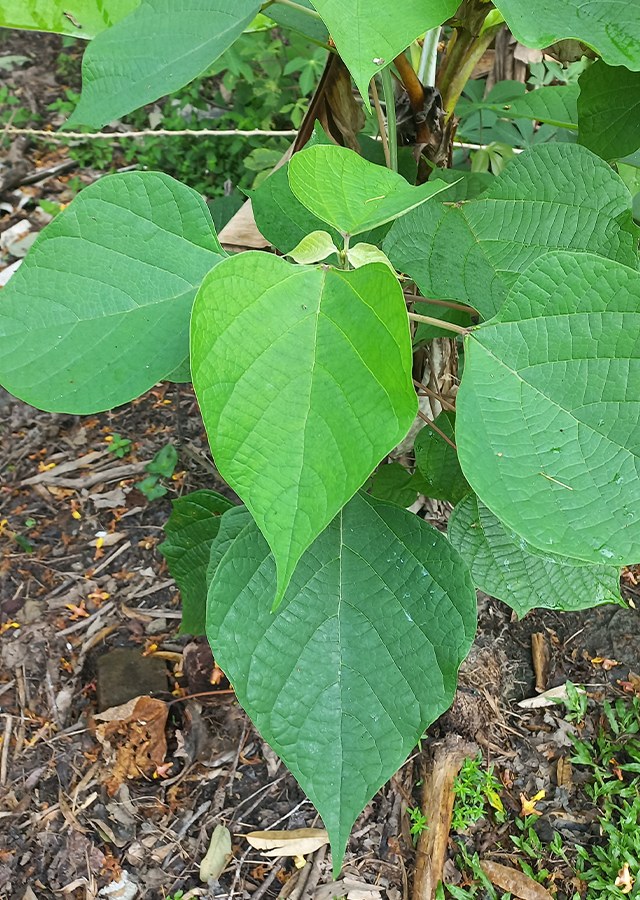
- Leaves generally large, obovate, opposite, with very short petioles. Leaves on saplings are large, about 60-70 × 80-100 cm, while on mature trees they shrink to about 15 × 20 cm. Finely hairy and have glandular hairs on the underside. Young leaves are reddish and exude blood-red sap when crushed.
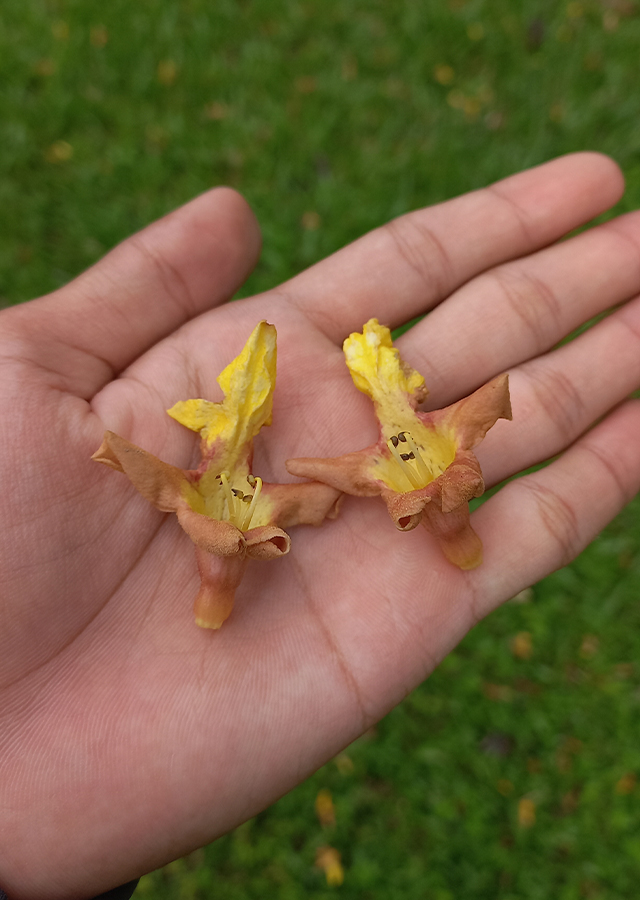
- Flowers compound, located in large panicles, 40 × 40 cm or larger, containing hundreds of florets arranged in forked umbellets located at the tips of twigs, far at the top of the tree canopy. 6-7 corolla lobes, whitish, 8 mm. Monoecious.
- Fruit round, somewhat flattened, 0.5-2.5 cm, with rough hairs and a thick core, containing 2-4 seeds, but generally only one grows. The fruit is enveloped by an enlarged calyx that swells resembling a small balloon.
Cultivation
In general, teak seedling production can be done through two methods: generative and vegetative. Generatively, teak seedling production is done using seeds. Teak seeds to be used should be selected fresh, because stored teak seeds easily lose their germination capacity. Several methods for breaking seed dormancy include:
1. Seeds soaked in cold water-dried under direct sunlight, repeated 4-5 days.
2. Teak seeds soaked in alternating cold-hot water for 1 week.
3. Teak seed coat thinned by sanding at the epicotyl to facilitate water and air entry into the seed.
4. Teak seeds soaked in concentrated sulfuric acid solution (H2SO4) for 15 minutes, then washed with cold water before being germinated on sand media.
Vegetative propagation for teak can be done from simple methods such as stumps, root cuttings, to grafting and tissue culture.
Chemical Content
Resin, tectoquinone, carbohydrates, reducing sugars, alkaloids, glycosides, flavonoids, sterols, saponins, tectograndone, 6-methyl-1,4-dihydroxyanthraquinone, 2β-hydroxyursolic acid, phenol, polyphenols, tannin.
Benefits
Used for menstrual disorders and bleeding in general, hemoptysis, mouthwash for sore throat, anemia, headaches and for dispersing swelling/inflammation, dyspepsia, burning sensation in the stomach caused by overflowing bile fluid, as a vermifuge, addressing eyelid swelling, strengthening vision, treats acute dermatitis especially from contact with the caustic oleoresin of Anacardium occidentale, stimulates hair growth, relieves skin itching, sedative for the gravid uterus, a tocolytic agent used to prevent premature birth. Also used in treating hemorrhoids, leukoderma, dysentery, as a laxative, and diarrhea.
Simplisia
- Prepare jati leaves as needed and wash with clean water.
- After clean, drain to remove excess wash water.
- Slice at 1.5 cm width so drying occurs faster.
- Dry by air-drying in a place protected from sunlight.
- Blend the dried leaves into powder then sieve with a 60-mesh sieve.
- Store in a clean, airtight container.
Local Names
Deleg, Kulidawa (Java).
Traditional Recipes
The following recipes reflect traditional knowledge passed down through generations, not a substitute for professional medical diagnosis or advice. Consult a healthcare provider before use.
1. Sore throat
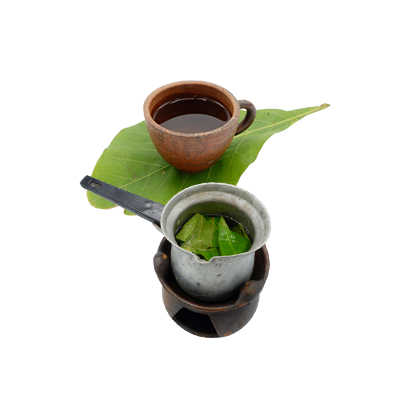
- Take jati leaves as needed.
- Wash the ingredients with running water until clean.
- Boil until boiling.
- Let cool/warm.
- Strain then gargle until the throat pain decreases.
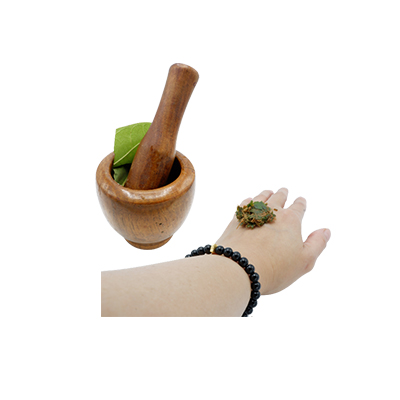
2. Relieving skin itching
- Take jati leaves as needed.
- Wash clean with running water.
- Mash into a paste.
- Apply the leaf paste to the itchy skin.
Reference Sources
- Royal Botanic Gardens. 2017. Plants of the World Online: Tectona grandis L.f. http://www.plantsoftheworldonline.org/taxon/urn:lsid:ipni.org:names:864923-1. 23-09-2021.
- Stuartxchange. 2018. Philippine Medicinal Plants: Tekla. http://www.stuartxchange.org/Tekla. 23-09-2021.
- CAB International. 2021. Tectona grandis. https://www.cabi.org/isc/datasheet/52899. 23-09-2021.
- Suroso. JATI (Tectona grandis). Dinas Kehutanan dan Perkebunan Daerah Istimewa Yogyakarta. http://dishutbun.jogjaprov.go.id/assets/artikel/Tanaman_Jati.pdf. 23-09-2021.