Abelmoschus esculentus (L.) Moench
Summary
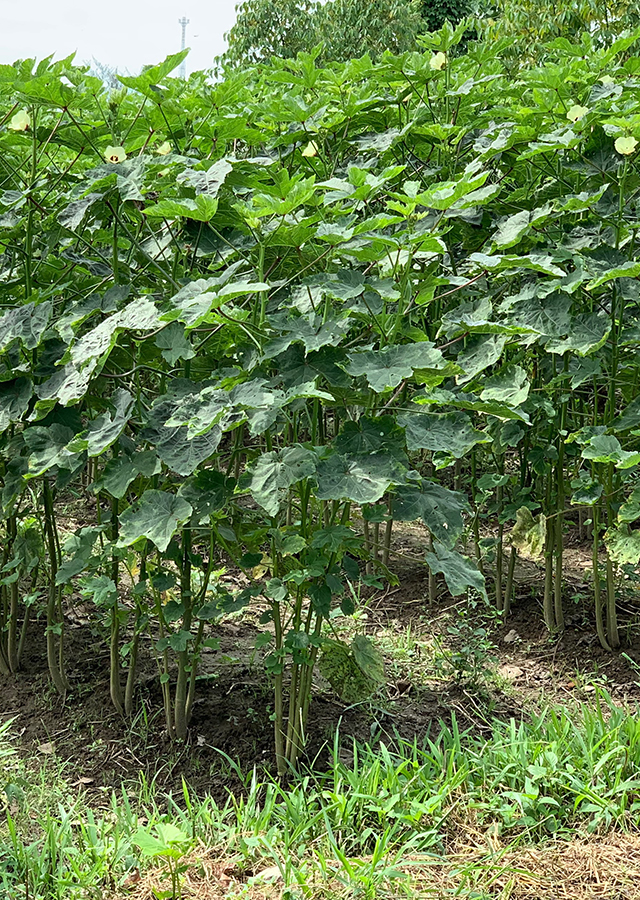
Okra (Abelmoschus esculentus) is an erect annual herb up to 1.8 meters tall of the Malvaceae family, believed to be native to Ethiopia and Sudan, now widely cultivated in India, West Africa, and Latin America. Its mucilaginous fruit is rich in polyphenols and commonly cooked as a nutritious vegetable, while its stem fiber is used to make hemp and textiles. Traditionally, okra is also believed to help control blood sugar levels and ease hemorrhoids.
Agroecology
Grows well in humid tropical lowlands at temperatures of 20-30 °C, pH 6-6.7, favoring humus-rich soil. This plant is tolerant of varying rainfall.
Morphology
- Roots deep taproot.
- Stem erect, round, watery (succulent), finely hairy, with little branching.
- Leaves spirally arranged, petiole up to 50 cm long, stipules extending up to 2 cm, often split down to the base.
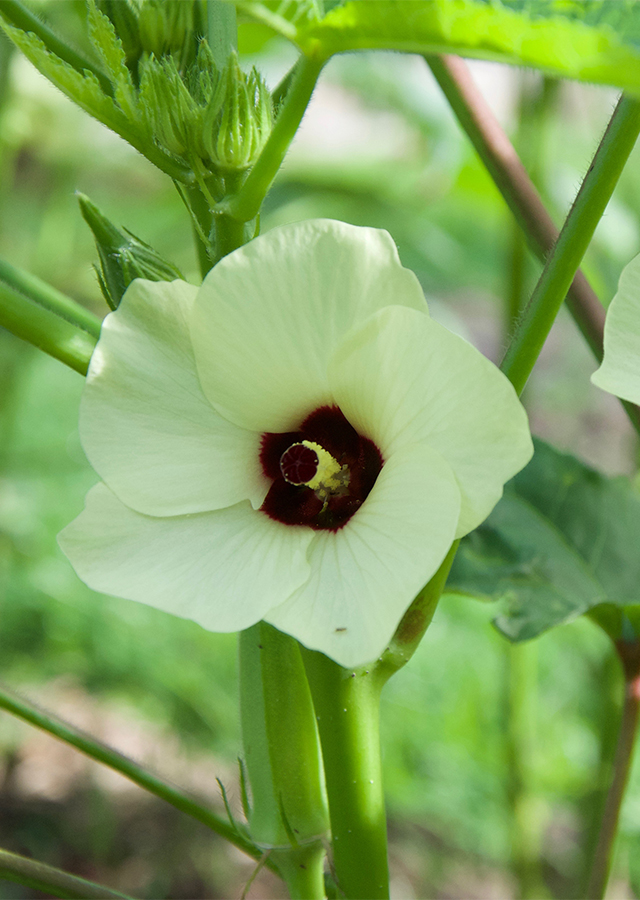
- Flowers solitary, cylindrical to pyramidal capsule shape, emerging from the leaf axils or in pseudo-clusters, yellow, with a dark purple center.
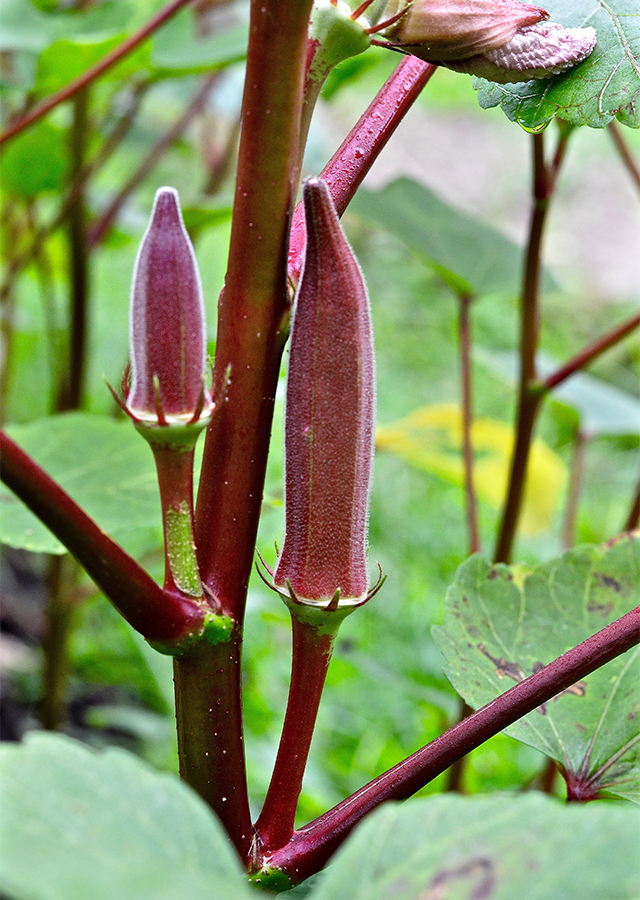
- Fruit green, greenish-purple, or purple when young, turning brownish when ripe.
- Seeds round, blackish, 3-6 mm in diameter.
Cultivation
- Propagated by seed. Seeds are taken from mature fruit, then sown 2-3 seeds per polybag.
- Once the plant reaches a height of 15-20 cm, seedlings are transplanted to the field.
Chemical Content
Tannins, steroids, flavonoids, saponins, alkaloids, anthraquinones, phenols, terpenoids, cardiac glycosides, resin, palmitic acid, stearic acid, oleic acid, linoleic acid.
Benefits
Treats wounds, boils, syphilis, heart disease, and neurological disorders; eases hemorrhoids; controls blood sugar levels; has antioxidant, diuretic, and anticancer activity; addresses dandruff; relieves pain.
Simplisia
- Prepare fresh seeds from mature okra fruit. Wash thoroughly under running water, drain.
- Dry the okra seeds using an oven at 60 °C for 72 hours.
- Grind the dried material into a powder.
- Store in an airtight container/plastic bag.
Local Names
Kacang bindi, Okro, Gumbo (Central Java), Termemes (Jogja), Kopi londo (Java).
Traditional Recipes
The following recipes reflect traditional knowledge passed down through generations, not a substitute for professional medical diagnosis or advice. Consult a healthcare provider before use.
1. Controlling Blood Sugar Levels in Diabetes
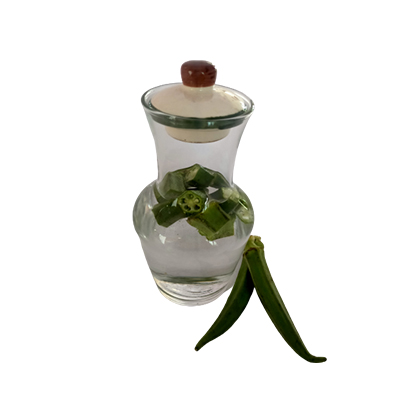
- Cut off both ends of two okra pods. Okra sap will come out; do not wash it off. Soak the okra in a glass of water and let it sit overnight. Don't forget to cover the glass.
- In the morning, remove the okra from the water and drink the water.
- The okra sap can lower blood sugar levels.
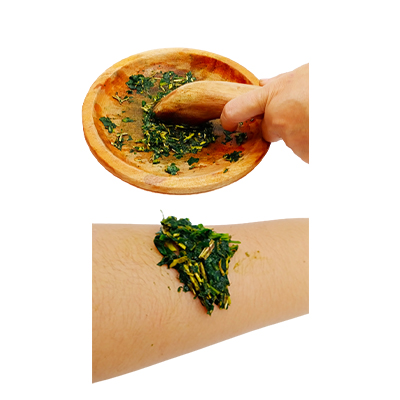
2. Healing Wounds
- Prepare a sufficient amount of root and leaves.
- Remove any adhering debris by washing under running water.
- Mash both ingredients until mashed and apply to the wound.
Reference Sources
- Ayushi T, Prachee D,Gupta SK, Geeta W. 2016. Screened Phytochemicals of A. esculentus Leaves and their Therapeutic Role as an Antioxidant. International Journal of Pharmacognosy and Phytochemical Research 8(9): 1509-1515
- Puri V, Sindhu RK. 2016. Phytochemical, Nutritional and Pharmacological evidences for Abelmoschus esculentus (L.). The Journal of Phytopharmacology 5(6): 238-241.
- Prosea. 2016. Abelmoschus esculentus. https://uses.plantnet-project.org/en/Abelmoschus_esculentus_(PROSEA) 12-06-2020