Abelmoschus moschatus Medik.
Summary
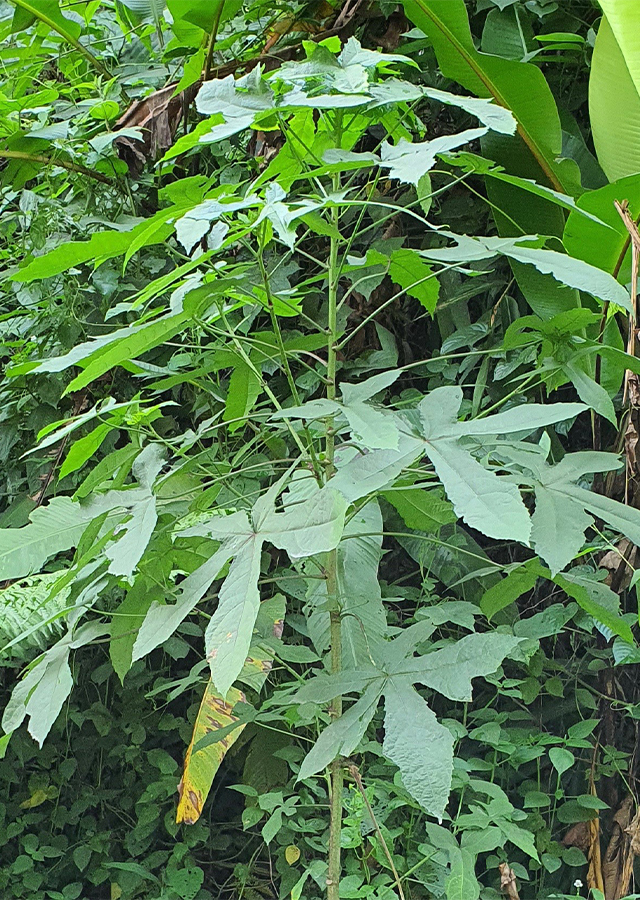
Kapasan (Abelmoschus moschatus) is a shrub 0.5-2.5 meters tall of the Malvaceae family, distributed from India to China and northern Australia. Its seeds produce an essential oil used as a food additive and in Ayurvedic medicine, particularly for eye disorders and asthma. Kapasan is also believed to be antidiabetic and to help soften the skin.
Agroecology
This plant grows wild in open places, thickets, vacant land or gardens. Prefers conditions with temperatures of 20-30°C, rainfall ranging between 1,000-1,400 mm/year. Thrives in loamy and sandy soil with a pH of 5.5-7.8.
Morphology
- Root a round taproot, branched, yellowish-white.
- Stem round, generally woody at the base, few branches, covered with hair.
- Leaves single, long-stalked. Leaf blade lobed, serrated edges, pointed green tip, heart-shaped base, palmate venation, both surfaces roughly hairy, 6-22 cm long, 5-6 cm wide.
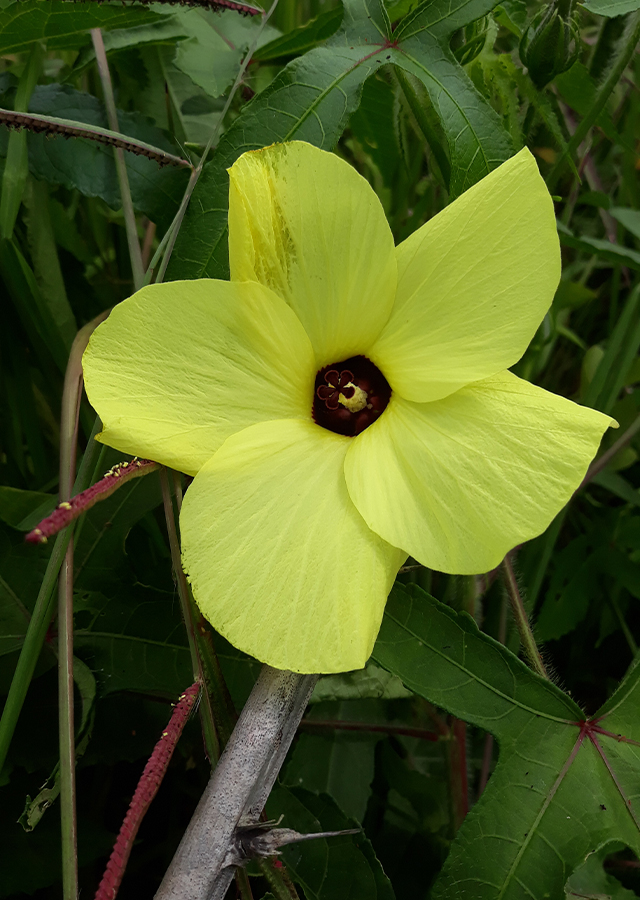
- Flowers single, bell-shaped, large, emerging from leaf axils, 5 petals, yellow in color.
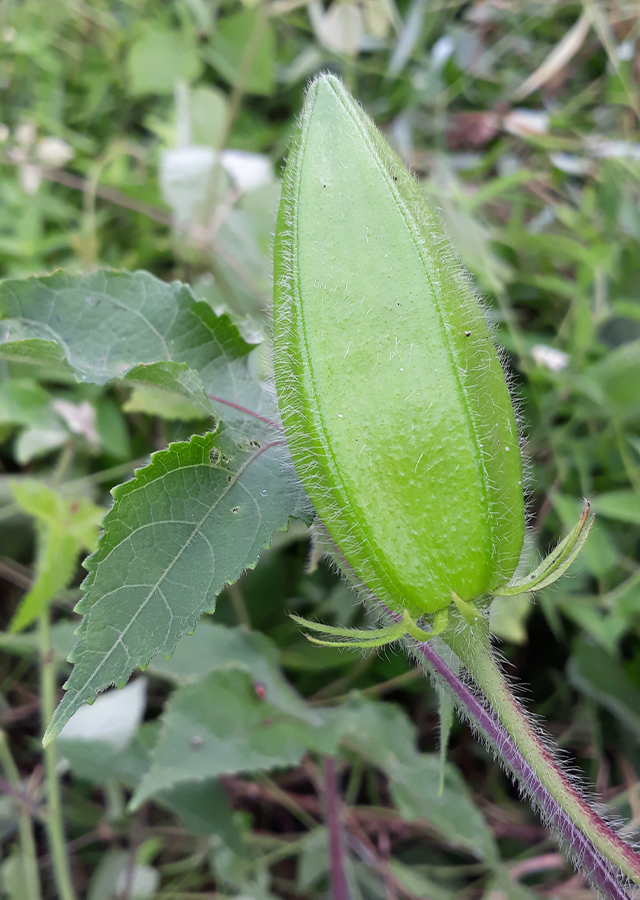
- Fruit a box, ovate, five-ribbed, tapering, 5-8 cm long, brush-like hairy, opens with 5 valves when ripe.
- Seeds kidney-shaped, flat, hard, gray in color, finely lined from base to tip, fragrant smell.
Cultivation
Propagated generatively (seed), vegetatively (stem cuttings).
Chemical Content
Seeds: ambrettolic acid, β-sitosterol-β-D-glycoside, farnesol, furfural. Dried leaves: β-sitosterol, β-D-glycoside. Flowers: β-sitosterol, myricetin, glycoside.
Benefits
Antidiabetic, antioxidant, antibacterial, antiproliferative (prevents cancer cell proliferation), softens skin, remedy for skin rashes, treats cough, boils, and bone fractures.
Simplisia
- Prepare kapasan root as needed.
- Wash the material thoroughly then cut into small pieces.
- Arrange in a container then dry in the sun for 5 days or until dry.
- Store in an airtight container.
Local Names
Gandapura, Kapas sedaki (Sumatra), Kakapasan, Kaworo, Kapasan, Kasturi, Regulo, Rewulow, Waron, Kastore, Buka (Java), Kasturi (Maluku), Kastore bukal (Madura).
Traditional Recipes
The following recipes reflect traditional knowledge passed down through generations, not a substitute for professional medical diagnosis or advice. Consult a healthcare provider before use.
1. Cough
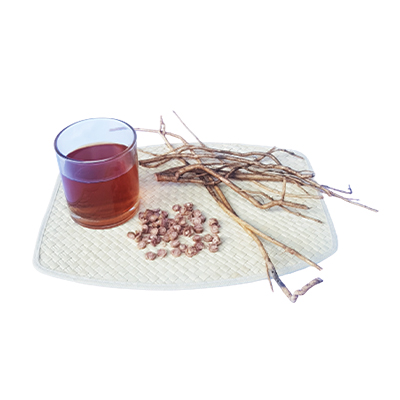
- Wash 10 g fresh kapasan root, then slice thinly. Boil in 3 glasses of water until reduced to 1 glass. Once cool, strain.
- Drink twice a day, ½ glass each time.
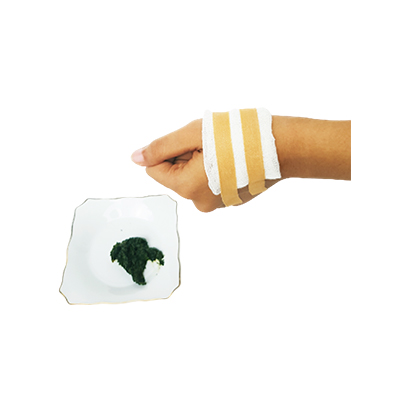
2. Boils or bone fractures
- Wash fresh kapasan leaves.
- Grind until fine.
- Apply the mixture to the boil or fractured bone.
- Bandage with cloth.
Reference Sources
- Widyaningrum Herlina. 2019. Kitab Tanaman Obat Nusantara. Media Pressindo, Jakarta.
- Maulana Murad. 2014. Khasiat Tanaman Obat Kapasan atau Gandapura. https://www.muradmaulana.com/2014/09/khasiat-tanaman-obat-kapasan-gandapura.html?m=1 18-07-2020