Abroma augustum (L.) L.f.
Summary
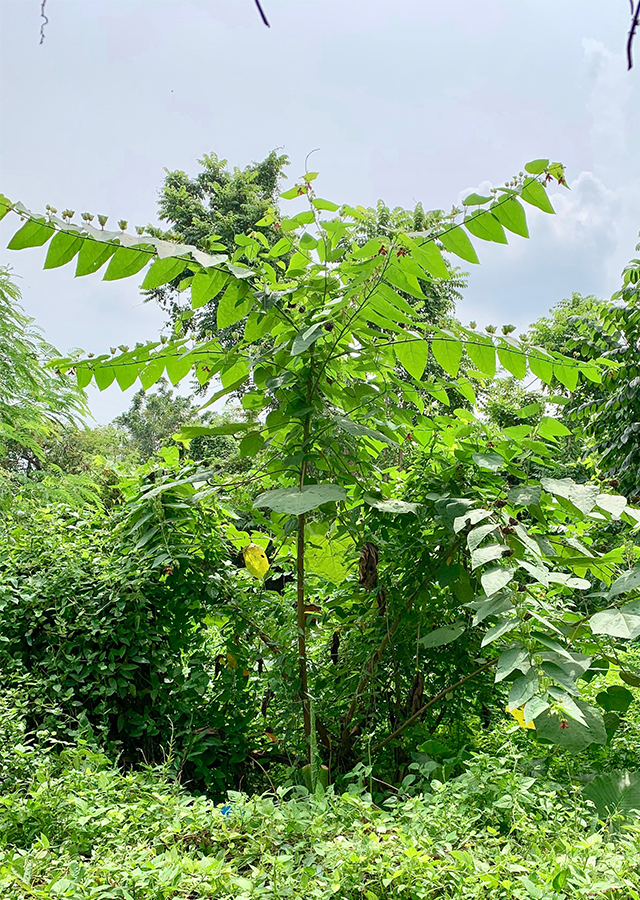
Kapas hantu (Abroma augustum) is a shrub up to 1-4 meters tall of the Malvaceae family, distributed from East Asia, especially China, to Southeast Asia, commonly found in marginal forests and valleys of South China. Its fiber is used as a traditional textile material, besides being grown as an ornamental plant. Traditionally, kapas hantu is believed to help address uterine disorders, diabetes, and regulate menstruation.
Agroecology
Grows in tropical areas at elevations up to 1,200 m above sea level, annual daytime temperature 26-31 °C. Average annual rainfall ranges between 1,500-3,000 mm/year and is not tolerant of the dry season. Grows well in fertile, medium clay soil with pH 5-6 and good drainage.
Morphology
- Roots taproot, brown in color.
- Stem finely hairy, brown bark, and very fibrous.
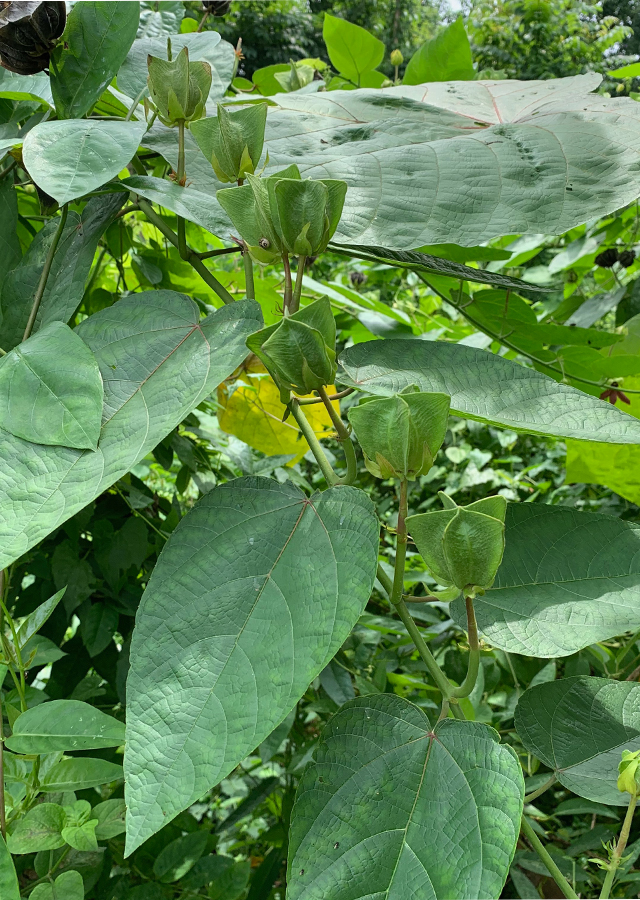
- Leaves single, polymorphic (two or more leaf shapes on one tree), egg-shaped, serrated, and wavy. Leaves alternate.
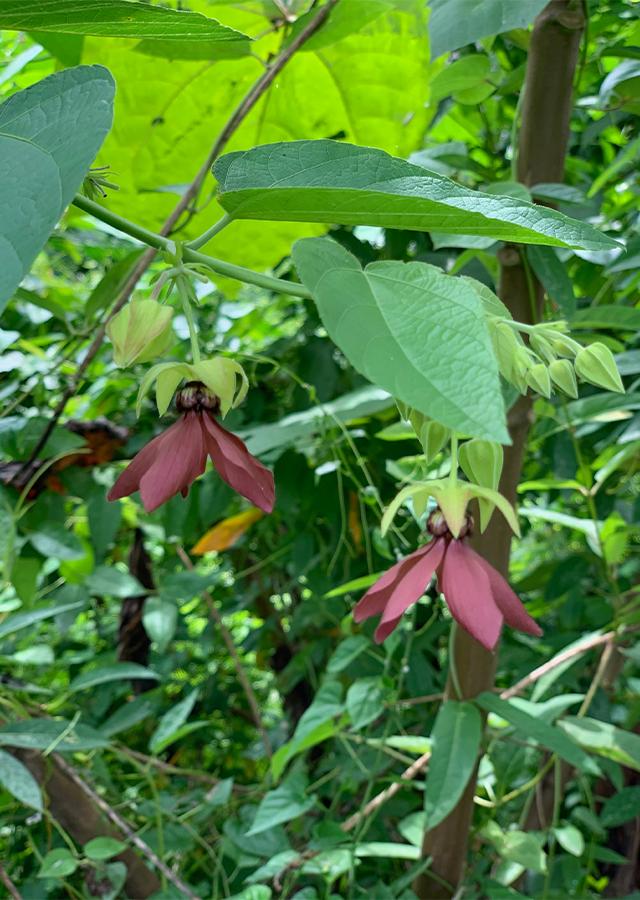
- Flowers compound, dark red, purple or yellow in color. Sepals lance-shaped, calyx almost not exceeding the sepals, attached to the bud.
- Fruit bell or inverted cone shaped, with 5 wings, opening at the tip splitting according to the chambers.
- Seeds numerous, small, blackish, covered with fine hairs.
Cultivation
- Propagated by seed or cuttings.
- Fresh seeds are soaked in water for 15 minutes at 28 °C, and must be sown immediately. Sowing is done before the rainy season.
Chemical Content
Alkaloids, abromine, sterols, protocatechuic, friedelin, abromasterol, choline, betaine, glycosidic, taraxerol, lupeol, octacosanol, β-sitosterol, α-amyrin, masilinic acid.
Benefits
Treats uterine bleeding, promotes fertility, diabetes, rheumatism, uterine disorders, sinusitis, gonorrhea, dermatitis, vaginal discharge, and regulates menstruation.
Simplisia
- Prepare kapas hantu roots and clean off attached soil and dirt.
- Wash thoroughly with running water.
- Cut the root into pieces to make drying easier.
- Dry in the sun.
- Once dry, store in a clean, airtight place.
Local Names
Rebong pengayoh (Lampung), Kaworo, Ki kecangkir (Sunda), Kapasan, Lawe (Java), Ame-ame (Ternate), and Jaba Oto (Halmahera).
Traditional Recipes
The following recipes reflect traditional knowledge passed down through generations, not a substitute for professional medical diagnosis or advice. Consult a healthcare provider before use.
1. Regulating Menstruation
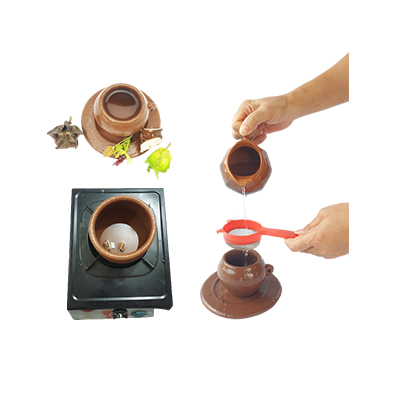
- Boil 5 g kapas hantu root with 400 ml water until it boils and the water reduces to 100 ml.
- Cool and strain.
- Drink twice a day.
Reference Sources
- Easy Ayurveda. 2015. Abroma ausgusta-Devil's cotton-uses dose-side effectshttps://www.easyayurveda.com/2015/06/03/abroma-augusta-devils-cotton/ 15-09-2020
- SlideShare. A Scrib Company. 2017. Phytomedicinal properties of Abroma augusta Linn F. https://www.slideshare.net/IqbalMahmud03/abroma-augusta-ulatkambal 18-01-2021