Abrus precatorius L.
Summary
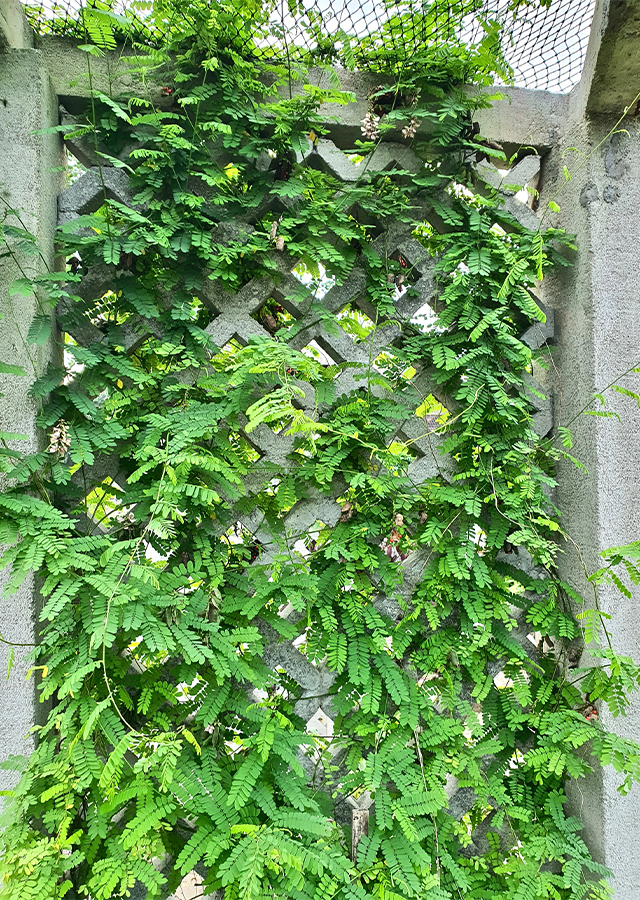
Saga rambat, or rosary pea (Abrus precatorius), is a climbing plant up to 6 meters tall of the Fabaceae family, native to India and spreading throughout tropical Asia. In Ayurvedic medicine, its seeds are used as a remedy for eye infections and a natural contraceptive, though caution is needed since the seeds are also toxic if swallowed whole. Its leaves, stem, and root are traditionally used to relieve sore throat, canker sores, and hepatitis.
Agroecology
Grows wild in grasslands and wet areas, at elevations ranging from 50-1,650 m above sea level. Favors well-drained, sandy soil with adequate water and requires full sun.
Morphology
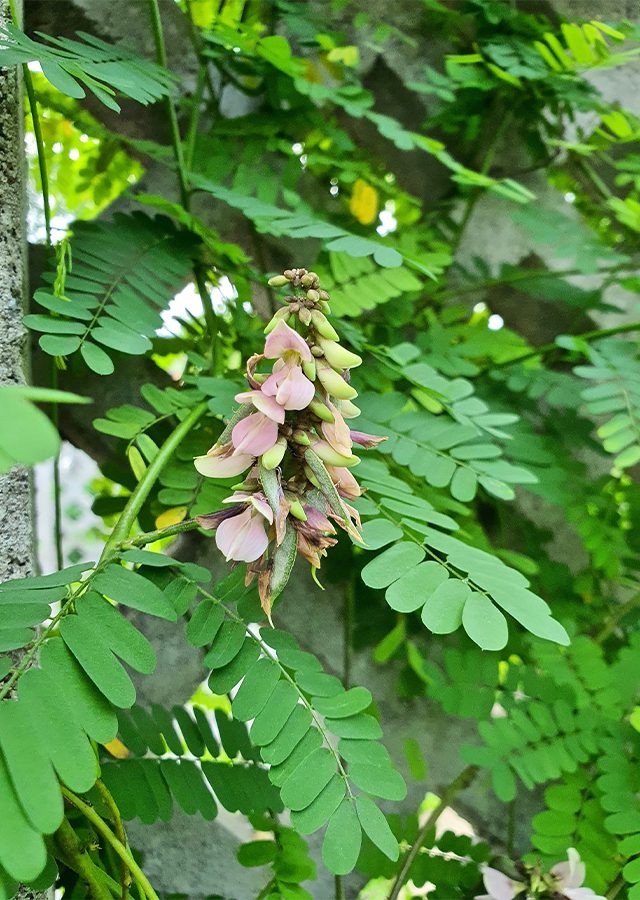
- Leaves evenly pinnate compound, alternately arranged, short-stalked, broad oblong shape, blunt and somewhat rounded tip and base, smooth margins, smooth upper surface, finely hairy underside, prominent veins on the underside. Green to pale green.
- Flowers compound, gathered in a raceme emerging from the leaf axils, small, pale purple, butterfly-shaped corolla.
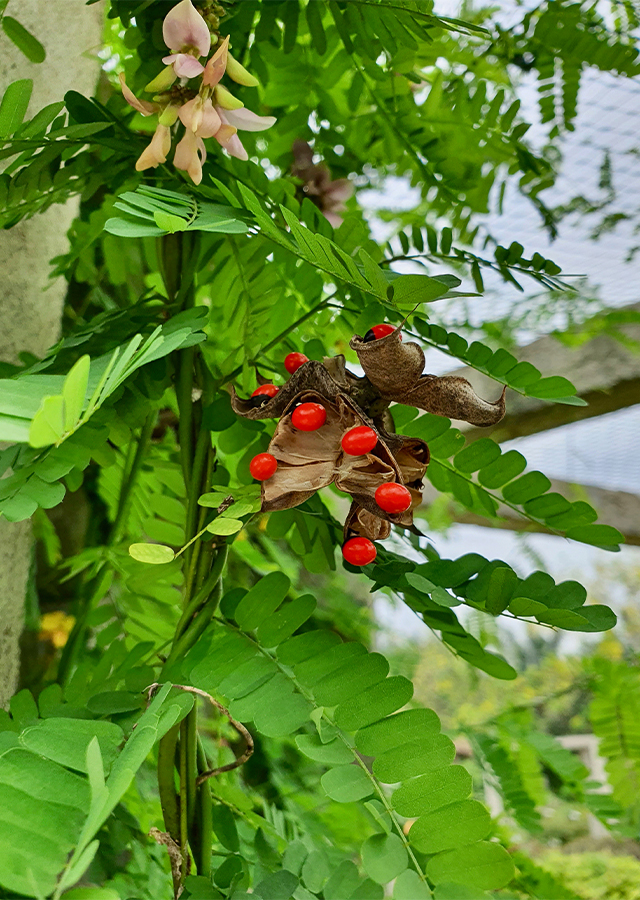
- Fruit a green-yellow pod, flattened and elongated square-shaped, toxic.
- Seeds red with a black spot, glossy, and smooth.
Cultivation
Propagated generatively (by seed). Before sowing, the seed stock is first soaked, and those that sink are selected.
Chemical Content
Tannins, luteolin, polyphenols, saponins, flavonoids, alkaloids (L-abrine), abruquinones D, E, F, calcium oxalate, glycyrrhizin, glycyrrhizinate, polygalacturonic acid, pentosan
Benefits
Leaves, stem, root: treats sore throat, canker sores, tonsillitis, dry cough, bronchitis, hepatitis, acute and chronic viral infections, jaundice. Seeds: contraception, eye infections, scabies, and fungal infections (tinea).
Local Names
Thaga (Aceh), Seugeu (Gayo), Hasebo (Batak), Kendari, Kundari (Lampung, Minangkabau), Saga telik, Saga manis (Java), Taning bajang (Dayak).
Traditional Recipes
The following recipes reflect traditional knowledge passed down through generations, not a substitute for professional medical diagnosis or advice. Consult a healthcare provider before use.
1. Canker Sores and Cough
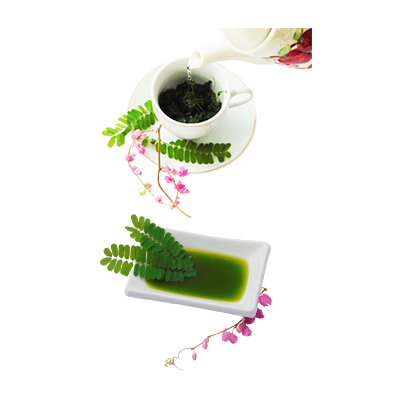
- Prepare 40 g rosary pea leaves and 10 ml warm water.
- Wash the rosary pea leaves thoroughly, then knead until fine, adding warm water little by little. Pour the resulting liquid into a glass and it is ready to drink. Drink 3 times a day.
- External use for canker sores: Knead the rosary pea leaves and place on the affected area.
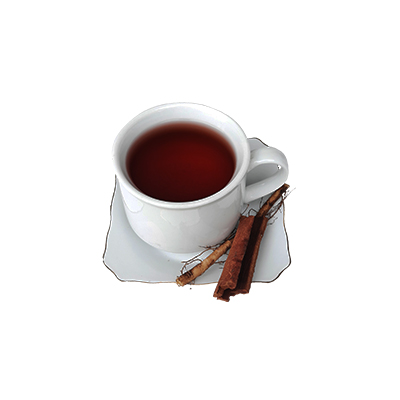
2. Tonsillitis
- Prepare 11 g rosary pea root, 10 g rock sugar, and 8 g cinnamon.
- Boil all ingredients in 5 cups of clean water until boiling and reduced by half.
- Strain the liquid and drink 1 cup twice a day, morning and evening.
Reference Sources
- Dalimantha, Setiawan, 2008. Atlas Tumbuhan Obat Indonesia jilid 5. Pustaka Bunda, Jakarta 176
- Hidayat, Syamsul, RM Napitupulu, 2015. Kitab Tumbuhan Obat. Agriflo, Jakarta 416
- Kardinan, A. 1999. Pestisida Nabati : Ramuan dan Aplikasi. Penebar Swadaya, Jakarta 80
- Nurawan, A., E. A. Hadad dan D. Sitepu, 1993. Penanggulangan Penyakit Penting pada Tanaman Tempuyung dan Saga Manis. Jurnal Warta Tumbuhan Obat Indonesia. Pusat Penelitian dan Pengembangan Farmasi 2(2):21-22.
- Saga Rambat, Gulma Berkhasiat Obat. sotyati, 01-09-2016. https://www.satuharapan.com/read-detail/read/saga-rambat-gulma-berkhasiat-obat 05-09-2020