Abutilon indicum (L.) Sweet
Summary
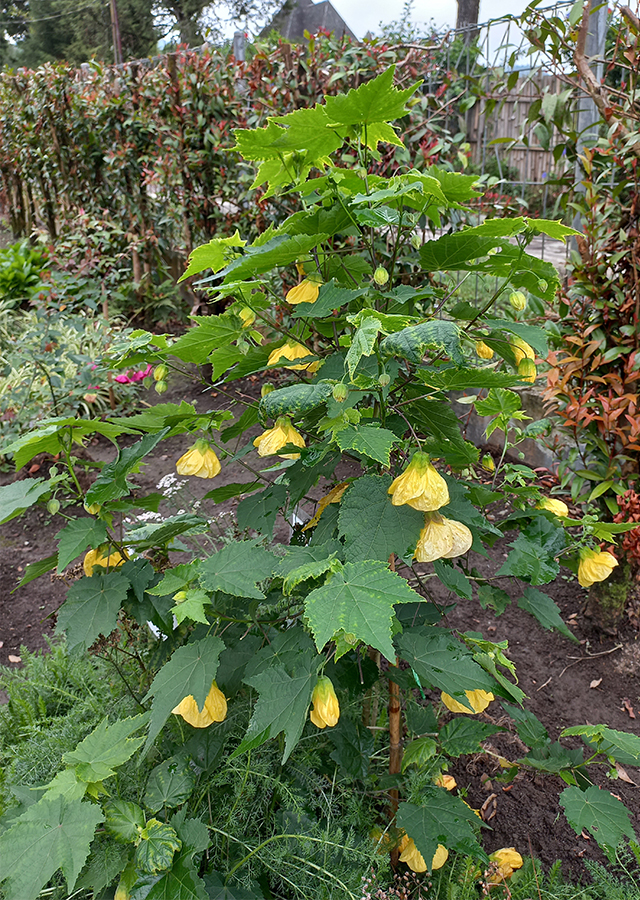
Kembang sore (Abutilon indicum) is a shrub up to 2.5 meters tall from the Malvaceae family that originates from Africa, Asia, and Australasia, named for its flowers that only bloom in the afternoon or evening. In India, this plant is an important medicine source in Ayurveda, while in Indonesia a decoction of its leaves is applied to fight rheumatism. Kembang sore also has potential for phytoremediation of heavy-metal-contaminated soil.
Agroecology
Kembang sore can be found along roadsides, low thickets, savannas, lake edges, beach edges, sand dunes and roadsides, from sea level up to an elevation of about 1,600 m asl. This plant usually grows in tropical climates with warm temperatures. Its growth prefers sunny or half-day shaded locations with fertile, well-drained soil conditions, but tolerates drought and saline environments.
Morphology
- Stem upright, round, many-branched, semi-woody, gray, velvety pubescent, often tinged purple, base of stem woody.
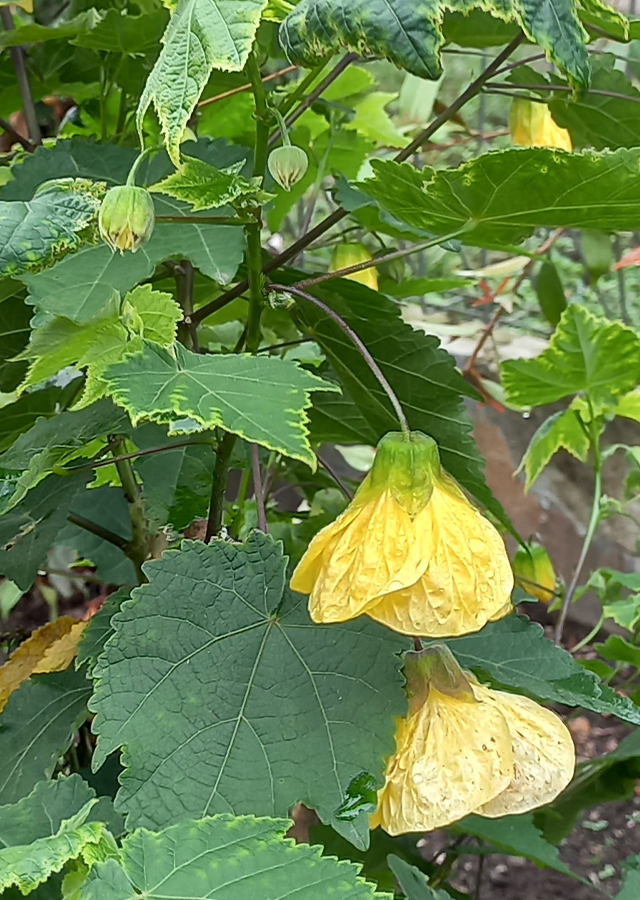
- Leaves simple, green, ovate-orbicular, heart-shaped base, irregularly serrated margin, tip pointed or tapering, alternately arranged, both surfaces soft velvety-pubescent. Petiole 2-4 cm, stipules subulate (needle-shaped) and curved outward.
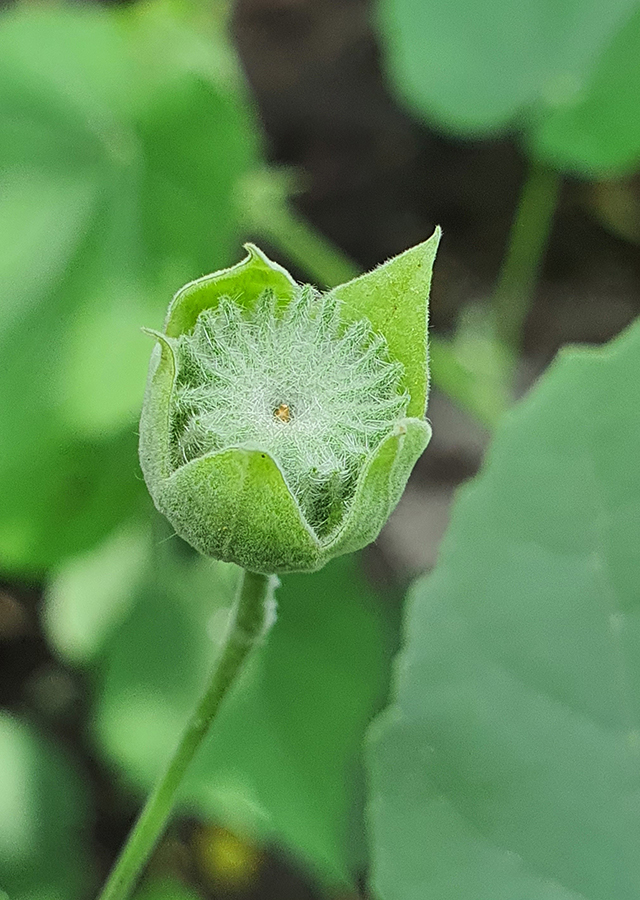
- Flowers solitary, axillary (located in the leaf axil). Calyx green, disc-shaped, finely and softly hairy gray, 5-lobed, calyx segments broadly ovate, pointed tip. Corolla yellow, petals numbering 5, 7-8 mm in size, triangular-ovate, staminal tube hairy long and stiff (hirsute) with star-shaped hairs. Flowers open in the afternoon or evening.
- Fruit shaped like a pressed ball, green, circular, flat top, pointed tip, somewhat wavy, with 11-20 radiating carpels, each carpel flattened, somewhat boat-shaped. The fruit is hispid, with long star-shaped hairs.
- Seeds reniform, rarely star-shaped, pubescent, dark brown or black.
Cultivation
- Propagation is done generatively (seeds) or vegetatively (stem cuttings, shoot cuttings).
- Flowering depends on temperature and light, flowering occurs at 25-30 °C, on cloudy days flowers open at 16:00 or at night.
Chemical Content
Steroids, sapogenins, saponins, alkaloids, phenols, coumarins, flavonoids, tannins, asparagine, abutilin A, (R)-N-(1'-methoxycarbonyl-2'-phenylethyl)-4-hydroxybenzamide, essential oil (alpha-pinene, caryophyllene oxide, endesmol, farnesol, borneol, geraniol, geranyl acetate, elemene, alpha-cineole), eudesmic acid, ferulic acid, caffeic acid, 2-pentanone,4-hydroxy-4-methyl, 2-hexanol,2-methyl, 2-pentanol,2,3-dimethyl, m-xylene, p-xylene, o-xylene, c-sitosterol, a-sitosterol, cholest-5-en-3-ol, 4,4-dimethyl-,(3a)-, lupeol, lup-20(29)-en-3-ol,acetate,(3a)-, 9,19-cyclo-9a-lanostane-3a,25-diol, taraxerol, 4 hydroxyphenylacetic acid methyl ester, 5-thio-D-glucose, 5-allylsulfanyl-1-(4-methoxy-phenyl)-1H-tetrazole,(E)-10-heptadecen-8-ynoic acid methyl ester, and Z-11-hexadecenoic acid.
Benefits
Treats and cleanses wounds, seizures, cramps, colic pain, spermatorrhea (uncontrolled ejaculation), dysmenorrhea (menstrual pain), menorrhagia (excessive menstruation), dysentery and stomach ache, reduces fever, relieves abscess inflammation, boils, gum inflammation, toothache, tuberculosis, cough, bronchitis, earache, tinnitus (ringing ears), body aches, hemorrhoids, dysuria (painful urination), promotes urination, addresses urethritis (inflammation of the urethral tract), diabetes, skin ulcers, leprosy, helps blood clotting, sedative, has aphrodisiac, laxative, astringent, immunomodulatory, analgesic, antimalarial, antimicrobial properties.
Local Names
Belangan sumpa, Barulau (Palembang), Cemplok (Java), Jeuleupa (Aceh), Kembang sore kecil (Maluku), Gandera ma cupa (Ternate).
Traditional Recipes
The following recipes reflect traditional knowledge passed down through generations, not a substitute for professional medical diagnosis or advice. Consult a healthcare provider before use.
1. Toothache
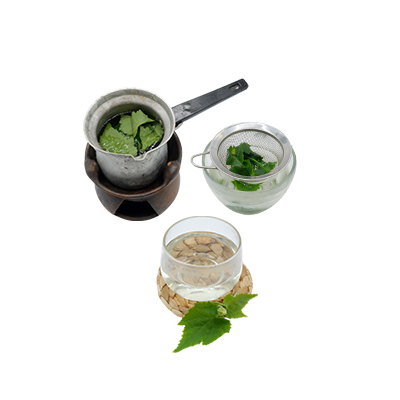
- Take fresh kembang sore leaves as needed and wash until clean.
- Boil the leaves until boiling.
- Strain the decoction.
- Use as a mouthwash to relieve toothache.
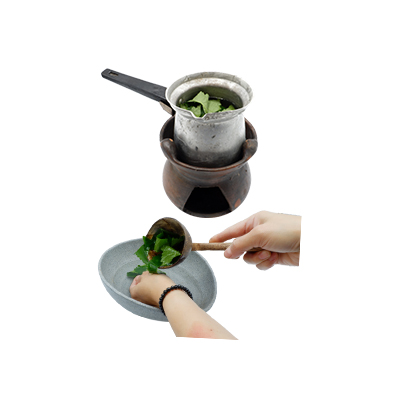
2. Cleansing wounds
- Take kembang sore leaves as needed and wash until clean.
- Boil until boiling.
- Let cool then use to clean the wound.
Reference Sources
- Royal Botanic Gardens. 2021. Plants of the World Online: Abutilon indicum (L.) Sweet. http://powo.science.kew.org/taxon/urn:lsid:ipni.org:names:1101632-2. 27-09-2021.
- CAB International. 2019. Invasive Species Compendium: Abutilon indicum (country mallow). https://www.cabi.org/isc/datasheet/1979#toPictures. 27-09-2021.
- Flora Fauna Web. 2019. Abutilon indicum. https://www.nparks.gov.sg/florafaunaweb/flora/1/5/1582. 27-09-2021.
- Stuartxchange. 2016. Philippine Medicinal Plants: Malbas. http://www.stuartxchange.org/Malbas.html. 27-09-2021.
- PROSEA. 2016. Abutilon indicum (PROSEA). https://uses.plantnet-project.org/en/Abutilon_indicum_(PROSEA). 27-09-2021.