Acalypha indica L.
Summary
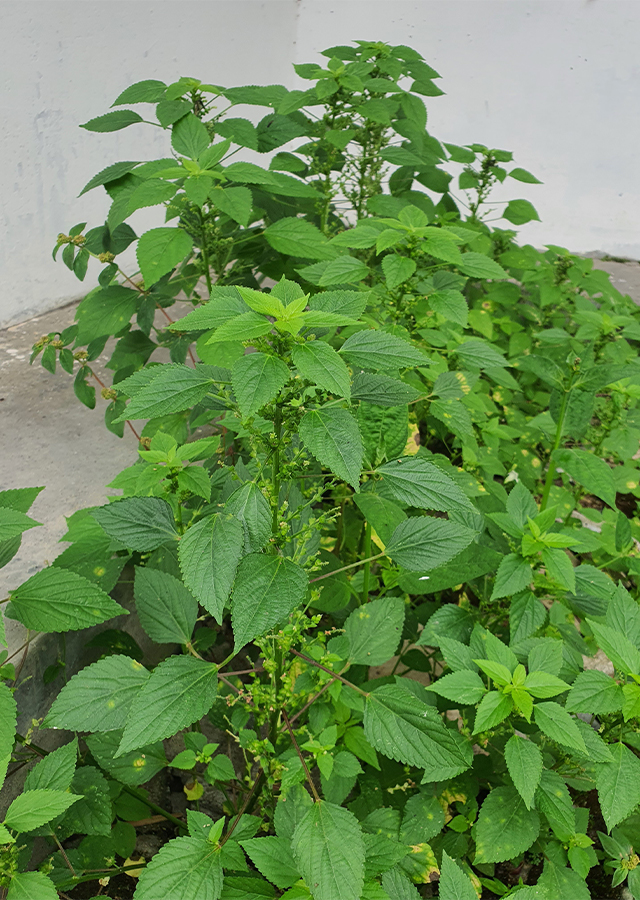
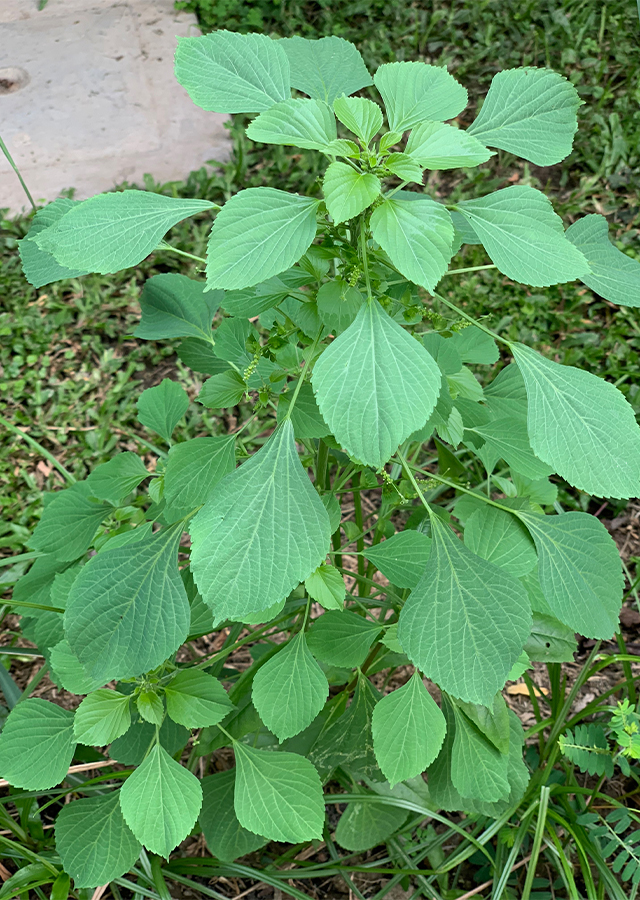
Anting-anting (Acalypha indica) is an erect annual herb 30-50 cm tall of the Euphorbiaceae family, widely distributed from West Africa to India, Indochina, and Java. Although generally considered a weed growing wild along roadsides, this plant has traditionally been used for generations to address digestive disorders. Anting-anting is also believed to act as a diuretic and help stop minor bleeding such as nosebleeds.
Agroecology
Grows ideally in tropical lowlands up to an elevation of 1,350 m above sea level, rainfall of 1,500-3,500 mm/year with dry months of less than 2 months. Suitable soil types for this plant are andosol, latosol, and red-yellow podzolic, with a soil pH of 5.5-6.5. Air temperature of 22-28 °C.
Morphology
- Roots taproot.
- Stem branched, with coarse elongated lines.
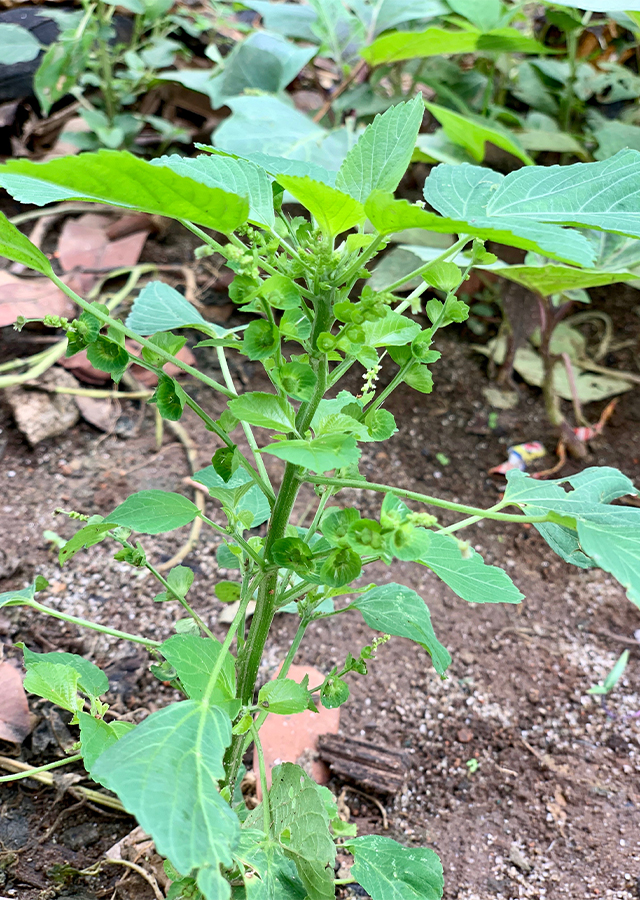
- Leaves simple, cylindrical petiole (3-4 cm long), round-oblong, alternately arranged, pointed tip and base, toothed margins. Leaf length 2.5-8 cm and width 1.5-3.5 cm.
- Flowers monoecious, emerging from the leaf axils, small, in panicle clusters.
Cultivation
- Propagated generatively (by seed).
- Easy to maintain, requires water with even watering to maintain soil moisture, and fertilization.
Chemical Content
Flavonoids, alkaloids, steroids, saponins, aleurone, tannins, cyanogenic glucoside (acalyphin), and pyranoquinolinone alkaloid (flindersine).
Benefits
Acts as a diuretic, laxative, and hemostatic (stops bleeding); acts as an expectorant; treats dysentery, nosebleeds, gout, rheumatism, diabetes; relieves body aches; has anti-inflammatory, antibiotic, antibacterial, and antifungal activity.
Simplisia
- Prepare fresh anting-anting root, separate from any adhering debris.
- Wash thoroughly under running water.
- Dry in the sun or in an oven at 40 °C until reaching a moisture content of 10%.
- Once dry, store in a closed container.
Local Names
Kucing-kucingan, Kucing galak, Lateng (Cirebon), Akar kucing (Java), Rumput bolong-bolong (Jakarta), Rumput kokosongan (Sunda), Ceka mas (Malay).
Traditional Recipes
The following recipes reflect traditional knowledge passed down through generations, not a substitute for professional medical diagnosis or advice. Consult a healthcare provider before use.
1. Dysentery
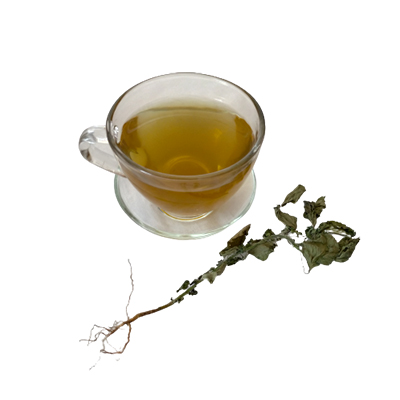
- Wash 30-60 g of dried anting-anting thoroughly, then boil in 2 cups of water until reduced to 1 cup, let cool.
- Drink twice a day, ½ cup each time.
- Do this regularly for 5-10 days.
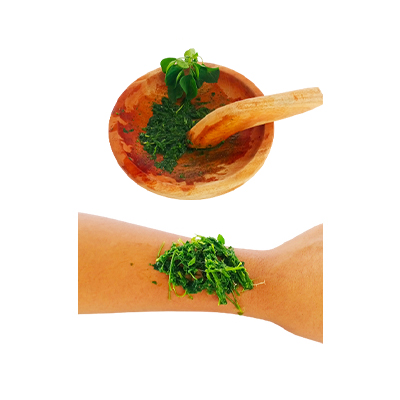
2. Bleeding and External Wounds
- Mash a sufficient amount of the whole fresh anting-anting plant.
- Mix with a sufficient amount of sugar.
- Then apply the mashed mixture to the wound.
Reference Sources
- Dineshkumar B, Vigneshkumar P, Bhuvaneshwaran P, Mitra A. 2010. Phyto-pharmacology of Acalypha indica: a review. I.J.B.S.A.H.M. 1(2):27-32.
- Firdaus I. 2014. Potensi ekstrak daun anting-anting (Acalypha Indica L.) sebagai antibakteri Streptococcus mutans dan degradator boifilm pada gigi. Skripsi. Fakultas Matematika dan Ilmu Pengetahuan Alam. Institut Pertanian Bogor. Bogor.
- Godipurge SS, Biradar JS, Mahurkar N. 2014. Phytochemical and pharmacological Evaluation of Acalypha indica Linn in experimental animal models. I.J.P.P.R. 6(4): 973-979.
- Handayani et al. 2018. Profil fitokimia dan pemeriksaan farmakognostik daun Anting-Anting (Acalypha indica L.). Jurnal Fitofarmaka Indonesia 5(1) : 258-265.
- Jagatheeswari D, Deepa J, Ali HSJ, Ranganathan P. 2013. Acalypha indica L - an important medicinal plant: a review of its traditional uses, and pharmacological properties. International Journal of Research in Botany 3(1): 19-22.
- Saha R, Ahmed A. 2011. Phytochemical constituents and pharmacological activities of Acalyphus indica Linn: a review. I.J.P.S.R. 2(8): 1900-1904.
- Siregar AH. 2002. Acalypha indica (L.) Willd. dalam Van Valkenburg, J.L.C.H, Bunyapraphatsara, N. (Editor): Plant Resource of South-East Asia 12(2). Medicinal and poisonous plants 2. Prosea Foundation. Bogor.Indonesia 34.
- Zahidin SY, Saidin S, Zulkifli RM, Muhamad II, Ya'akob H, Nur H. A review of Acalypha indica L. (Euphorbiaceae) as traditional medicinal plant and its therapeutic potential. Journal of Ethnopharmacology 207: 146–173.