Acanthocereus tetragonus (L.) Hummelinck
Summary
Acanthocereus tetragonus or barbed wire cactus is a dry tropical and subtropical plant distributed from the southern coast of Texas and Florida to Mexico and Central America, where this species is endemic. Its edible fruit serves as an alternative food source in some Mexican communities, while its spiny stems are used as a living fence, especially in the Pacific coastal lowlands. Traditionally, barbed wire cactus is also used to minimize internal bleeding and as a diuretic.
Agroecology
Acanthocereus tetragonus is generally found growing in sandy areas, coastal lowlands. This plant can grow in light (sandy) and medium (loam) soil, well-drained in a sunny position, and is also able to grow in nutrient-poor soil. A. tetragonus prefers dry soil conditions and can tolerate drought, as well as soil with an acidity level (pH) in the range of 6-7.5.
Morphology
- Roots fibrous.
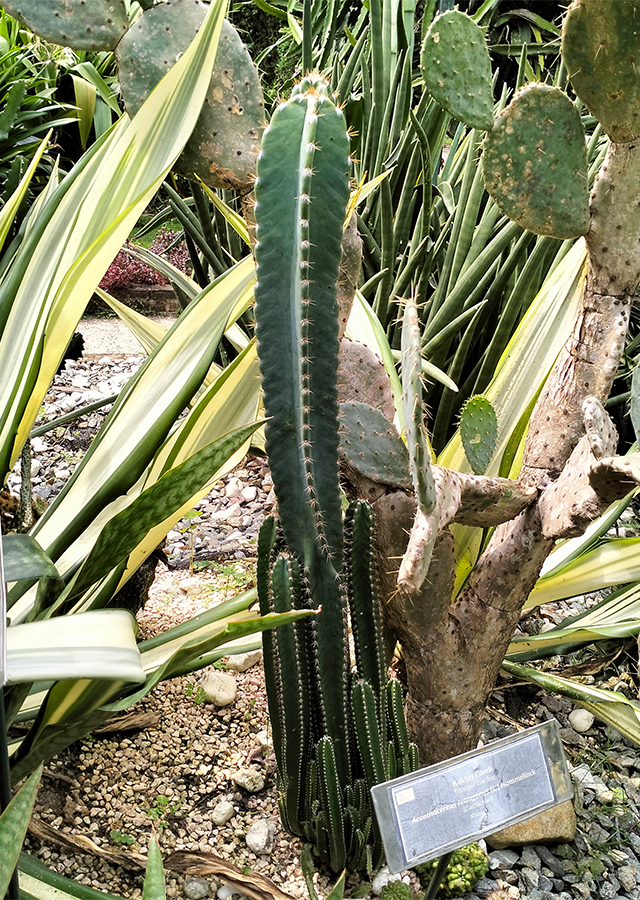
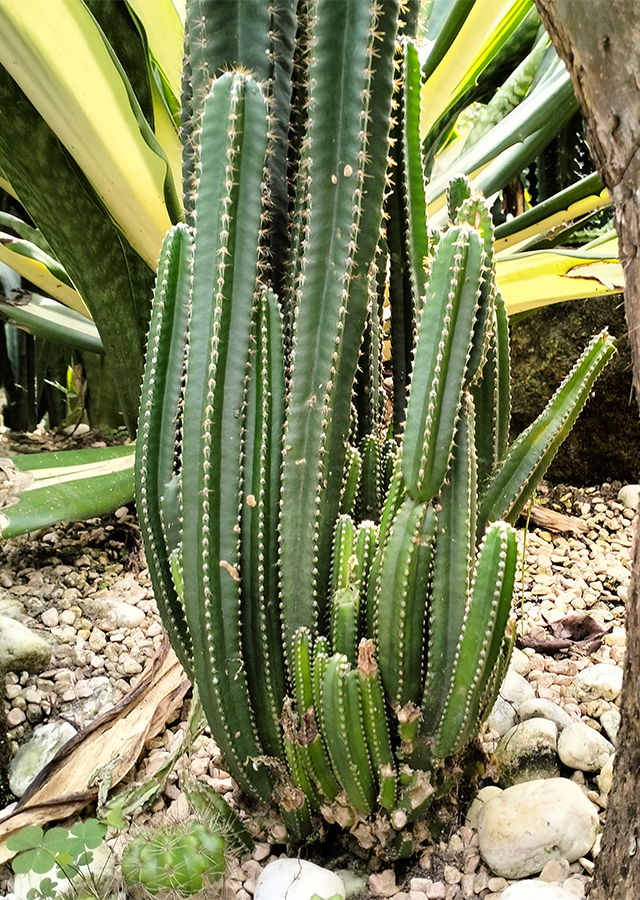
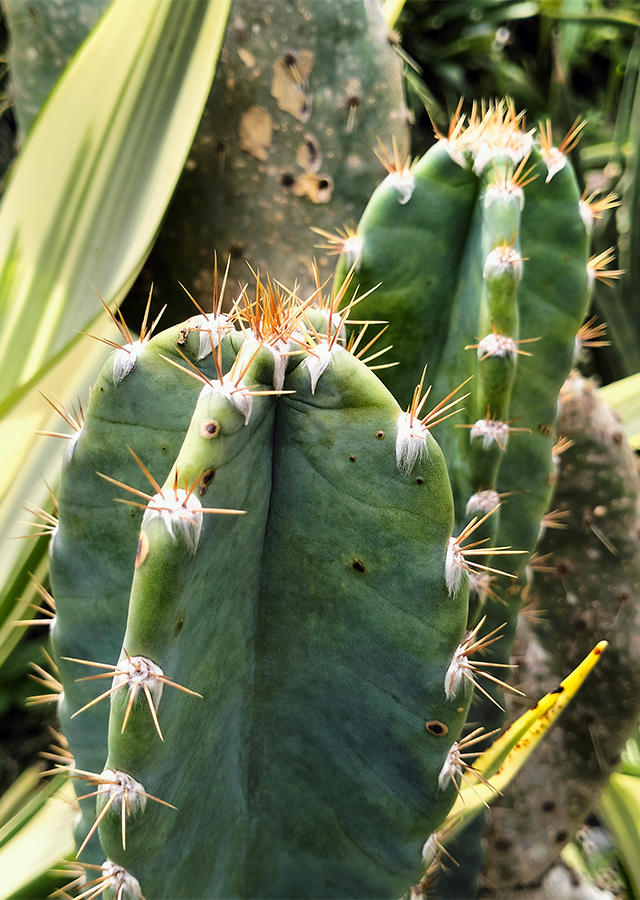
- Stem dark green, columnar shaped, branching, the branches gathering vertically to form "fairy castle" towers, curved, sharply angled ribs, usually 3 on mature stems, 4-5 on young stems, short white spines growing along the ribs. Areoles gray, the central areole has one to two spines up to 4 cm long, while the radial areole has six to eight spines up to 2.5 cm long.
- Flowers bisexual, inner tepals pure white, outer tepals greenish white, stamens yellow, pistil creamy white, slightly fragrant.
- Fruit red, juicy, ovoid to oblong shaped, about 2.5 cm in diameter, glossy fruit surface, sweet tasting.
Cultivation
- Plant propagation through seed and stem sections/cuttings.
- Propagation through seed is done by removing the seed from the fruit flesh and drying it thoroughly before sowing.
Chemical Content
Carboxylic acids such as threonic, citric, and malic acid, eucomic acid, sinapic acid, glycosylated flavonoids (luteolin-O-rutinoside).
Benefits
Minimizes internal bleeding, acts as a diuretic.
Local Names
Information not found. Further research is needed.
Traditional Recipes
The following recipes reflect traditional knowledge passed down through generations, not a substitute for professional medical diagnosis or advice. Consult a healthcare provider before use.
1. Minimizes internal bleeding
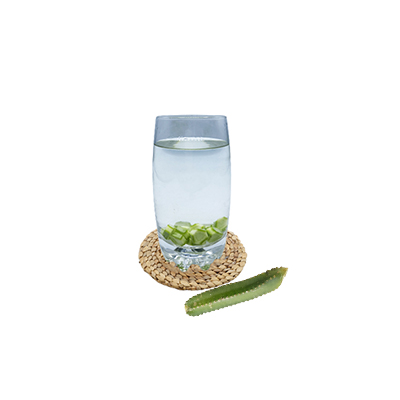
- Take barbed wire cactus stem, wash until clean, and cut into pieces.
- Soak with a glass of water.
- Wait for a while.
- Strain then drink.
Reference Sources
- Plants For A Future. 2022. Acanthocereus tetragonus - (L.) Hummelinck. https://pfaf.org/user/Plant.aspx?LatinName=Acanthocereus+tetragonus. 03-01-2023.
- Cornejo-Campos J. et al. 2022. Impact of the Cooking Process on Metabolite Profiling of Acanthocereus tetragonus, a Plant Traditionally Consumed in Mexico. Molecules, 27(12), 3707; https://doi.org/10.3390/molecules27123707.
- La Palomera. 2020. Ethnobotanical Dictionary, Barbed wire cactus: Acanthocereus tetragonus (L.) Hummelinck. https://en.lapalomera.org/especies/004-plant-003-nopal-de-cruz. 03-01-2023.
- Lady Bird Johnson, Wildflower Center. Acanthocereus tetragonus. https://www.wildflower.org/plants/result.php?id_plant=acte4. 03-01-2023.