Acanthus montanus (Nees) T.Anderson
Summary
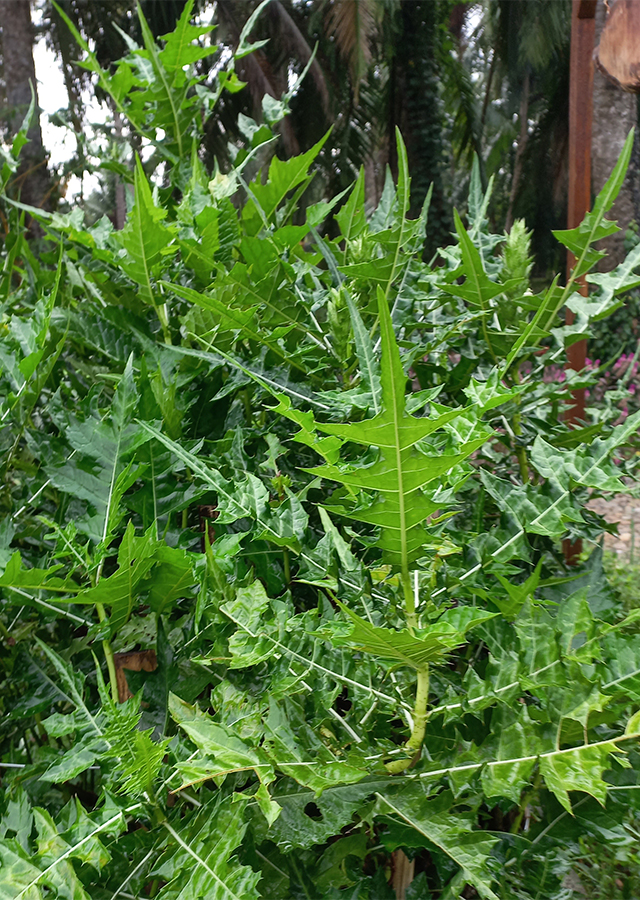
Mountain thistle (Acanthus montanus) is a shrub up to 2 meters tall from the Acanthaceae family native to Africa, nicknamed 'mountain thistle' for its leaf shape, now classified as a threatened and underutilized vegetable in Africa. Its leaves are used in making highly nutritious soup. Mountain thistle is traditionally used to manage diabetes and relieve body aches.
Agroecology
Mountain thistle can grow in fertile, moist, well-drained soil, and in full sun. The plant tolerates a wide variety of soils except poorly drained ones. The plant may not flower well in overly shaded places. Remove the flower stalk after blooming. The plant can spread invasively through creeping underground stems, especially in loose soil.
Morphology
- Stem succulent upright, highly branched, smooth bark.
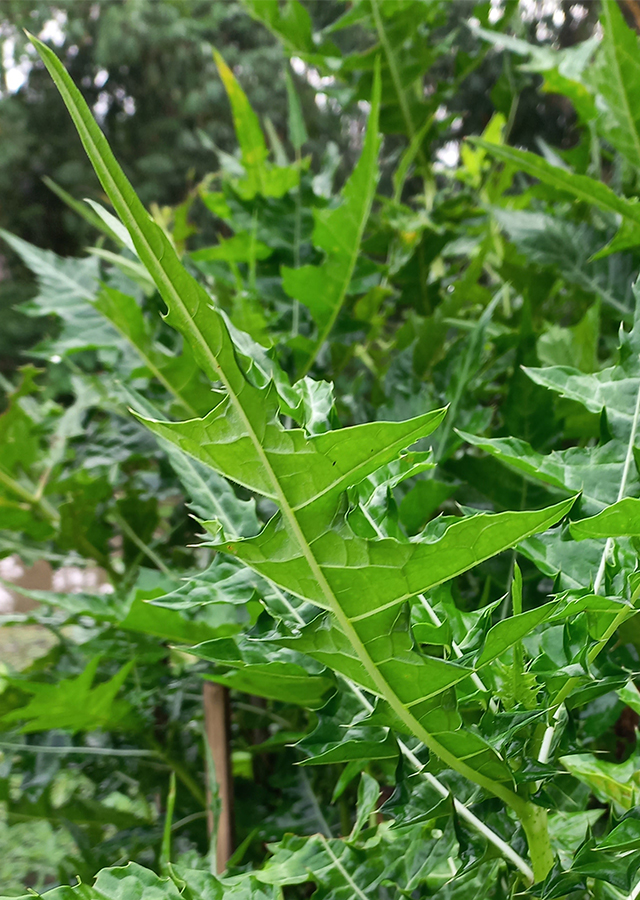
- Leaves simple, ovate to lanceolate, shallowly to deeply lobed, toothed with short spines, apex pointed, dark glossy green above and pale green below.
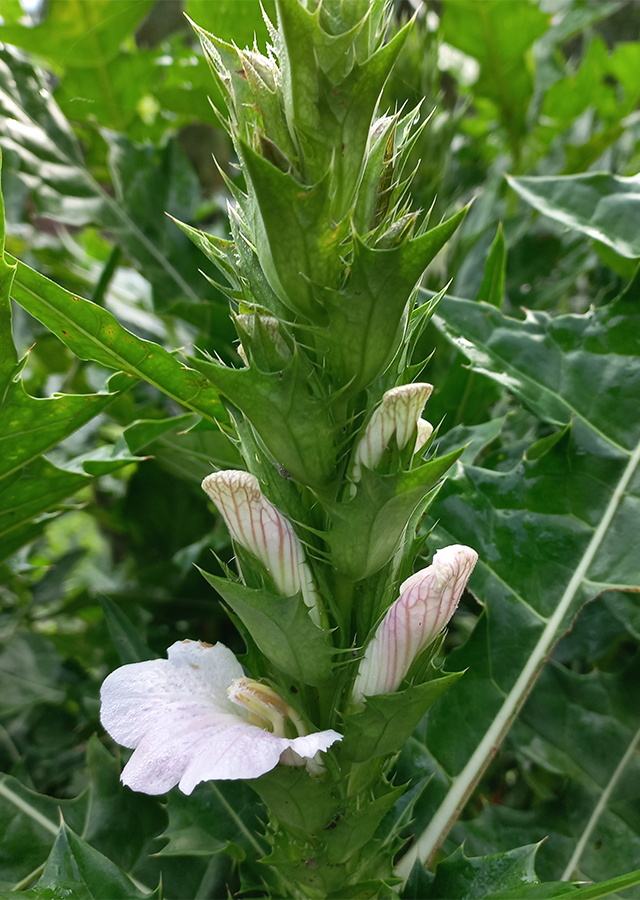
- Flowers at the tip of the stem, 2-lipped, blue, pink to reddish, in long upright spikes.
Cultivation
The plant is best propagated from root cuttings taken at the beginning of the rainy season, but can also be grown from seed.
Chemical Content
Alkaloids, flavonoids, glycosides, steroids, saponins, tannins, terpenoids, (2,6-bis(1,1-dimethylethyl)-4-methylphenol), allyl(2-tetrahydrofuryl methoxy)dimethylsilane, cyclohexylmethyl hexyl sulfate ester, alpha-methyl 4-methylmannoside, hexadecanoic acid methyl ester, 11-octadecenoic acid methyl ester, docosane, N,N-dimethylvaleramide, 2,6,10,15-tetramethylheptadecane, β-sitosterol-3-O-β-D-glucoside, palmitic acid, linarioside, homoplantaginin, 5,7,3-trihydroxy-6,4′-dimethoxyflavone-7-O-glucoside, shikimic acid, protocatechuic acid, blepharin, and acteoside.
Benefits
Treats gonorrhea, syphilis, wounds, boils, hypertension, heart dysfunction, hepatitis, vomiting in children, cough, epilepsy, a laxative and treats abscesses. Has antimicrobial, antidiabetic, anti-inflammatory, analgesic, immunomodulatory, hepatoprotective, antifertility, fetotoxic, relaxant, anthelmintic, and mosquito-repellent activity.
Simplisia
- Prepare fresh mountain thistle root, wash clean with running water then drain.
- Sun-dry directly for several days or use an oven at 40°C until the moisture content reaches 10%.
- Store the simplicia in a clean, airtight container.
Local Names
Informasi tidak ditemukan. Butuh penelusuran lebih lanjut.
Traditional Recipes
The following recipes reflect traditional knowledge passed down through generations, not a substitute for professional medical diagnosis or advice. Consult a healthcare provider before use.
1. Hepatitis
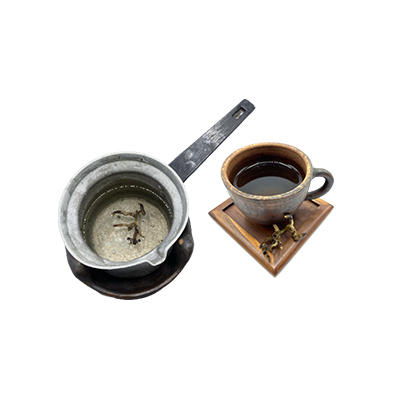
- Prepare 100 g of dried mountain thistle root.
- Boil with 2 glasses of water until only 1/2 glass remains.
- Let it cool.
- Strain and divide into 2 glasses (1/4 glass each).
- Add 1 tbsp honey.
- Drink.
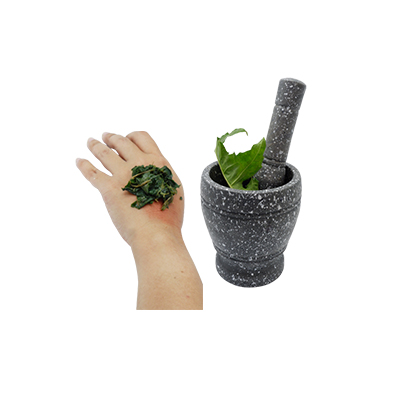
2. Boils
- Take an adequate amount of mountain thistle leaves.
- Wash clean with running water.
- Grind until it becomes a paste.
- Apply the paste to the boil.
Reference Sources
- Royal Botanic Gardens. 2017. Plants of the World Online: Acanthus montanus (Nees) T.Anderson. https://powo.science.kew.org/taxon/urn:lsid:ipni.org:names:44894-1. 17-9-2021.
- Stuartxchange. 2018. Philippine Medicinal Plants: Mountain thistle. http://www.stuartxchange.org/MountainThistle. 17-9-2021.
- Missouri Botanical Garden. Acanthus montanus. https://www.missouribotanicalgarden.org/PlantFinder/PlantFinderDetails.aspx?taxonid=275329. 17-9-2021.
- I. Andrew. , Eleazu C. 2018. Effect of processing on the biochemical contents of Acanthus montanus (Nees) T. Anderson (Acanthaceae) leaves. Food Science and Nutrition. 2018 Mar; 6(2): 388–394. https://www.ncbi.nlm.nih.gov/pmc/articles/PMC5849901/. 17-9-2021.