Achillea millefolium L.
Summary
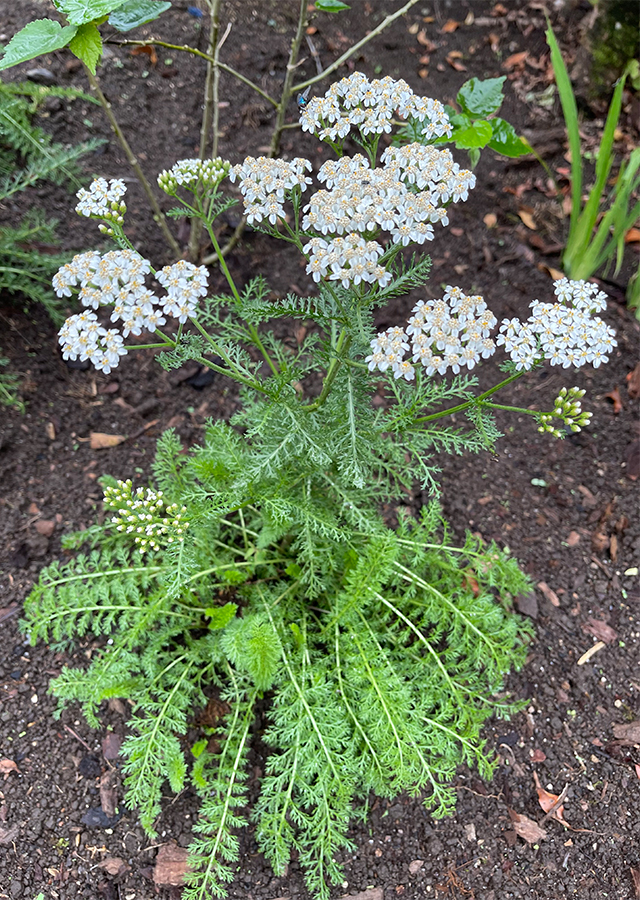
Yarrow (Achillea millefolium) is an upright herb up to 100 cm tall from the Asteraceae family distributed across Eurasia and North America, nicknamed 'Herba Militaris' by ancient Europeans for its role in stopping bleeding on the battlefield. This plant is included in the official pharmacopeias of Germany, France, and Switzerland. Yarrow is traditionally used to heal wounds, treat digestive disorders, and strengthen hair.
Agroecology
Yarrow can grow in areas at elevations from sea level to mountainous regions (0-3,600 m asl) and is found growing in various habitats including grasslands, forests, riverbanks, fallow fields, grassy waste areas, footpath edges, yards, and hedges. It is also one of the understory plant species in boreal forests. This species can grow well in almost any soil type, temperature, climate, and elevation. Found in dry or sandy soil, moist, clay, and saline soil, with low nutrient and moisture levels. Generally grows in open areas but tolerates shade. This species is also drought- and frost-tolerant (tolerating temperatures down to about -25°C), but not flood-tolerant.
Morphology
- Roots taproot, light brown.
- Stem non-woody, upright, simple or branched, solid, round, green, densely lanate-tomentose (wool-like finely hairy) to glabrate.
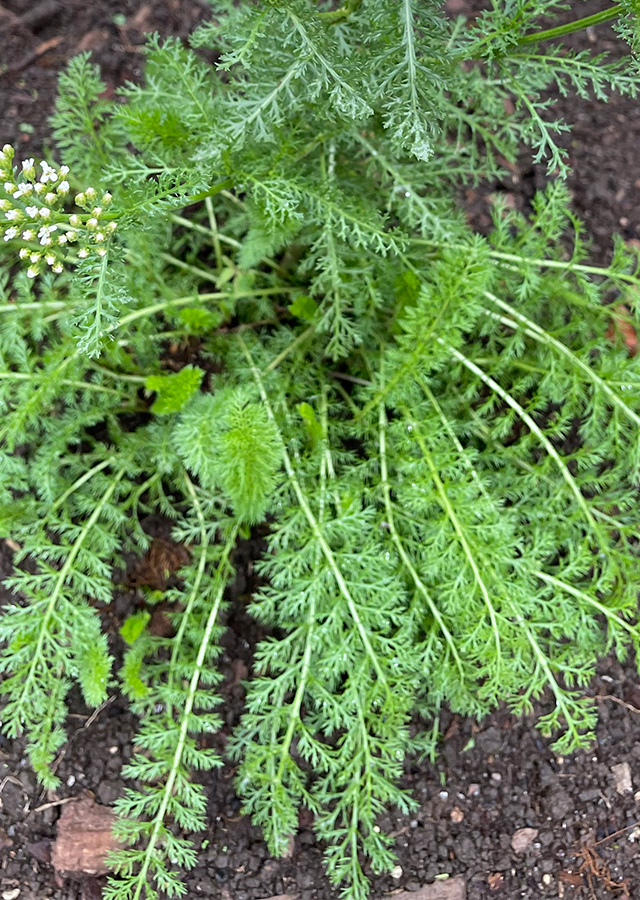
- Leaves alternate, sessile clasping the stem, green, compound, clustered at the stem base with smaller leaves above, veins pinnate, leaf structure lobed, deeply divided, up to 3-pinnatifid, lanceolate to linear shaped.
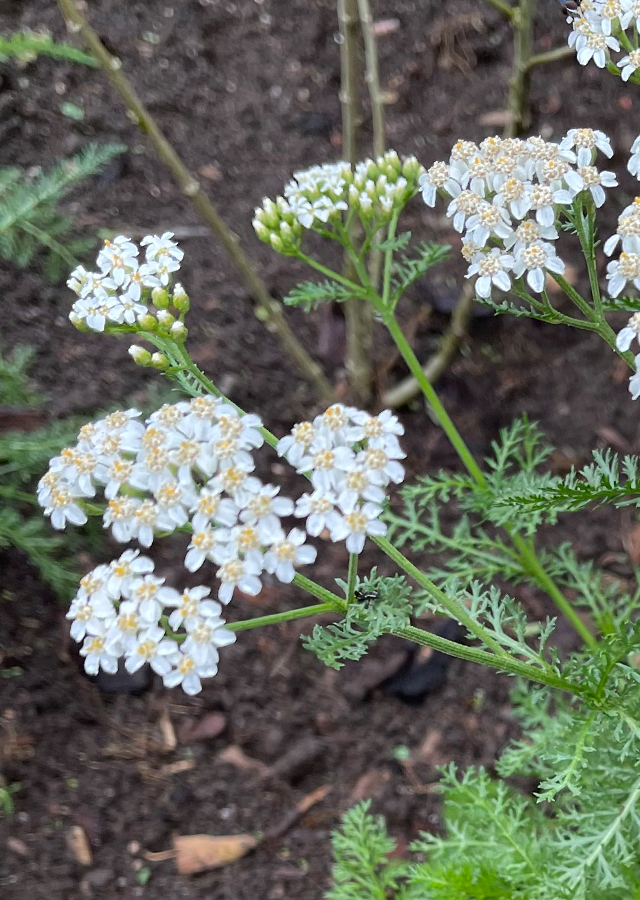
- Flowers compound, small, stalked, aromatic, with a corolla of five, color varying from white to pink, magenta, and red. The outer florets in each capitulum are usually 5-lobed, female, ligulate with roughly 3-dentate. The inner florets are hermaphrodite, 5-lobed, with a compressed corolla tube. Pistil protruding. Inflorescence forming an umbel.
- Fruit a compressed achene, small, oblong or ovate, without a pappus, brown.
- Seeds round, flat and black.
Cultivation
- Propagation is generative (seed) and vegetative (shoot cuttings, offshoots, or suckers).
- Seeds usually germinate within 1-3 months.
Chemical Content
Alkaloids (achilleine, achilletine, and moschatine), flavonoids (apigenin and luteolin-7-O-glucoside), flavone glycosides (mainly swertisin, vicenin-2 and -3, schaftoside and isoschaftoside), 6-methoxylated or di- and tri-methylated flavonols (such as pectolinarigenin, 3-methylbetuletol, and 3,6,4'-methylquercetagetin), polyynes, alkylamides, triterpenes, saponins, coumarins, tannins, essential oil (azulene, eucalyptol, camphor, alpha-terpineol, beta-pinene, α-pinene, 1,8-cineole, sabinene, myrcene, linalool, β-thujone, α-thujone, α-phellandrene, limonene, and borneol), aconitic acid, nuline, asparagine.
Benefits
Helps heal wounds, skin and mucous membrane inflammation, relieves itching, bruises, treats colds, fever, blocked sweating, digestive disorders (gastric ulcers, bloating, heartburn, colic, diarrhea), epilepsy, varicose veins, hemorrhoids, menstrual pain, kidney disorders, nervous disorders, stops bleeding in the lungs, kidneys and nose (nosebleeds), relieves rheumatism, toothache, headaches, earaches, lowers blood pressure, stimulates appetite, strengthens hair and prevents baldness, an abortifacient and emmenagogue. Has anti-inflammatory, antioxidant, and antimicrobial activity.
Simplisia
- Prepare an adequate amount of fresh yarrow leaves, wash clean with running water then drain.
- Sun-dry directly for several days or use an oven at 40°C until the moisture content reaches 10%.
- Grind using a blender until it becomes powder.
- Store the simplicia in a clean, airtight plastic or container.
Local Names
Godong sewu (Java), Komantin saebu (Madura).
Traditional Recipes
The following recipes reflect traditional knowledge passed down through generations, not a substitute for professional medical diagnosis or advice. Consult a healthcare provider before use.
1. Toothache
- Take fresh yarrow leaves and wash until clean.
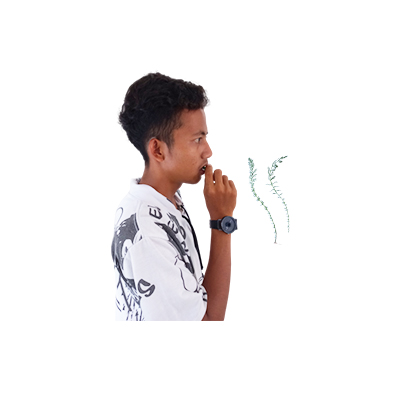
- Chew the leaves to treat toothache.

2. Earache
- Take fresh yarrow leaves and wash until clean.
- Soak in water for a while.
- Strain then drip the soaking water into the ear canal for earache.
Reference Sources
- Royal Botanic Gardens. Plants of the World Online: Achillea millefolium L. https://powo.science.kew.org/taxon/urn:lsid:ipni.org:names:2294-2. 02-03-2022.
- Stuartxchange. 2019. Philippine Alternative Medicine: Milfoil. http://www.stuartxchange.org/Milfoil.html. 02-03-2022.
- PROSEA. 2018. Achillea millefolium (PROSEA). https://uses.plantnet-project.org/en/Achillea_millefolium_(PROSEA).
- CAB International. 2022. Invasive Species Compendium: Achillea millefolium (yarrow). https://www.cabi.org/isc/datasheet/2636#toidentity. 02-03-2022.
- Useful Temperate Plants Database. 2021. Achillea millefolium. http://temperate.theferns.info/plant/Achillea+millefolium. 02-03-2022.