Acorus calamus L.
Summary
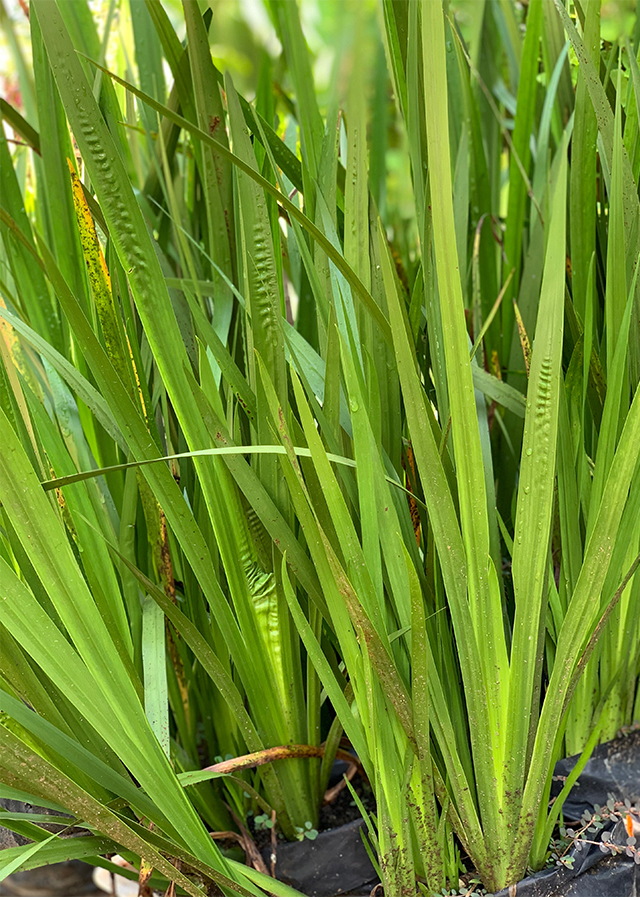
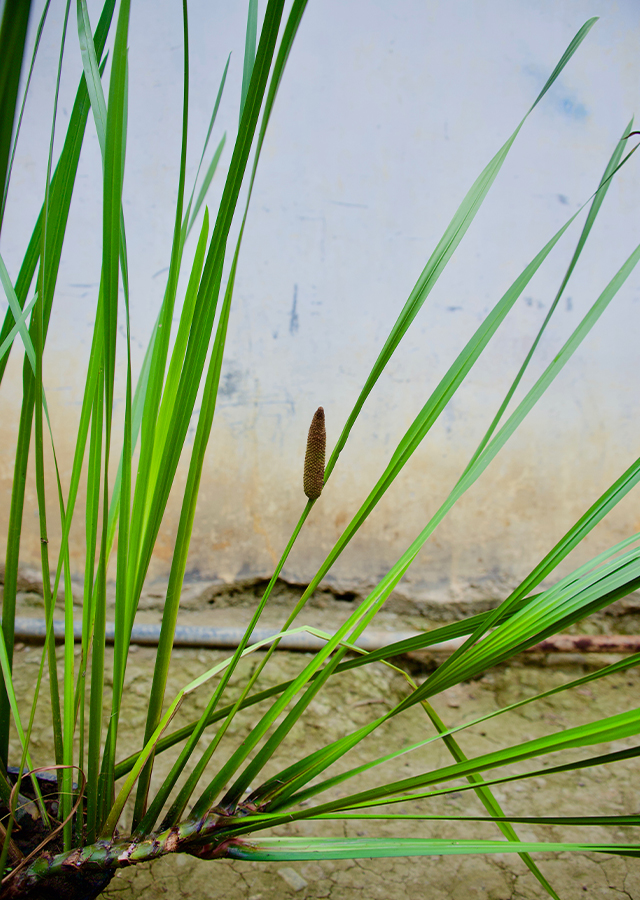
Dringo (Acorus calamus) is a herb up to 75 cm tall of the Acoraceae family, native to East Asia, including Mongolia and Siberia, as well as North America, later spreading around the world through spice trade routes. Recorded as used by at least 104 ethnic groups in Indonesia as a traditional remedy, its rhizome is also used to scent toothpaste and as a natural pesticide ingredient. For generations, dringo has been believed to relieve postpartum fever and nerve disorders such as epilepsy.
Agroecology
Dringo grows well from lowlands to mountains at elevations between 275-2,050 m above sea level, temperature 18-26 °C, pH 5.5-6.5, rainfall 700-2,000 mm/year. Generally suited to clay soil or light alluvial soil, and commonly found growing abundantly in rice fields and swamps.
Morphology
- Roots rhizomatous, light brown, somewhat block-like and hard with internodes 1-3 cm long, heavily branched rhizome. The interior is white but turns pink when dried.
- Stem short, rhizome-shaped.
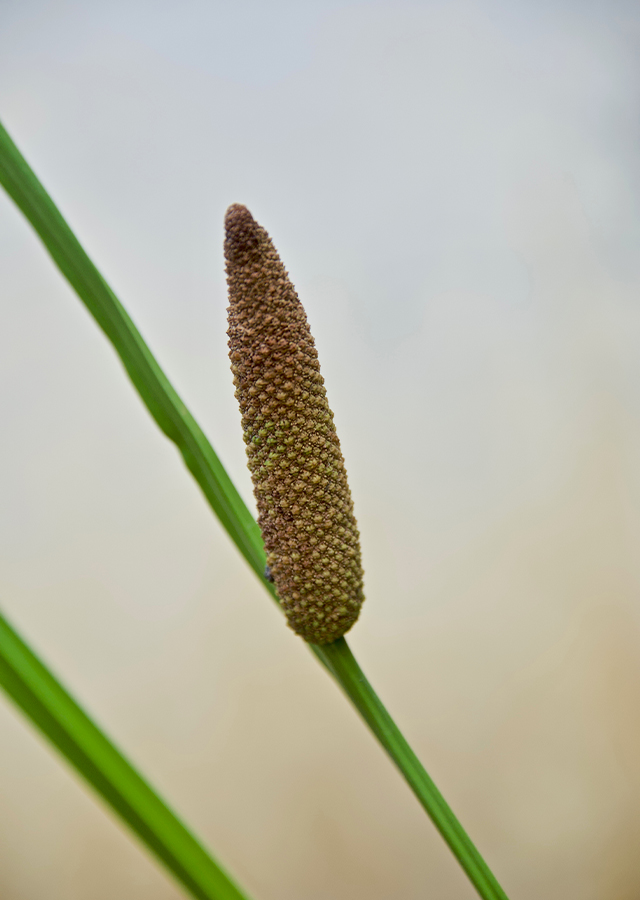
- Leaves simple, with compound flowers.
- Fruit top-shaped, mucilaginous, and falls when ripe.
Cultivation
- Propagated using clump divisions or rhizome cuttings.
- Propagation can also be done using seeds, but this plant rarely forms seeds.
Chemical Content
- Rhizome: essential oil, glycosides, asarone, isocalamendiol, flavonoids, alkaloids, polyphenols, acoretin, choline, calameon, epi-isocalamendiol, shyobunone, trimethylamine, saponins, thiamine.
- Leaves: essential oil, β-asarone, saponins, flavonoids.
Benefits
Relieves postpartum fever and inflammation; addresses nerve disorders (epilepsy, autism), rheumatism, gallstones, and malaria.
Simplisia
- Cut off the rhizome tip, then wash with clean water until no mud remains. Remove fibrous roots. Then drain and weigh.
- Dry under direct sunlight on a mat or other perforated surface until dry. Store the dried rhizome in a closed, airtight container.
Local Names
Jeurunger (Aceh), Jarango (Batak), Jarianggu (Minangkabau), Jerango (Gayo), Daringo (Sunda), Dlingo (Central Java), Ai wahu (Ambon).
Traditional Recipes
The following recipes reflect traditional knowledge passed down through generations, not a substitute for professional medical diagnosis or advice. Consult a healthcare provider before use.
1. Epilepsy/Seizures
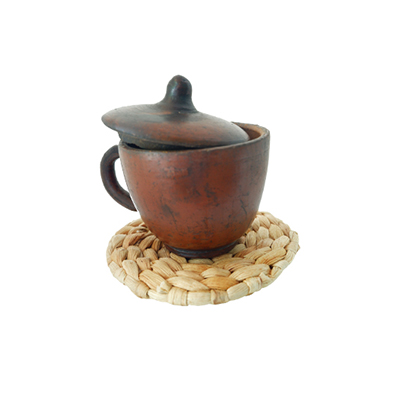
- Grate a finger-joint-sized piece of dringo rhizome, add 2 tbsp boiled water. Squeeze and strain. Add 1 tsp honey and mix well.
- Drink twice a day in equal amounts.
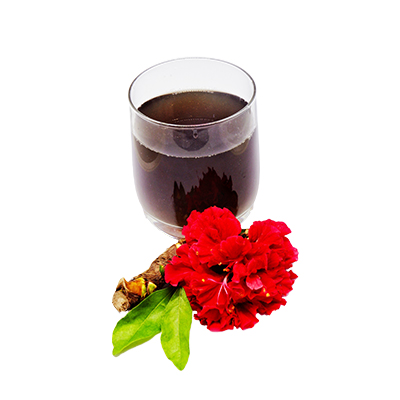
2. Postpartum Fever
- Prepare ½ finger-joint of dringo rhizome, 4 hibiscus flowers, ¼ handful of serut leaves, 1 cup water, salt.
- Wash all ingredients, then mash. Add boiled water and a tamarind-seed-sized amount of salt. Squeeze and strain.
- Drink half a cup twice a day.
Reference Sources
- Destryana A, Ismawati I. 2019. Etnobotani dan penggunaan tumbuhan liar sebagai obat tradisional oleh masyarakat suku Madura – J. Food Technol. and Agroindustry 1(2): 1-8.
- Gaw LJ, Jäger AK, Staden JV. 2001. Isolation of β-asarone, an antibacterial and anthelmintic compound, from Acorus calamus in South Africa. South Afric. J. Bot. 68: 31-35
- Phongpaichit S, Pujenjob N, Rukachaisirikul V, Ongsakul M. 2005. Antimicrobial activities of the crude methanol extractof Acorus calamus Linn. Songklanakarin J. Sci. Technol. 27(2): 518-523
- Kim H, Han TH, Lee SG. 2009. Anti-inflammatory activity of a water extract of Acorus calamus L. leaves on keratinocyte HaCaT cells. Journal of Ethnopharmacology 122: 149–156.