Actinidia chinensis var. deliciosa (A.Chev.) A.Chev.
Summary
Actinidia chinensis var. deliciosa or kiwi is native to the mountains of southern and central China, where this fruit is known as 'yangtao' and has been cultivated for hundreds of years before spreading to New Zealand, Italy, and Chile, which are now its main producers. Besides being rich in vitamins C, E, and B, kiwifruit contains the enzyme actinidin, useful for tenderizing meat, and research shows its potential in supporting cardiovascular health.
Agroecology
Actinidia deliciosa is a fairly hardy plant, tolerating temperatures down to about -20°C when fully dormant, although young growth in spring is very vulnerable to damage from late frost and can be killed back at -2°C. The plant requires a frost-free growing season of 6-8 months. It also requires 600-1,100 hours of winter chilling below 7°C and a long, warm summer to ripen the fruit. Prefers healthy, acidic loamy soil, dislikes alkaline soil and becomes chlorotic at pH 6 or higher. Tolerates a pH range of 5.5 to 7.3. Prefers a sheltered position and succeeds in semi-shade, but full sun is best for fruit production.
Morphology
- Stem strong and woody.
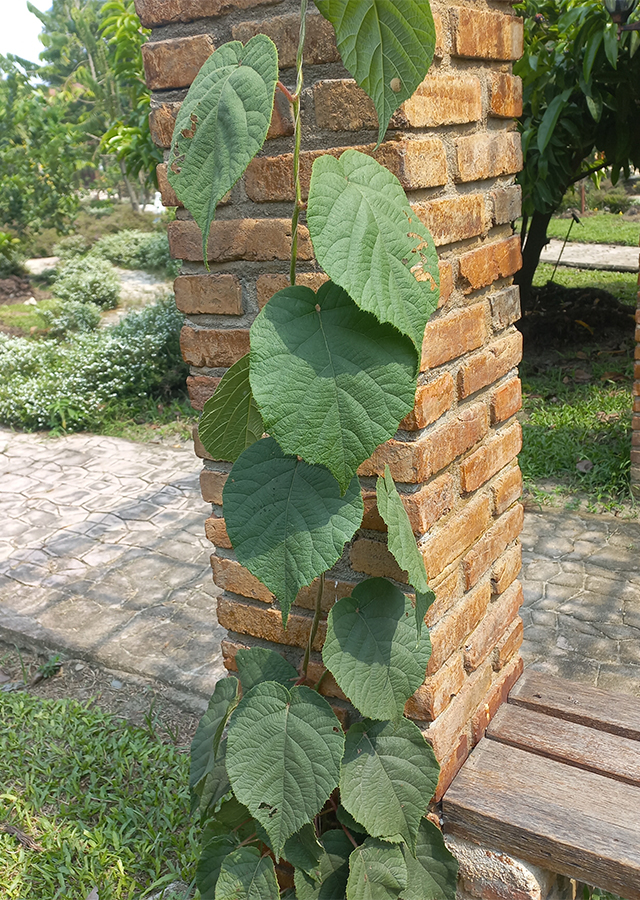
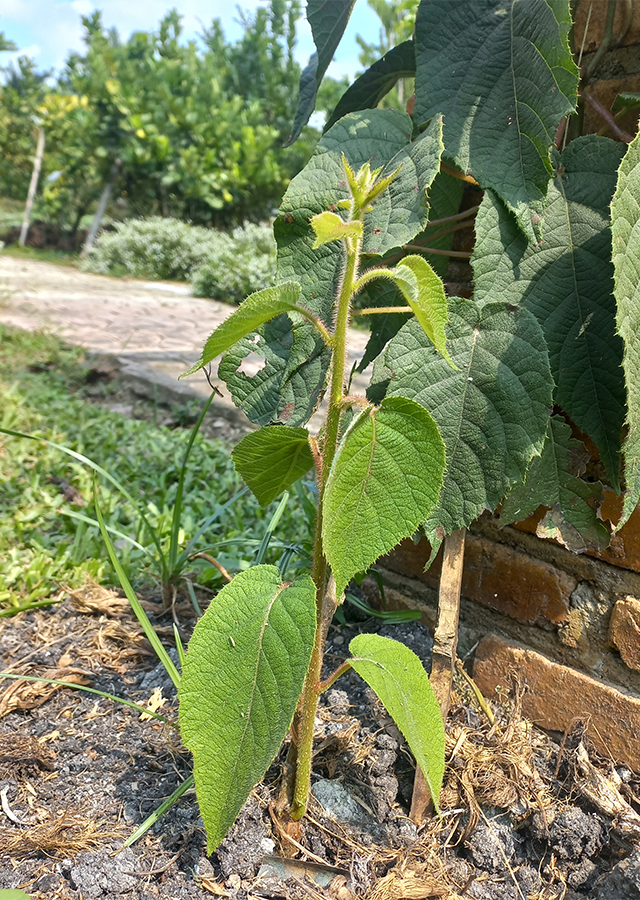
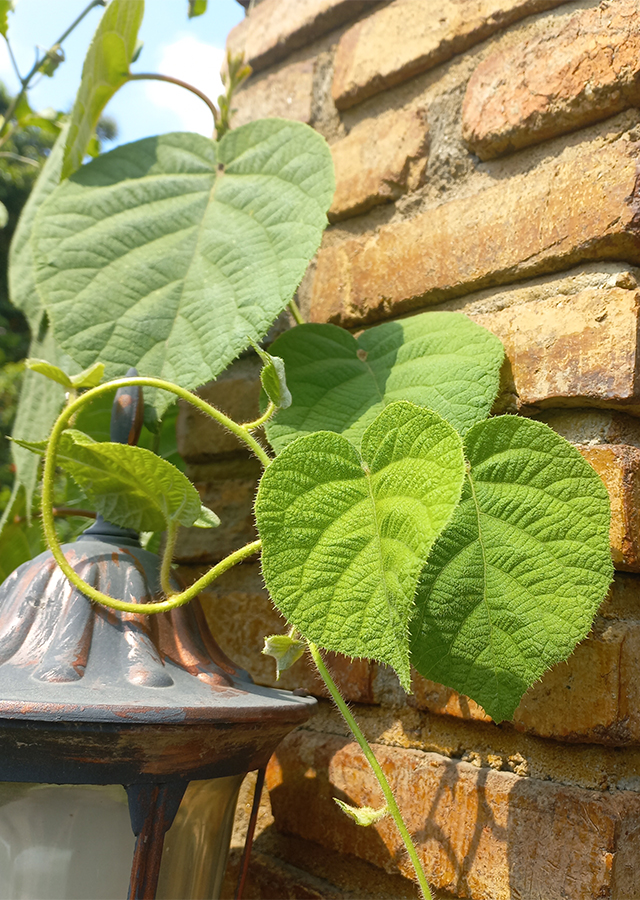
- Leaves large green, roughly heart-shaped, up to 25 cm, turning reddish in autumn.
- Flowers cream white to yellow, slightly fragrant and up to about 5 cm wide. They are produced in the leaf axils in May-June and are pollinated by bees. Female plants bear fruit if pollinated.
- Fruit the well-known fruit is a brown berry, oval shaped, up to 8 cm long, covered with fine hairs. The edible flesh is bright green with many small black seeds.
Cultivation
Kiwi plant propagation is done generatively with seed. Sow kiwi seeds on a sowing medium of loose soil or humus. Leave for 10 days and make sure the seedlings are protected from direct sunlight. Once leaves appear on the shoot, the kiwi seedling is ready to be planted in the field.
Chemical Content
Triterpenoids, saponins, and phenolic compounds (flavonoids, polyphenols, anthraquinones, and coumarins) varying in structure.
Benefits
Treatment of diseases such as hepatitis, edema, rheumatoid arthritis, stomach cancer, asthma, healing of acute burns, treating acne and dark circles under the eyes, breast cancer, liver and esophageal cancer, and removal of stones in the urinary tract. The fruit, roots, and stems have diuretic, pyretic, and sedative properties. Has antitumor, antioxidant, anti-inflammatory, immunoregulatory, hypolipidemic, antidiabetic, and cardiovascular protective activity.
Local Names
Informasi tidak ditemukan. Butuh penelusuran lebih lanjut.
Traditional Recipes
The following recipes reflect traditional knowledge passed down through generations, not a substitute for professional medical diagnosis or advice. Consult a healthcare provider before use.
1. Acne
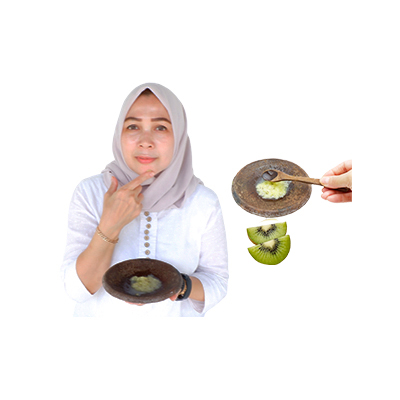
- Prepare an adequate amount of kiwi fruit, wash until clean, peel and take the flesh.
- Mash the kiwi flesh and add one spoonful of lemon juice.
- Let it dry for about half an hour then rinse with warm water.
- Do this for three days. You will see the difference, acne will be reduced and the marks will fade.

2. Reduces dark circles
- Take an adequate amount of kiwi fruit, wash until clean, peel and take the flesh.
- Grind until it becomes a paste.
- Apply as a poultice on the eyes.
- Regular use of kiwi fruit extract on the eyes is also believed to reduce many other eye problems.
Reference Sources
- Royal Botanic Gardens. Plants of the World Online: Actinidia chinensis var. deliciosa (A.Chev.) A.Chev.. https://powo.science.kew.org/taxon/urn:lsid:ipni.org:names:60458895-2#image-gallery. 16-05-2022.
- Useful Temperate Plants. 2021. Actinidia chinensis. http://temperate.theferns.info/plant/Actinidia+chinensis. 16-05-2022.
- Vivek Kumar Raman, Sunil Kumar Chauhan dan Arijit Chaudhuri. Actinidia deliciosa: A Nature’s Boon to Modern Pharmacotherapeutics. Applied Pharmaceutical Science and Microbiology. https://www.researchgate.net/publication/344545197_Actinidia_Deliciosa_A_Nature's_Boon_to_Modern_Pharmacotherapeutics.
- Xirui He, Jiacheng Fang, Xufei Chen, Zefeng Zhao, Yongsheng Li, Yibing Meng dan Linhong Huang. 2019. Actinidia chinensis Planch.: A Review of Chemistry and Pharmacology. Front. Pharmacol.. https://doi.org/10.3389/fphar.2019.01236.