Adenanthera pavonina L.
Summary
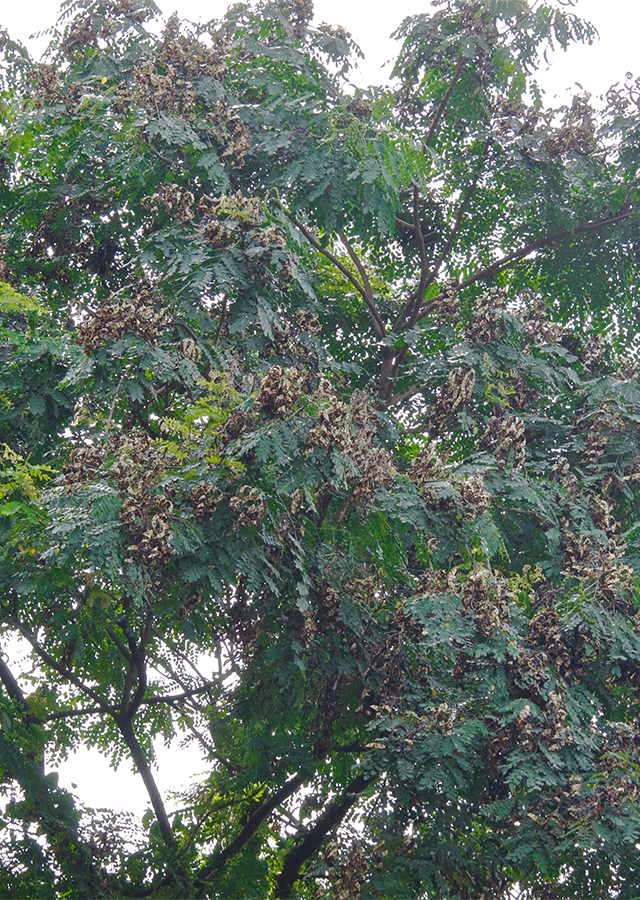
Saga (Adenanthera pavonina) is a tree 10-15 meters tall of the Fabaceae family that grows naturally from Sri Lanka and Southern Myanmar to Northern Australia. Its hard, beautifully textured wood is used for furniture, while its protein-rich seeds are processed into tempeh, soy sauce, and plant-based milk, though toxic if eaten raw. Traditionally, saga is also believed to relieve tonsillitis, eye inflammation, and gout.
Agroecology
Grows well in tropical and subtropical lowlands up to an elevation of 600 m above sea level with an annual temperature of 22-28 °C, rainfall between 3,000-5,000 mm/year, and favors full sun. Generally found in rocky areas, brackish areas, or alang-alang grassland. Tolerant of various soil conditions and topography, both flat and steep.
Morphology
- Trunk has grayish dark brown bark, soft-textured interior.
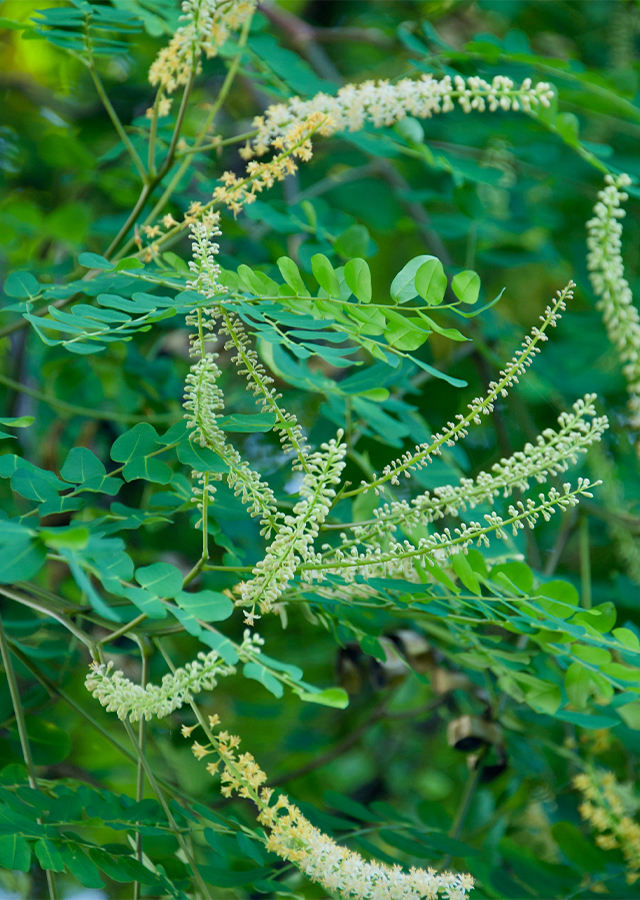
- Leaves light green, evenly pinnate compound, alternately arranged, leaflets stalked in 2-6 pairs, leaf blades 6-12 pairs, petiole length 25 cm.
- Flowers small, yellowish, corolla with 4-5 petals, 8-10 stamens.
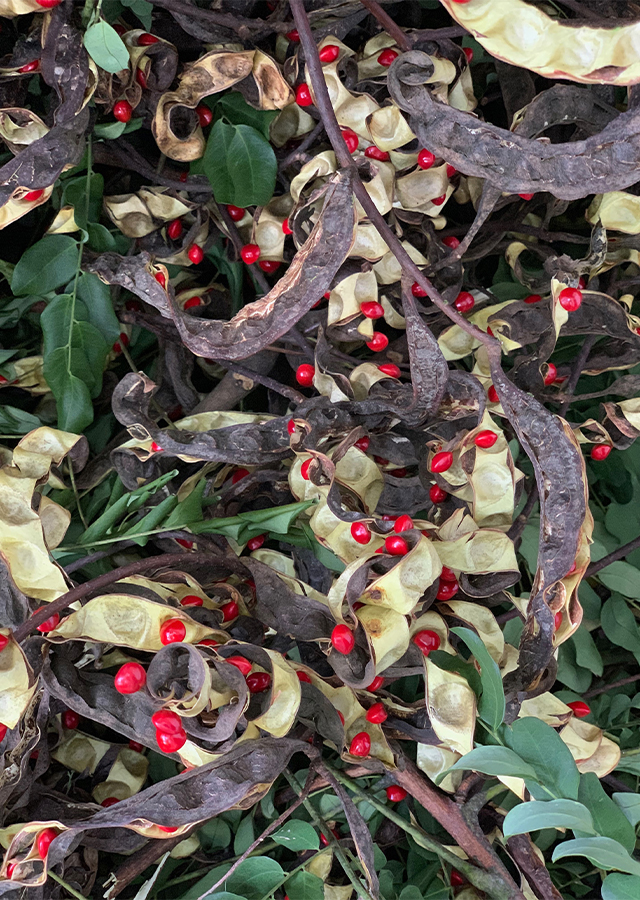
- Fruit green turning blackish-brown and splits open when mature, resembling stink beans (pod type) containing small seeds. Each pod contains 10-12 seeds.
- Seeds blunt triangular, hard, and glossy red.
Cultivation
- Propagated generatively (by seed): soak in water for 10-15 minutes, then plant directly in soil.
- Propagated vegetatively (by cuttings): cut twigs 20-30 cm long.
Chemical Content
Abrin, flavonoids (ampelopsin, butein, dihydrorobinetin and robinetin), glycyrrhizin, alkaloids, polyphenols, terpenoids (echinocystic acid and oleanolic acid), saponins.
Benefits
Treats tonsillitis, eye inflammation, canker sores, hoarseness or sore throat, dry and phlegmy cough in children; promotes healthy hair; treats gout; used to cleanse wounds.
Simplisia
- Prepare a sufficient amount of saga seeds and wash thoroughly under running water, drain.
- Air-dry the seeds without direct sun exposure for several days. Grind the dried seeds into a powder.
- Store the dried material in a clean, airtight container. Place in a well-ventilated room.
Local Names
Segawe sabrang, Kitoke laut, Saga telik (Java).
Traditional Recipes
The following recipes reflect traditional knowledge passed down through generations, not a substitute for professional medical diagnosis or advice. Consult a healthcare provider before use.
1. Cleansing Wounds
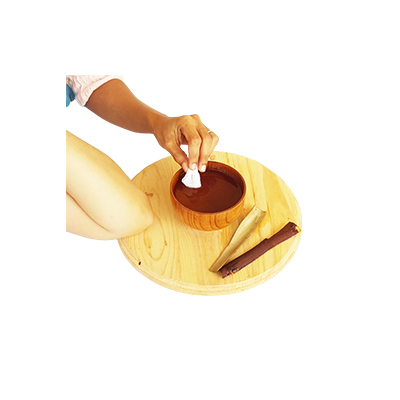
- Wash and cut into small pieces 20 g of bark.
- Boil in 2 cups of water for 15 minutes, let cool, and strain.
- Use the strained liquid to clean the wound.
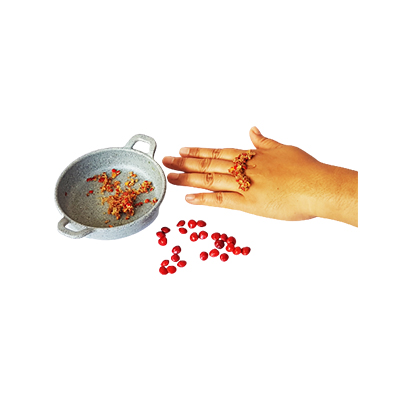
2. Gout
- Prepare a sufficient amount of saga seeds.
- Wash thoroughly under running water.
- Pound until fine.
- Apply to the part of the body affected by gout.
Reference Sources
- Badan penelitian dan Pengembangan Kehutanan. 2013. Seri Teknologi Perbenihan Tanaman Hutan. Saga Pohon. hhttps://www.forda-mof.org/files/Seri_Teknologi_Perbenihan_SAGA_POHON-web.pdf . 26-06- 2020.
- Indianmedicinalplants.info. Adenanthera pavonina Medicinal Uses Morphology Images Side Effects Pharmacology. https://indianmedicinalplants.info/herbs/index.php/a/1331-adenanthera-pavonina-medicinal-uses-morphology-images-side-effects-pharmacology 26-06-2020.
- Sirait Midian dkk.1985. Cara Pembuatan Simplisia. Departemen Kesehatan Republik Indonesia, Jakarta 66.