Adiantum raddianum C.Presl
Summary
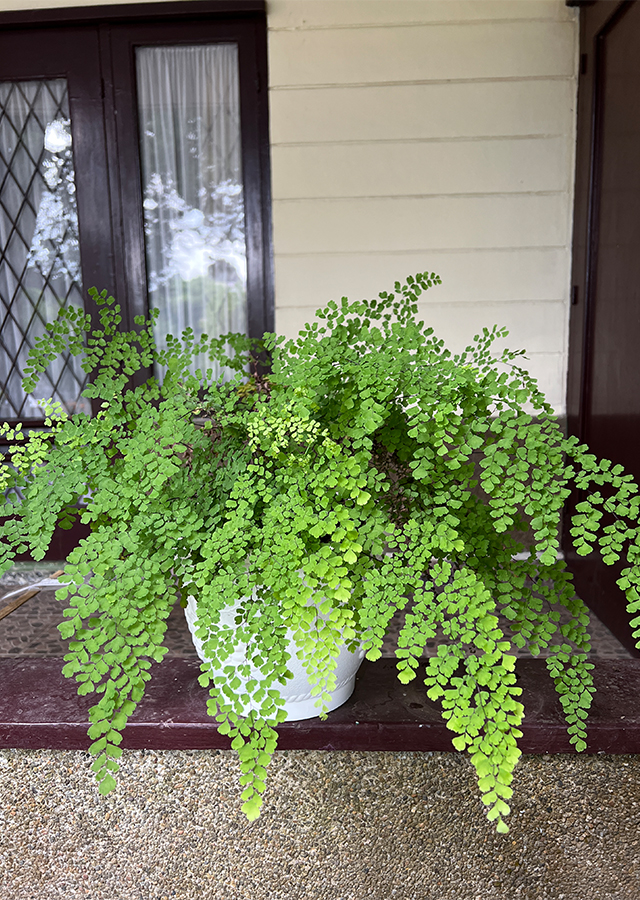
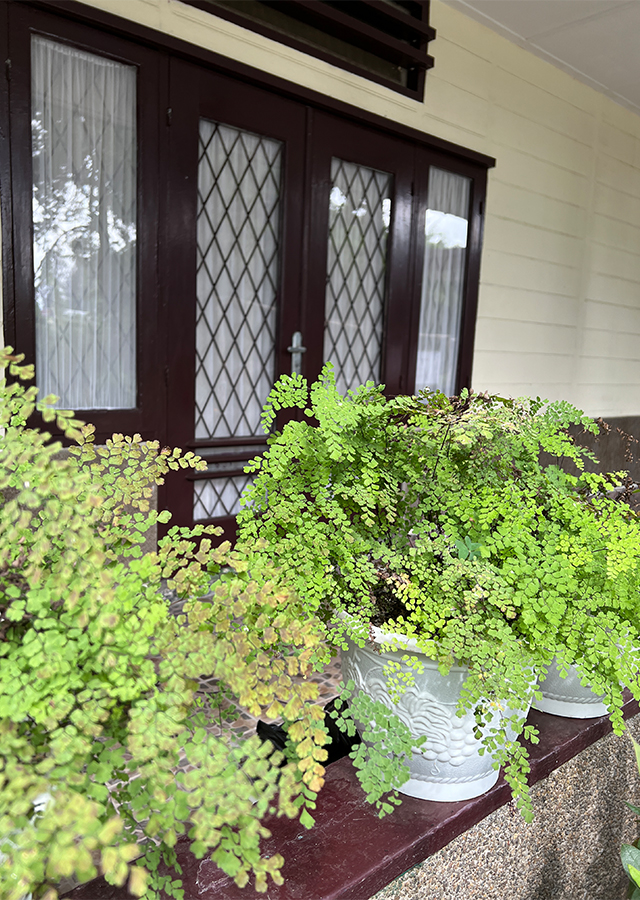
Delta maidenhair fern (Adiantum raddianum) is a fern up to 0.6 meters tall from the Pteridaceae family native to tropical South America, now distributed in Asia, Africa, and the Pacific as a popular ornamental. Several South American ethnic groups use delta maidenhair fern in traditional medicine due to its high bioactive filicene content. Delta maidenhair fern is traditionally used as an analgesic, expectorant, and diuretic.
Agroecology
Delta maidenhair fern is usually found at elevations from 0 to 4,000 m asl. In Hawaii, it grows on all the major islands and rises from sea level to 4,400 m asl. In the Azores it is found on all islands except Terceira and Corvo and rises to 400 m asl. Usually delta maidenhair fern is grown as an ornamental, where it seems to respond best in bright indirect light including diffused sunlight, but dislikes direct sunlight. If grown in full shade, the foliage will lose its vigor. Use moist but well-drained potting soil. The roots must not be allowed to dry out. The plant needs a very humid atmosphere. Avoid placing the plant in windy areas or locations near heating vents. The preferred medium is crumbly/porous, black in color like compost, with a pH of 6-7.
Morphology
- Roots fibrous.
- Rhizome short-creeping and irregularly branching, up to 50 mm long and about 2 mm wide. The rhizome and stipe base are covered with dark brown scales less than 1 mm long.
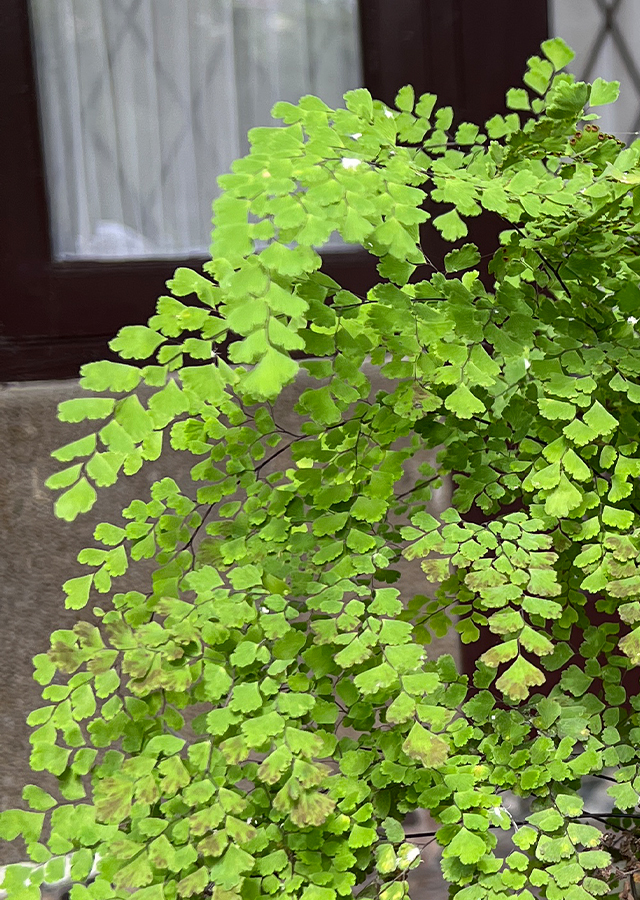
- Leaves (fronds) arching to upright, 10-50 cm long and 6-20 cm wide, and triangular shaped. The stipe and rachis are reddish-brown to blackish and glossy. The stipe is usually longer than the lamina. The lamina is 3-4-pinnate, with fine, herbaceous final segments up to 1 cm wide. The final segments are wedge-shaped and have a thin, red-black stalk. Sterile leaf segments, if present, are larger than the fertile ones. Sporangia clusters (sori) are 'U'-shaped and arranged either along the vein margin or at its tip and are less than 4 mm wide. Each sorus is covered with a pale or whitish membrane (indusium).
Cultivation
The easiest way to propagate delta maidenhair fern is by separating its offshoots. Large, sturdy offshoots can be separated and planted in their own pots. Like other ferns, delta maidenhair fern can also be propagated using spores. Fertile fronds with ripe sporangia are incubated for a day and the released spores are scattered on sterile, moist medium then covered with clear plastic. The medium container is then placed in a tray containing water up to 1 cm from the base of the pot to maintain humidity. After 2 weeks the spores will germinate and develop into a prothallus (heart shape). Once it has grown into a fully formed fern, the delta maidenhair fern can be moved to an individual pot so it can grow better.
Chemical Content
Triterpenes (filicene and filicenal), isohopane and neohopane [Neohop-12-ene; neohop-18-en-12a-ol; 13-epineohop-18-en-12a-ol; neohop-13(18)-en-19a-ol; neohopa-11,13(18)-diene], norhopanes (trisnorhopane; isoglaucanone; glaucanol B acetate; 21-hydroxy-30-norhopan-22-one; isoadiantol B), fernane [fern-9(11)-en-25-ol; fern-9(11)-ene; fern-7-en-25-ol; 7-fernene; 25-norfern-7-en-10b-yl formate; 7α,8α-epoxyfernan-25-ol; 7β,25-epoxyfern-8-ene; 7β,25-epoxyfern-9(11)-en-8α-ol], adiane, and filicane [adian-5-en-3α-ol; adian-5-en-25-ol; filicenal; 4,23-bisnor-3,4-secofilic-5(24)-en-3-al; and 4,23-bisnor-3,3-dimethoxy-3,4-secofilic-5(24)-ene], flavonoids (quercetin, kaempferol, 3-glucuronide, astragalin).
Benefits
Its most common traditional use is as an analgesic, expectorant, and diuretic, as well as for treating digestive problems, colds, and treating mouth blisters.
Simplisia
- Prepare an adequate amount of fresh delta maidenhair fern leaves, wash clean with running water.
- Dry under the sun or with an oven at 40°C until the moisture content reaches 10%.
- Grind using a blender until it becomes powder.
- Store in a clean, airtight container.
Local Names
Informasi tidak ditemukan. Butuh penelusuran lebih lanjut.
Traditional Recipes
The following recipes reflect traditional knowledge passed down through generations, not a substitute for professional medical diagnosis or advice. Consult a healthcare provider before use.
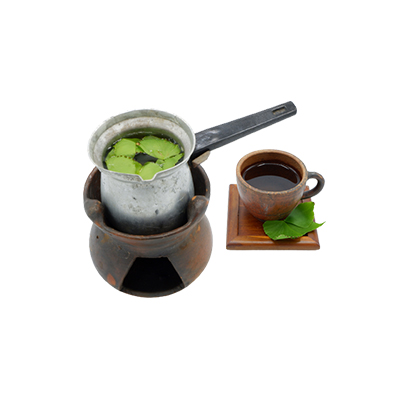
1. Colds
- Take an adequate amount of delta maidenhair fern leaves and wash until clean.
- Boil until it boils.
- Let it cool to warm/cold.
- Strain then drink.
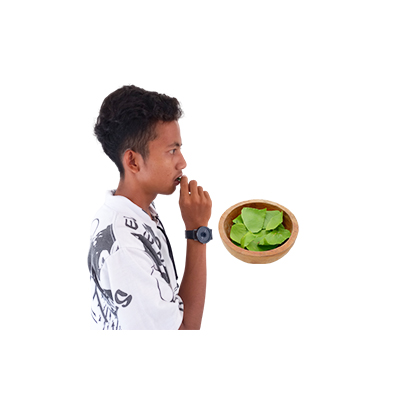
2. Treats mouth blisters
- Take an adequate amount of delta maidenhair fern leaves and wash until clean.
- Chew the leaves to treat mouth blisters.
Reference Sources
- Royal Botanic Gardens. 2021. Adiantum raddianum C.Presl. https://powo.science.kew.org/taxon/urn:lsid:ipni.org:names:17012580-1#descriptions. 05-03-2021.
- CAB International. 2019. Adiantum raddianum (delta maidenhair fern). https://www.cabi.org/isc/datasheet/3237. 05-03-2022.
- Flora Fauna Web. 2022. Adiantum raddianum C. Presl. https://www.nparks.gov.sg/florafaunaweb/flora/3/4/3497. 05-03-2022.
- Rafael Corrêa Prota dos Santos ReinaldoIvanilda Soares FeitosaAugusto César Pessôa SantiagoUlysses Paulino Albuquerque. 2018. Adiantum raddianum C. Presl.. Medicinal and Aromatic Plants of South America pp 89-96. Brazil. DOI: 10.1007/978-94-024-1552-0_6.
- Wenni S. Lestari. 2011. Suplir Tanaman Paku dengan Banyak Potensi. Warta Kebun Raya 11(1). UPT Balai Konservasi Tumbuhan. Kebun Raya "Eka Karya" Bali.