Aegle marmelos (L.) Correa
Summary
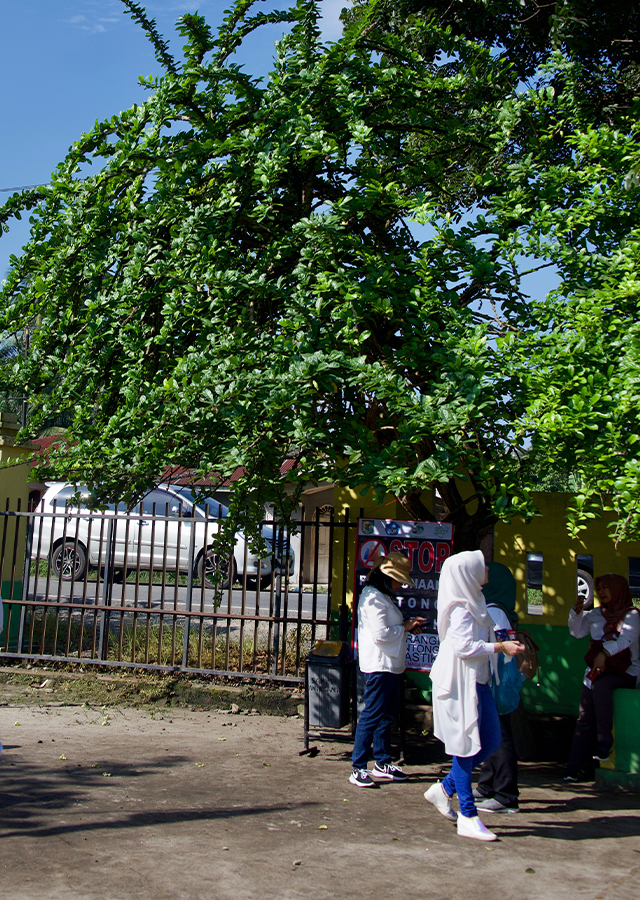
Kalabasa or maja (Aegle marmelos) is a shrub or small tree 10-15 meters tall from the Rutaceae family spread from Assam to the Western Himalayas. In India, Bangladesh, and Sri Lanka, its fruit is an important wedding item because it is considered an incarnation of Lord Shiva, used by peoples of the Indian subcontinent for over 5,000 years. Kalabasa is traditionally used in Ayurveda and Siddha to treat diarrhea, dysentery, and diabetes.
Agroecology
This tree can grow in tropical and subtropical regions, tolerant of harsh conditions, including extreme temperatures. It can grow from sea level to an elevation of 1,200 m asl, where average annual temperatures can range from -6 to 48 °C. Best in fertile, well-drained soil, but can tolerate poor soil and alkaline conditions. Grows well in swampy, alkaline or rocky soil with a pH range of 5 to 8. The plant is very drought-tolerant.
Morphology
- Stem woody (ligneous), branched, round, thorny, and yellowish-white.
- Leaves grow alternately, composed of 3, sometimes 5 oblong leaflets, 4-10 cm long and 2-5 cm wide. Terminal leaflets have a long petiole.
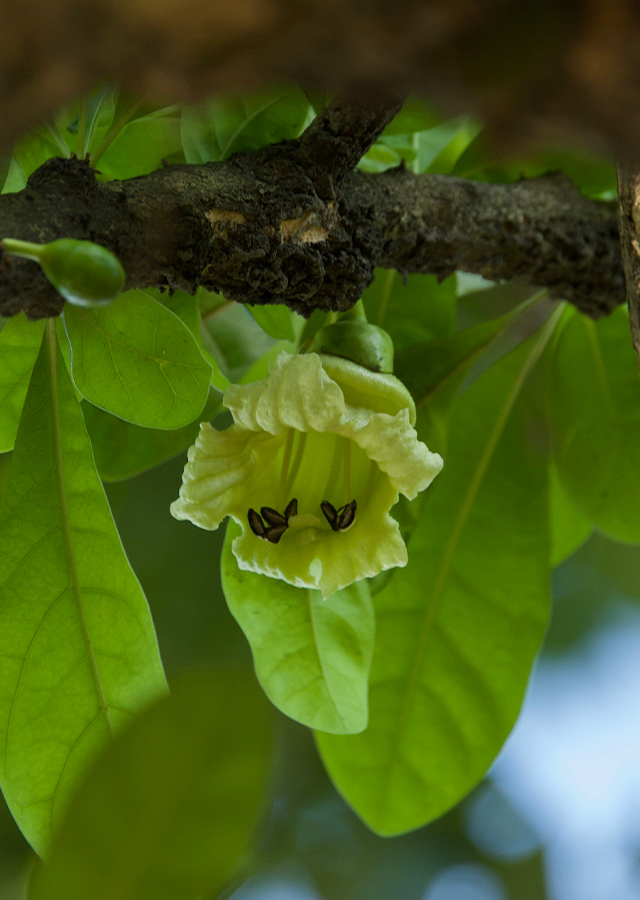
- Flowers yellowish-white or greenish and fragrantly scented.
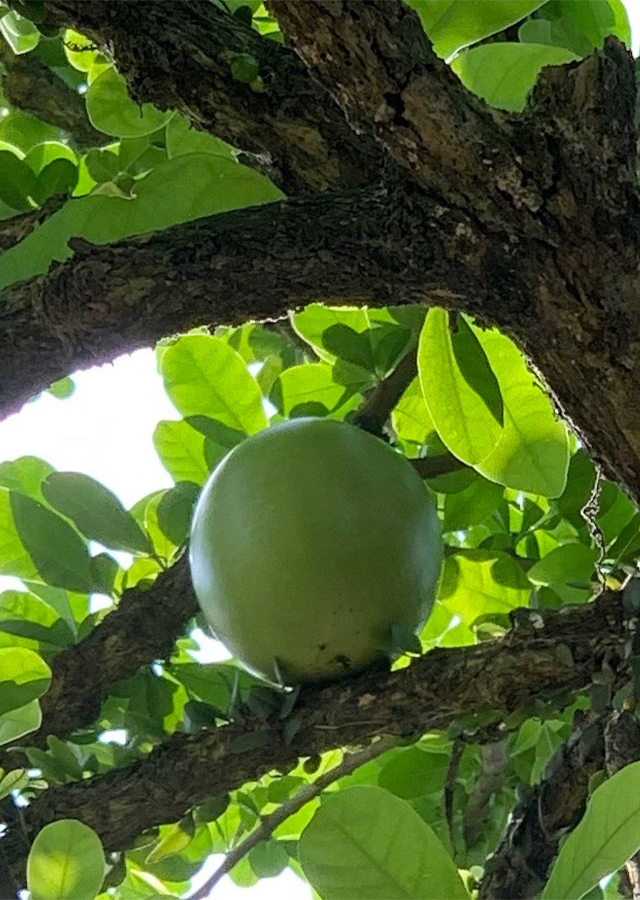
- Fruit about 5-20 cm in diameter, ovate or round. The fruit has a skin that turns pale yellow when ripe. The flesh is sweet, thick, aromatic, jelly-like, orange colored.
- Seeds numerous, oblong and flattened shape.
Cultivation
Maja propagation is generative (seeds) and vegetative (grafting).
Chemical Content
Alkaloid, cardiac glycoside, terpenoid, saponin, tannin, flavonoid, steroid, essential oil, sitosterol, marmelle oil, pectin, phenol, limonene, (E)-β-ocimene, germacrene B.
Benefits
Hair oil substitute, for hypochondriasis, melancholy, addresses heart palpitations, nasal mucous membrane inflammation, asthma, as a laxative, fever-reducing remedy, eye lotion, treats diarrhea, dysentery, dyspepsia, prevents and treats hemorrhoids, tuberculosis, gripping pain in the loin, diabetes, nausea remedy.
Simplisia
- Prepare fresh kalabasa/maja leaves as needed and wash with clean water.
- After clean, drain to remove excess wash water.
- Dry by air-drying in a place protected from sunlight.
- Store in a clean, airtight container.
Local Names
Bilak (Malay/Sumatra), Maja, Modjo, Mojo legi (Java), Maos (Madura) and Kabila (Nusa Tenggara).
Traditional Recipes
The following recipes reflect traditional knowledge passed down through generations, not a substitute for professional medical diagnosis or advice. Consult a healthcare provider before use.
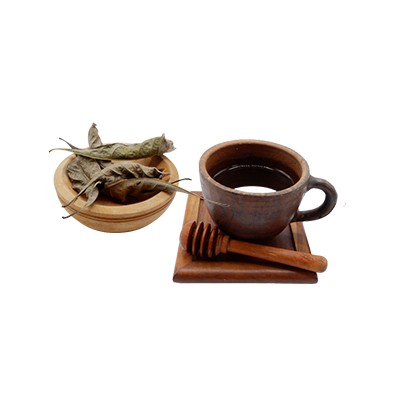
1. Asthma
- Take 5 g dried maja leaves.
- Steep with a glass of boiling water.
- Let warm and add 1 teaspoon of honey.
- Drink twice a day.
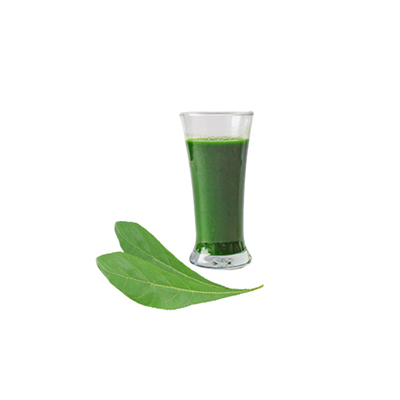
2. Diabetes
- Prepare 100 g leaves and a cup of boiled water.
- Blend both ingredients until smooth.
- Strain, then drink once a day for 3 days as a diabetes treatment.
Reference Sources
- Royal Botanic Gardens. Pants of the World Online: Aegle marmelos (L.) Corrêa. http://www.plantsoftheworldonline.org/taxon/urn:lsid:ipni.org:names:770819-1. 19-10-2021.
- Useful Tropical Plants. 2021. Aegle marmelos. https://tropical.theferns.info/viewtropical.php?id=Aegle+marmelos. 19-10-2021.
- Stuartxchange. 2018. Phiippine Medicinal Plants: Bael. http://stuartxchange.com/Bael.html. 19-10-2021.
- Flora Fauna Web. 2021. Aegle marmelos. https. http://www.nparks.gov.sg/FloraFaunaWeb/Flora/3/2/3292. 19-10-2021.
- Latifatoel Chilmi. 2020. Optimasi Random Amplified Polymorphic DNA (RAPD) Pada Karakterisasi Molekular Maja (Aegle marmelos (L.) Corr.) di Kabupaten dan Kota Mojokerto. Skripsi. Universitas Islam Negri Sunan Ampel. Surabaya. http://digilib.uinsby.ac.id/43034/2/Latifatoel%20Chilmi_H71216032.pdf. 19-10-2021.