Aeschynanthus albidus (Blume) Steud.
Summary
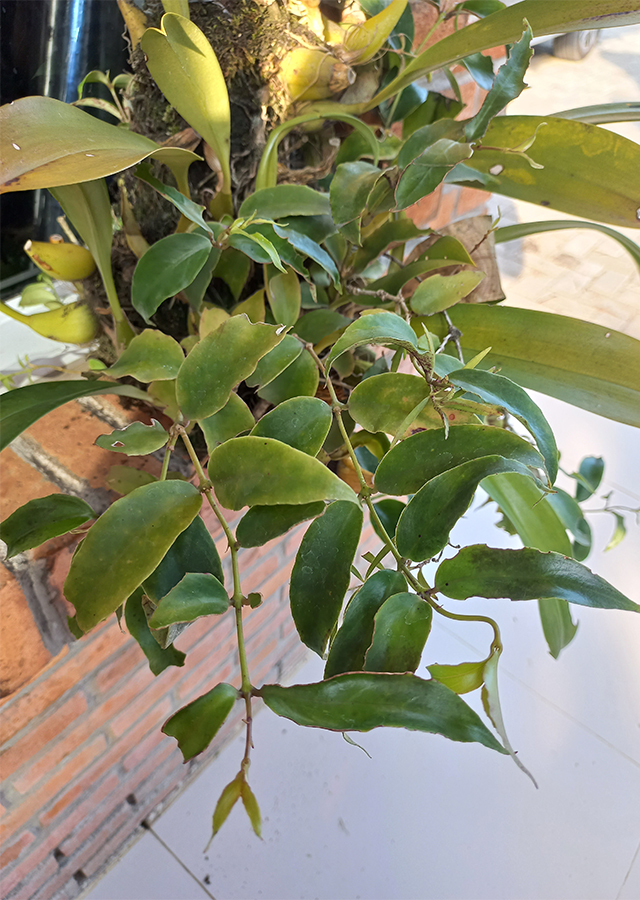
Situndal gara (Aeschynanthus albidus) is an epiphytic climbing plant from the Gesneriaceae family distributed from Peninsular Malaysia to Sumatra, Java, and Kalimantan. Its uniquely shaped flowers make it a popular yard ornamental. The Karo people traditionally use situndal gara leaves to treat cancer and as an ingredient for oil concoctions.
Agroecology
Situndal gara can be found growing at elevations from lowlands up to 1,440 m asl and sometimes up to 1,520 m asl. Recorded habitat types include mixed dipterocarp forest, near rivers, and lowland freshwater swamp forest. Its growth favors shaded conditions with partial shade.
Morphology
- Roots taproot.
- Stem usually trailing, green and purplish, sapless, round shaped, rough surface, hairless.
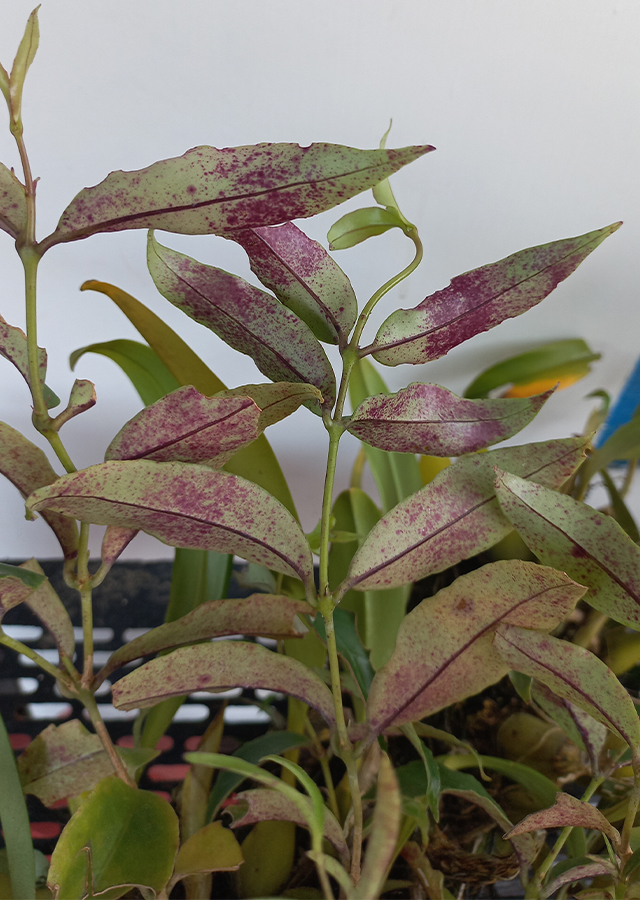
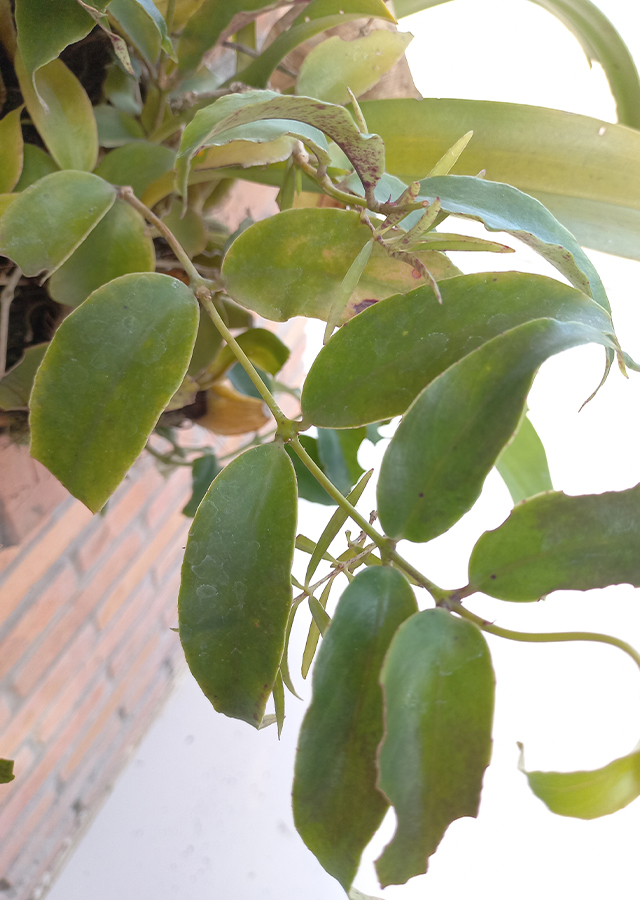
- Leaves simple, oppositely arranged, blade obovate, elliptic or ovate shaped, 2.3-13.7 × 1.1-5.5 cm in size, somewhat thick and fleshy in texture, base rounded to wedge-shaped, margin entire, apex tapering, surface smooth, dull green above and dark reddish purple below. Short-stalked.
- Flowers arranged in inflorescences with 1 to 5 flowers, arising from the tip or leaf axil, with single symmetry. Flower has a calyx with a short tube at the base, deeply notched, varying from green to entirely blackish red, corolla forming a slightly curved tube, total length ranging 1.6-2.9 cm, outer side green or yellowish green, corolla lobes green or green with a somewhat blurred purplish brown midline, on the inner side with various patterns, lobe tips rounded, sparsely hairy. Stamens four and longer than the corolla tube, with one additional sterile stamen, pistil with a superior ovary, stalk cream or green colored, head pale red. Short-stalked.
- Fruit a cylindrical capsule 11.5-40 cm long and 2.5-4 mm wide, brown when mature.
- Seeds have long thread-like hairs at one end, and at the hilar end.
Cultivation
Propagation is generative (seed) and vegetative (stem cuttings)
Chemical Content
Information not found. Further research is needed.
Benefits
Treats intestinal cancer and oral cancer, wounds or injuries.
Local Names
Kapal-kapal sigara tundal, Daun inggap.
Traditional Recipes
The following recipes reflect traditional knowledge passed down through generations, not a substitute for professional medical diagnosis or advice. Consult a healthcare provider before use.
1. Wounds
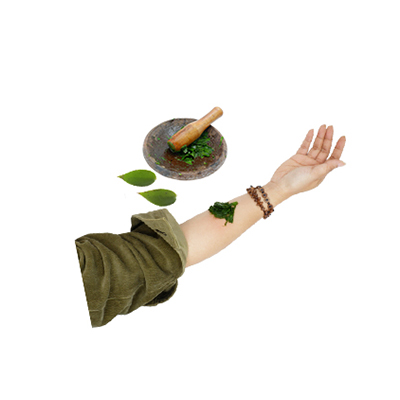
- Prepare fresh situndal gara leaves and wash until clean.
- Grind until it becomes a paste.
- Apply the leaf paste to the wound.
Reference Sources
- Royal Botanic Gardens. 2021. Plants of the World Online: Aeschynanthus albidus (Blume) Steud. http://powo.science.kew.org/taxon/urn:lsid:ipni.org:names:377663-1. 07-10-2021.
- FUJI WULANDARI. 2020. STUDI ETNOBOTANI RAMUAN PENGOBATAN PENYAKIT SISTEM PENCERNAAN DAN PEREDARAN DARAH PADA MASYARAKAT KARO GUGUNG, KABUPATEN KARO, SUMATERA UTARA. Skripsi. UNIVERSITAS SUMATERA UTARA. MEDAN.
- Silalahi M., Purba E.C., Mustaqim W.A. 2019. Tumbuhan Obat Sumatera Utara. Jilid II: Dikotiledon. UKI PRESS:Jakarta.
- Flora Fauna Web. 2019. Aeschynanthus albidus Steud. https://www.nparks.gov.sg/florafaunaweb/flora/5/0/5019. 07-10-2021.
- Middleton D.J. 2016. A revision of Aeschynanthus (Gesneriaceae) in Singapore and Peninsular Malaysia. Gardens’ Bulletin Singapore 68(1): 1–63. doi: 10.3850/S2382581216000016.