Agapanthus africanus (L.) Hoffmanns.
Summary
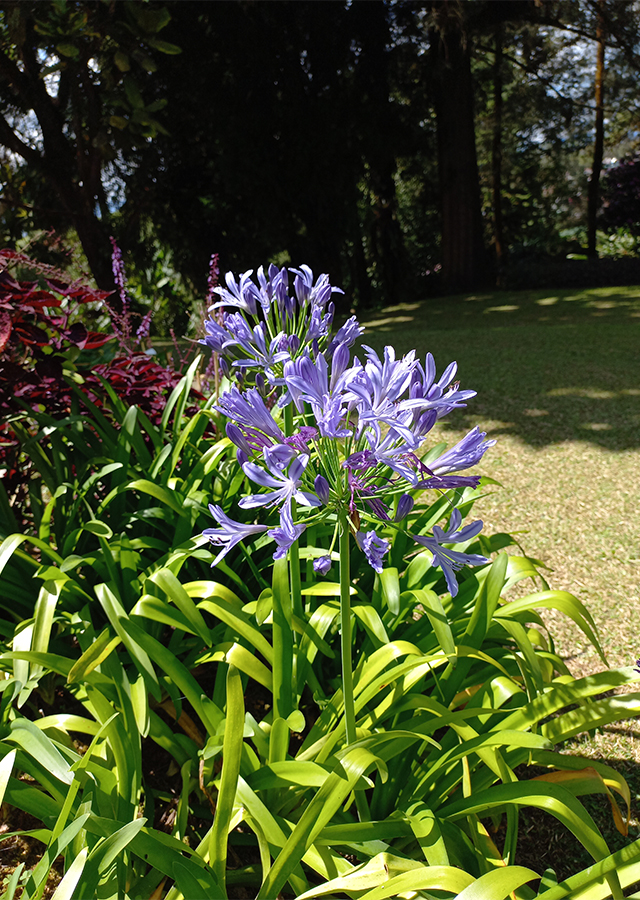
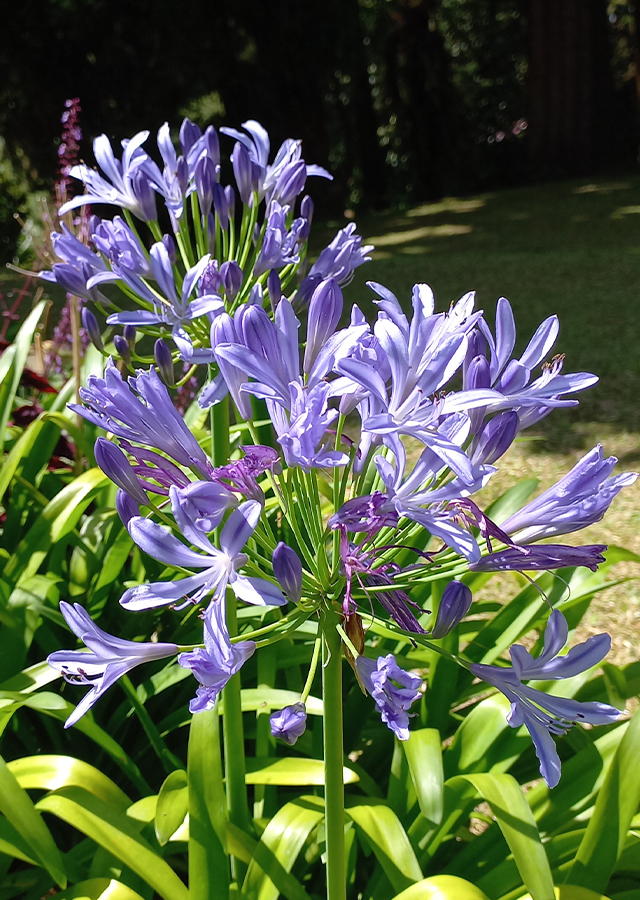
African lily (Agapanthus africanus) is a shrub up to 1 meter tall from the Amaryllidaceae family native to South Africa, its name derived from the Greek 'Agape' (love) and 'Anthos' (flower), hence nicknamed the love flower. Its striking blue-purple flowers are popular as a garden ornamental and in bouquets. In South Africa, African lily is traditionally used in remedies to address fertility and pregnancy problems.
Agroecology
Succeeds in most soils, light (sandy) and medium (loamy) soils and prefers well-drained soil. Suitable soil pH degree is slightly acidic, neutral, and alkaline (slightly alkaline). Can grow in semi-shade (light woodland) or without shade. It prefers moist soil. The plant can tolerate coastal exposure. They flower freely only if grown in a very sunny position. The rhizome is best planted just below the soil surface; gravel mulch or stone chips will help keep the plant's crown free of excess moisture.
Morphology
- Roots thick, tuberous.
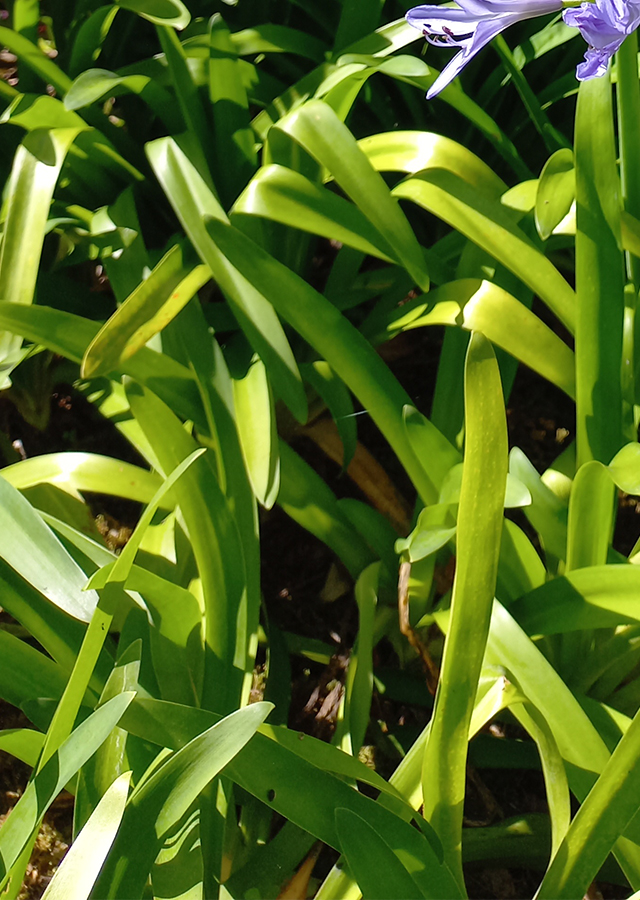
- Stem sturdy, bearing a tuft of long, narrow leaves.
- Leaves basal, 2-ranked, linear-lanceolate, up to 50 cm long and 2-4 cm wide. This plant is distichous: leaves grow in rows opposite each other.
- Flowers have a sturdy, upright flower stalk, up to 30-50 cm tall. The flowers are umbel-shaped, 12 to 30 flowers, usually bright blue-purple, clustered at the tip of the stalk.
- Fruit a capsule containing seeds inside.
Cultivation
- Propagation is generative using seed. Seeds are best sown as soon as they are ripe. Seeds usually germinate within 1-3 months at 18°C; do not sow too thickly so seedlings can be grown in pots without disturbing them for their first year of growth. Divide the seedlings into individual pots about 12 months after germination, grow on for another year and then plant into their permanent positions. Seedlings take 2-3 years to flower.
- Propagation is vegetative by bulb division. Division is very easy during the growing season, and divisions can be planted directly into their permanent positions if needed.
Chemical Content
Saponins and sapogenins of the furostane and spirostane type, including agapanthagenin and spirostane steroid sapogenins, anthocyanin, chalcone compounds, isoliquiritigenin, two new steroidal saponins, (25R)-5α-spirost-7-ene-2-α,3β,5α-triol 3-O-[-α-L-rhamnopyranosyl-(1→2)]-β-D-glucopyranoside 1, and (25R)-5α-spirost-7-ene-2α,3β,5α,9a-tetrol-3-O-β-D-glucopyranoside.
Benefits
Good for fertility and pregnancy (as a remedy for treating pregnancy-related ailments and easing childbirth and producing a healthy child), for bathing newborns, aphrodisiac, used for impotence and infertility, reduces fever.
Simplisia
- Prepare African lily root, wash clean with running water.
- Dry under the sun until dry
- Grind using a blender until it becomes powder.
- Store in a clean, airtight container.
Local Names
Informasi tidak ditemukan. Butuh penelusuran lebih lanjut.
Traditional Recipes
The following recipes reflect traditional knowledge passed down through generations, not a substitute for professional medical diagnosis or advice. Consult a healthcare provider before use.

1. Bathing newborns
- Prepare an adequate amount of fresh African lily root and wash until clean.
- Boil until it boils.
- Use the decoction to bathe the newborn.

2. Fever
- Prepare an adequate amount of fresh African lily leaves and wash until clean.
- Place the leaves around the wrist to reduce fever.
Reference Sources
- Royal Botanic Gardens. 2021. Plants of the World Online: Agapanthus africanus (L.) Hoffmanns. https://powo.science.kew.org/taxon/urn:lsid:ipni.org:names:527258-1#synonyms. 21-02-2022.
- Stuartxchange. 2019. Phillipine Medicinal Plants: African lily. http://www.stuartxchange.org/AfricanLily. 21-02-2022.
- Useful Tropical Plants Database. 2022. Agapanthus africanus. https://tropical.theferns.info/viewtropical.php?id=Agapanthus+africanus. 21-02-2022.