Agave pedunculifera Trel.
Summary
Agave pedunculifera, known as lidah buaya duri (spiny aloe), grows on steep volcanic rocky cliffs in several Mexican states such as Sinaloa, Durango, Nayarit, and Jalisco. This species was first described in 1920 by American botanist William Trelease and is closely related to Agave attenuata. Besides being planted as a garden ornamental, this succulent is also known in traditional medicine, though most claims of its efficacy still require further scientific investigation.
Agroecology
Agave pedunculifera prefers growing in full sun or partial shade, is not cold-hardy, in loose, fertile, well-drained soil with regular irrigation. This plant prefers a warm, dry environment and has a growing temperature of 15-25°C.
Morphology
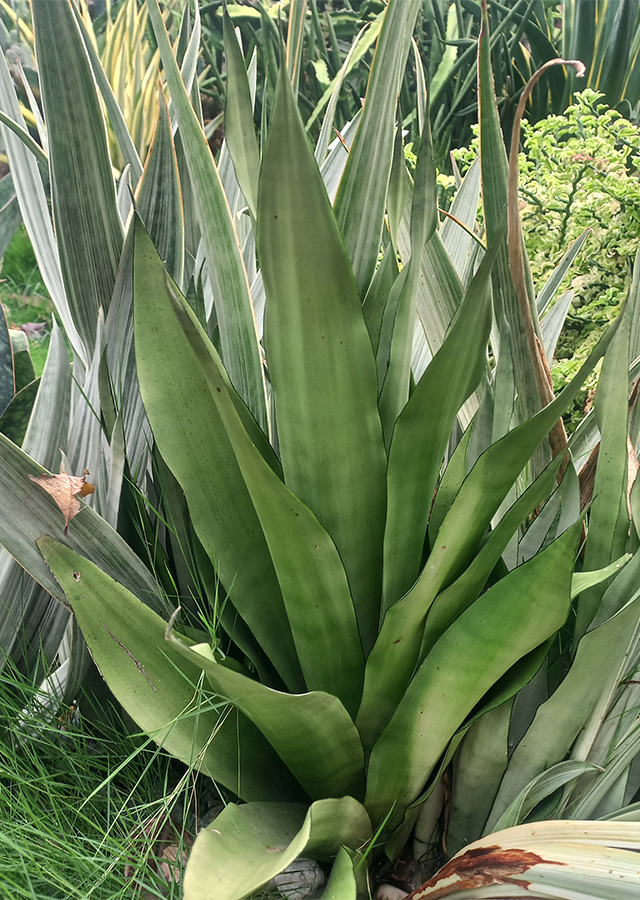
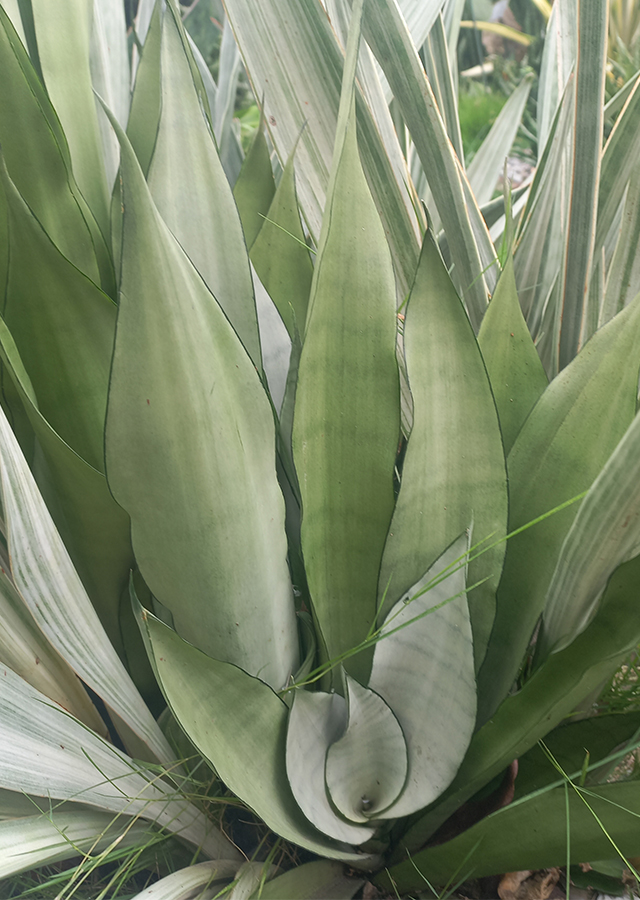
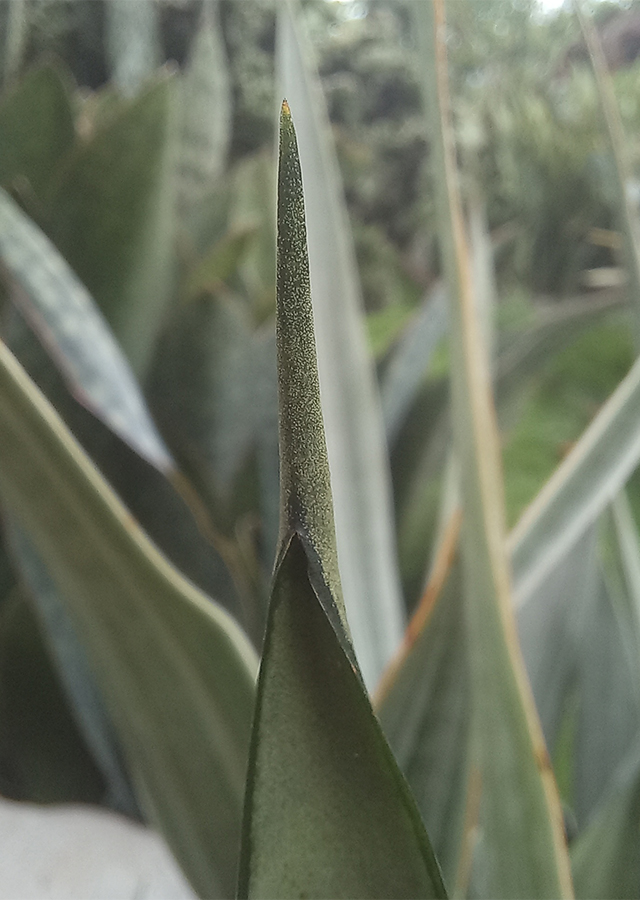
- Leaves soft, mostly 50-70 x 15-18 cm, or 80-90 x 11-15 cm and lanceolate, soft-succulent, symmetrically ascending-horizontal, concave surface, thickened, narrowing and convex at the base, pale green to grayish white, margins lined with narrow brown or white, closely denticulate, denticles 0.5-2 mm long, spine weak, needle-like, about 1 cm long.
- Flowers a racemose spike, 2-3 m long, upright or arching, flowering from near the leaf crown. Bracts chartaceous, very narrow, the lower ones longer than the flowers; flowers budding or clustered on dichotomous pedicels 2-3 cm long, yellow, slender, 37-52 mm long; ovary 20-27 mm long, slender, cylindrical, with an ungrooved narrowing neck; tube shallowly funnel-shaped, 2-6 mm deep, slightly wrinkled; tepals equal, oblong to elliptic, thin, ascending to blunt, overlapping at the base, the inner ones wider (7-8 mm), with a low, broad keel; filaments 30-55 mm long, inserted with the tepals at the mouth of the tube; anthers 14-22 mm long, centric yellow.
- Fruit a capsule 15-20 mm long, apiculate.
- Seeds 2.5 × 2 mm.
Cultivation
- The most common propagation method for lidah buaya duri is division, usually done during the growing season or when repotting. Carefully remove the offshoots growing from the plant's leaves. If the removed offshoot has roots and no wound at its base, it can be planted directly into a pot. If the removed offshoot has no roots or has a wound, it needs to be placed in a cool, well-ventilated environment for about 5 days so the wound completely dries and heals. After that, plant it in soil with good drainage and ventilation. It will usually root within 10 days and survive.
- It takes a long time to grow from a seedling into a flowering plant. Generally, when flowering, one or many long flower spikes will grow. When the flowers are almost dying, a cluster of plantlets will very often grow at the top of the spike. These can be harvested and replanted.
Chemical Content
Information not found. Further research is needed.
Benefits
Historical or theoretical uses lacking sufficient evidence: antibacterial, constipation, diabetes, diuretic, dysentery, bloating, hemolytic activity, indigestion, insulin resistance, jaundice, laxative, nutritional supplement. Further research or studies are needed to confirm the traditional use of this species.
Local Names
Informasi tidak ditemukan. Butuh penelusuran lebih lanjut.
Reference Sources
- Royal Botanic Gardens, Kews. Plants of the World Online: Agave pedunculifera Trel. https://powo.science.kew.org/taxon/urn:lsid:ipni.org:names:6637-2#synonyms. 14-07-2022.
- San Marcos Grower. Agave pedunculifera - Durango Soft Agave. https://www.smgrowers.com/products/plants/plantdisplay.asp?plant_id=3594.14-07-2022.
- Howard Scott Gentry. 2004. Agaves of Continental North America - Halaman 80. The University of Arizona Press.
- Picture This. Agave attenuata subsp. dentata (Agave attenuata subsp. dentata) Care Guide Tuscon. https://www.picturethisai.com/care/Agave_attenuata_subsp._dentata.html. 14-07-2022.