Aglaia odorata Lour.
Summary
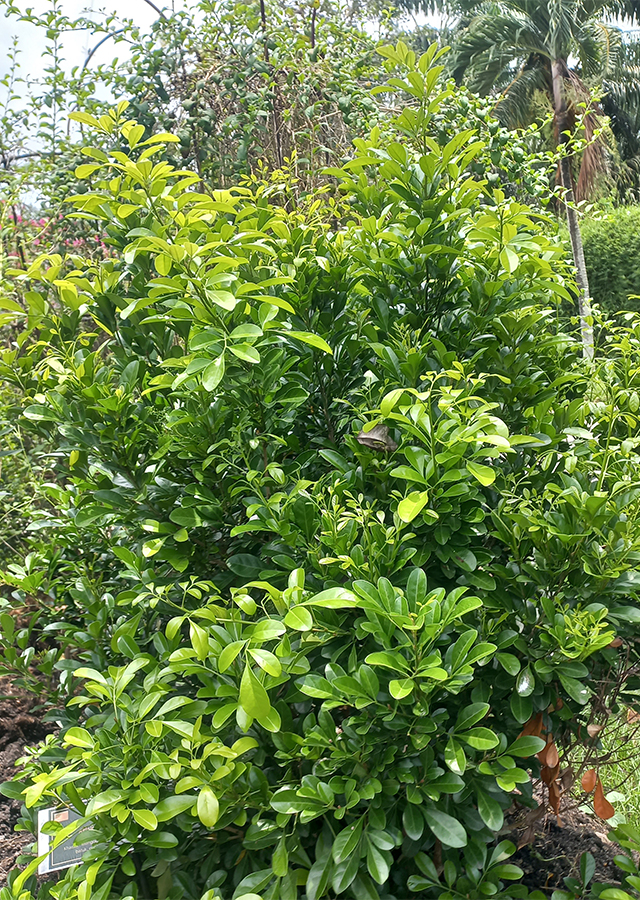
Pacar cina (Aglaia odorata) is a shrub or small tree up to 10 meters tall of the Meliaceae family, distributed from Cambodia to Vietnam and Malaysia. Its fragrant dried flowers are used to scent tea and clothing, while the plant is now classified as 'Near Threatened' by the IUCN. Pacar cina is traditionally used in the Philippines, Indonesia, and China to address excessive menstruation and reduce fever.
Agroecology
Pacar cina can grow in lowlands to highlands with elevations of 10-1,300 m above sea level. This plant is usually found growing in mountain thickets, evergreen forests, along coastlines, and often grows in clay soil. The desired environment is an open area getting full sunlight or partial shade.
Morphology
- Root a taproot, dirty yellow in color.
- Stem cylindrical shaped, rough stem surface, woody, many-branched, stalk with black spots.
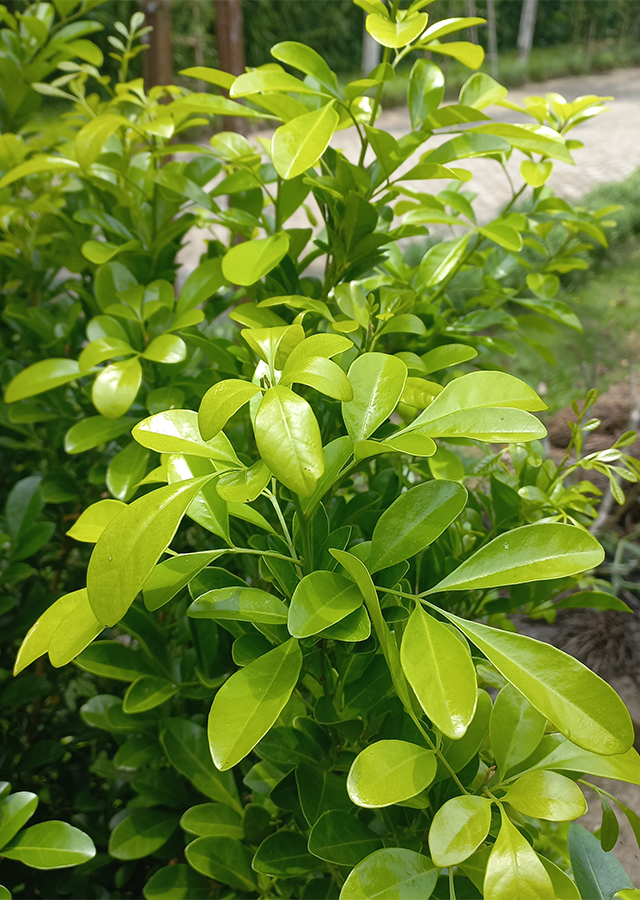
- Leaves compound, alternately positioned, green in color, arranged from 3-7 leaflets, oval-shaped like an egg with a tip wider than its base, flat leaf edges, pinnate leaf veins, glossy smooth surface, short-stalked.
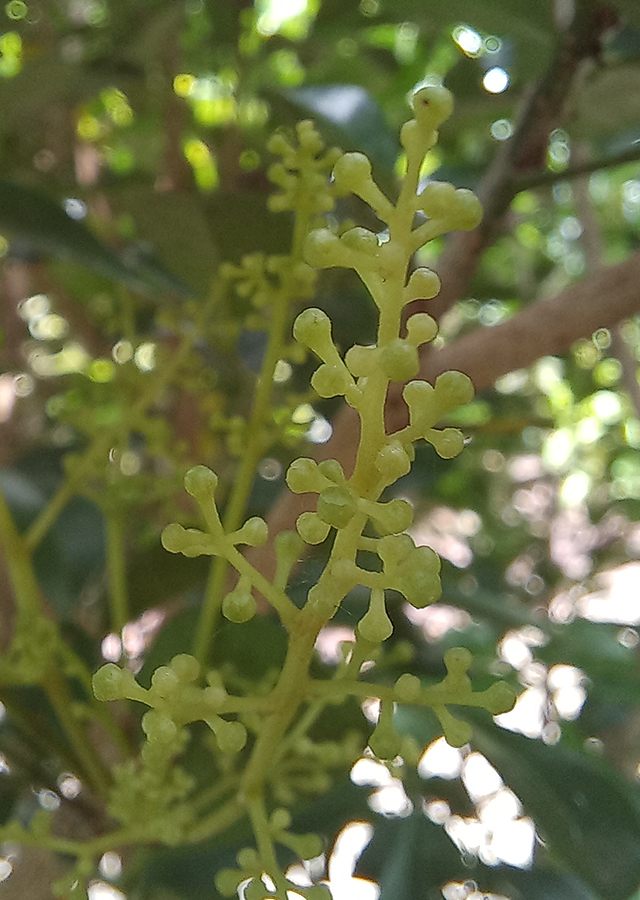
- Flowers compound, numerous, yellow in color, fragrant. Inflorescence thyrse-shaped, located in leaf axils. Male and female flowers occur on separate individuals.
- Fruit ovate or subglobose shaped, about 12 mm long, generally red in color, one chamber contains 1-3 seeds.
- Seeds surrounded by fleshy tissue (aril), round shaped, small in size.
Cultivation
Propagated generatively (seed) and vegetatively (stem cuttings).
Chemical Content
Triterpenoid (aglaiol, aglaiondiol, aglaitriol and aglaione), alkaloid (odorine and odorinol), essential oil (hendecane, linalool, decyladehyde, copaene, β-caryophyllene, β-humulene, β-elemene, β-selinene, humuladienone, humulene epoxide I, tridecanic acid methyl ester, β-humulene-7-ol, β-humulene-7-ol acetate, juniper camphor, heptadecane, khusol acetate, octadecane, nonadecane, eicosane, heneicosane, docosane), saponin, flavonoid, tannin.
Benefits
Excessive menstruation, cough, vertigo, eases labor, reduces fever, addresses convulsions, rheumatism, gonorrhea, skin disease, itching (external medicine), removes body odor. Has antipyretic activity.
Local Names
Pacar culan (Java), Culan (Sunda, Sumatra), Bunga maniran (Kalimantan), Kemuning cina or Bhangear cina.
Traditional Recipes
The following recipes reflect traditional knowledge passed down through generations, not a substitute for professional medical diagnosis or advice. Consult a healthcare provider before use.
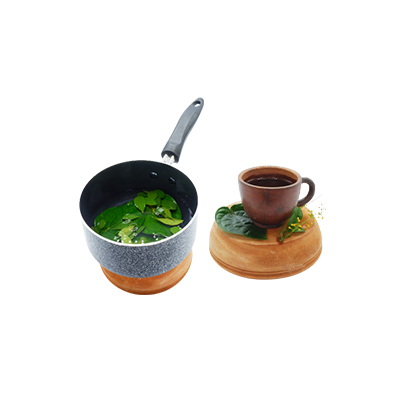
1. Heavy menstrual blood
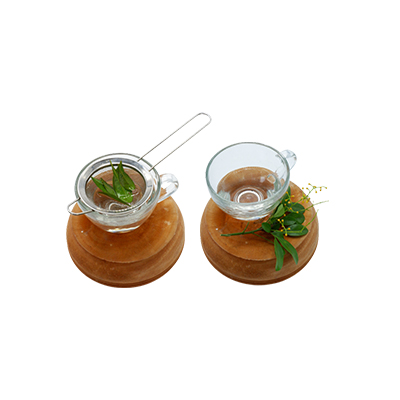
- Prepare 1 full handful of fresh pacar cina leaves, wash thoroughly.
- Boil with 2 glasses of water until reduced to 1 glass.
- Let cool then strain and drink.
- Drink twice a day, ½ glass each time.
2. Body odor
- Prepare 10 g fresh pacar cina leaves and 7 fresh betel leaves then wash thoroughly.
- Boil both ingredients with 2 glasses of clean water until reduced to 1 glass.
- Let the decoction cool then strain.
- Drink twice a day, ½ glass each time morning and evening.
Reference Sources
- Royal Botanic Gardens. 2021. Plants of the World Online: Aglaia odorata Lour. http://powo.science.kew.org/taxon/577227-1. 3-09-2021.
- Tropical Plants Database. 2021. Useful Tropical Plants: Aglaia odorata. http://tropical.theferns.info/viewtropical.php?id=Aglaia%20odorata. 3-09-2021.
- Flora Fauna Web. 2021. Aglaia odorata Lour. https://www.nparks.gov.sg/florafaunaweb/flora/1/6/1609. 3-09-2021.
- Stuartxchange. 2018. Philippine Medicinal Plants: Sinamomong-sungsong. http://www.stuartxchange.org/Sinamomong-sungsong. 3-09-2021.
- Balittro. 2021. Pacar cina. https://balittro.litbang.pertanian.go.id/?page_id=5436. 3-09-2021.
- Kumpulan Materi Pengetahuan Umum. 2015. Klasifikasi dan Morfologi Tanaman Pacar Cina. https://www.teorieno.com/2016/11/klasifikasi-dan-morfologi-tanaman-pacar.html. 3-09-2021.
- Riky. 2018. Toksisitas Senyawa B-Sitosterol dan Ekstrak Kulit Batang Aglaia odorata L. Jurnal Insan Cendekia 7(1):49-52.