Allamanda blanchetti A.DC.
Summary
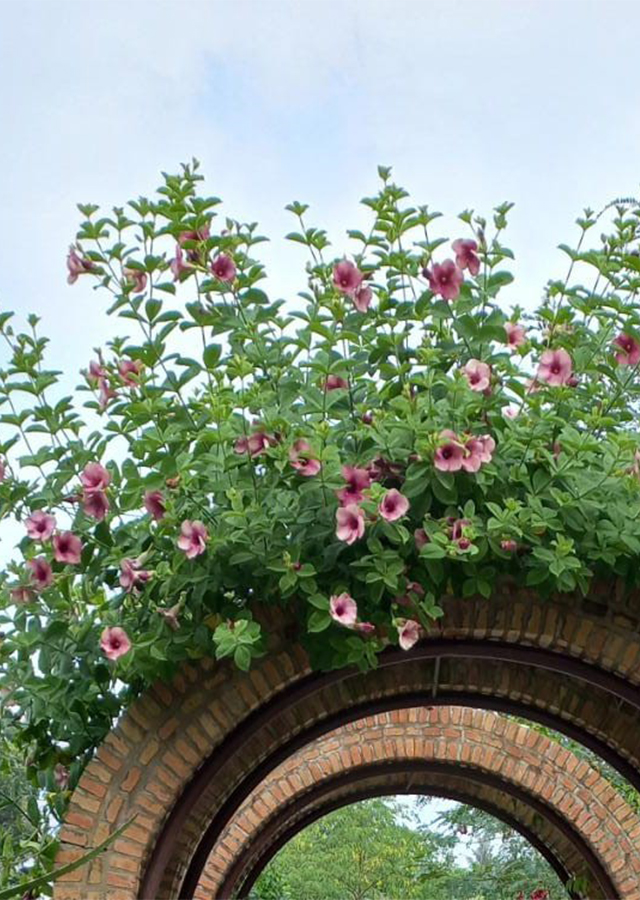
Purple allamanda (Allamanda blanchetti) is a climbing shrub growing up to 3 m tall of the Apocynaceae family, native to Brazil, now cultivated as far as India and Puerto Rico despite being considered invasive in Hawaii and Australia. Its bright purple flowers make it a popular tropical ornamental. In Brazil, the root and other parts of purple allamanda are traditionally used as an antidote and bactericide.
Agroecology
Purple allamanda plants prefer fertile, well-drained soil and a position in full sunlight, growing in hot and dry habitats with an average annual temperature of 24-30°C and average annual rainfall of 250-1,000 mm. This species adapts well to drought with moderate wind tolerance. In cultivation, this plant prefers loamy or sandy soil.
Morphology
- Stem forms clumps, cylindrical, woody, exudes milky sap when injured.
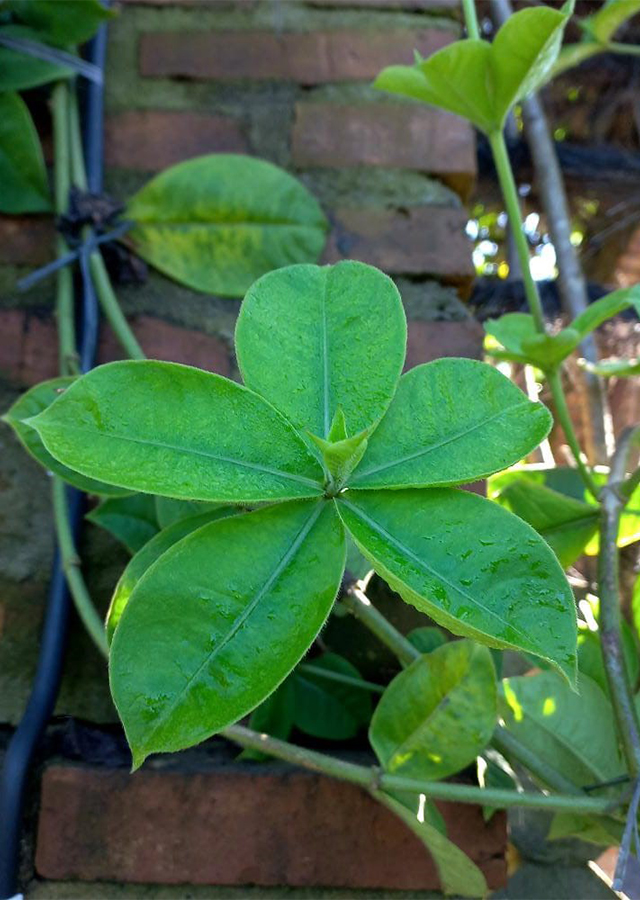
- Leaves sessile, 8-12 cm long, in whorls of 4, tip elongated-tapering, petiole 2 mm. Leaf blade broad elliptical to round with hair on both surfaces, pinnate veins, flat edges.
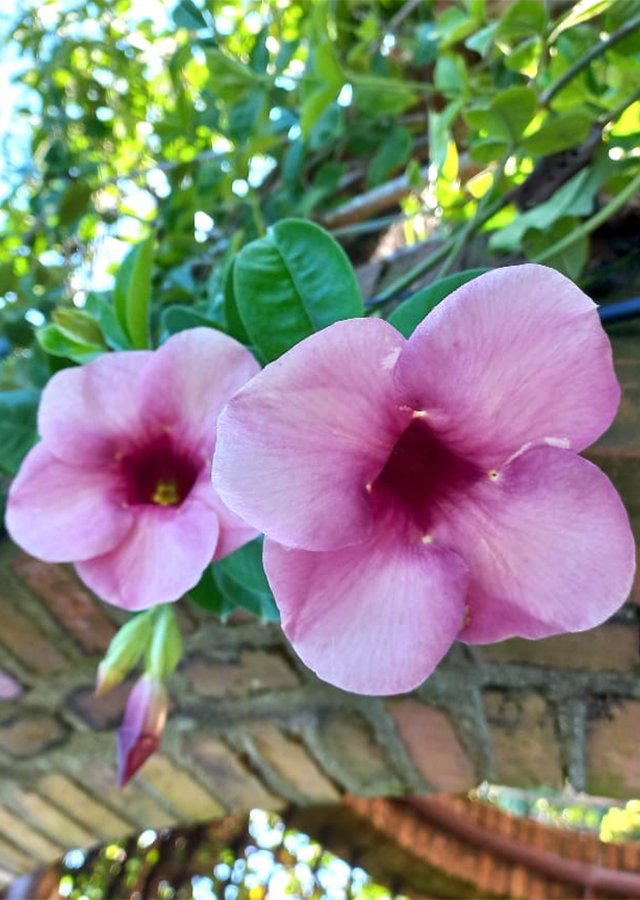
- Flowers funnel-shaped raceme, corolla with 5 petals/lobes, pink-purple in color, 6-9 cm long, 5-6 cm wide,
- Fruit a round and thorny follicle containing many seeds.
- Seeds flat equipped with a membrane wing.
Cultivation
Propagated generatively (seed) and vegetatively (stem cuttings).
Chemical Content
Polyphenol, flavonoid, polysaccharide, terpene, steroid, and saponin.
Benefits
Antidote in the body, kills bacteria. The plant's root, stem and leaves have cytostatic and cytotoxic activity. The flower has antidyslipidemic, antidiabetic and antioxidant activity.
Local Names
No information found. Further research needed.
Traditional Recipes
The following recipes reflect traditional knowledge passed down through generations, not a substitute for professional medical diagnosis or advice. Consult a healthcare provider before use.
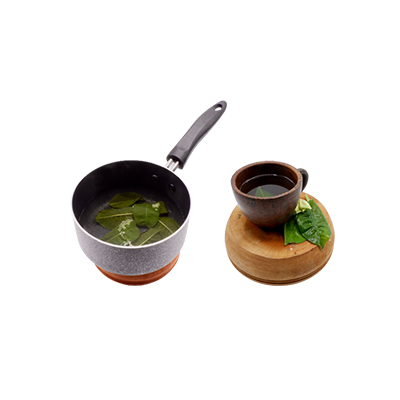
1. Antidote in the body
- Wash 15 purple allamanda leaves thoroughly.
- Boil with water for 15 minutes.
- Strain the decoction.
- Drink while warm.
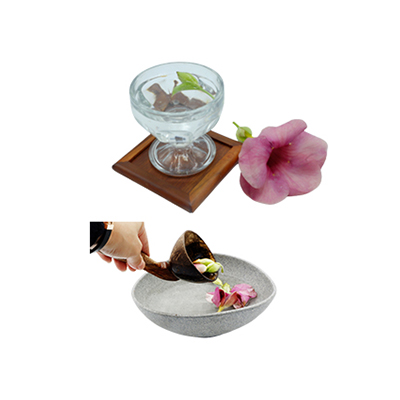
2. Killing bacteria
- Take purple allamanda flowers as needed then wash thoroughly.
- Boil the allamanda flowers until boiling.
- Strain the decoction.
- Drink.
Reference Sources
- CAB International. 2019. Allamanda blanchetii (purple allamanda). https://www.cabi.org/isc/datasheet/25980468. 5-09-2021.
- Tropical Plants Database,. 2021. The fern : Allamanda blanchetii. http://tropical.theferns.info/viewtropical.php?id=Allamanda+blanchetii. 5-09-2021.
- Royal Botanic Garden. 2021. Plants of the world Online : Allamanda blanchetii A.DC. http://plantsoftheworldonline.org/taxon/urn:lsid:ipni.org:names:76468-1. 5-09-2021.
- G. CHANDREYI , SAYANTAN BANERJEE. FLORAL EXTRACTS OF ALLAMANDA BLANCHETII AND ALLAMANDA CATHARTICA ARE COMPARATIVELY HIGHER RESOURCE OF ANTI-OXIDANTS AND POLYSACCHARIDES THAN LEAF AND STEM EXTRACTS. International Journal of Current Pharmaceutical Research ISSN- 0975-7066 Vol 10, Issue 4, 2018. https://www.researchgate.net/publication/326442114_FLORAL_EXTRACTS_OF_ALLAMANDA_BLANCHETII_AND_ALLAMANDA_CATHARTICA_ARE_COMPARATIVELY_HIGHER_RESOURCE_OF_ANTI-OXIDANTS_AND_POLYSACCHARIDES_THAN_LEAF_AND_STEM_EXTRACTS.
- Louise M. S. Oliveira, dkk. 2019. Extracts From Leaves of Allamanda blanchetti Inducing Mechanism of Defense to Diseases in Sugarcane. Journal of Agricultural Science; Vol. 11, No. 3; 2019 ISSN 1916-9752 E-ISSN 1916-9760 Published by Canadian Center of Science and Education.