Aloe arborescens Mill.
Summary
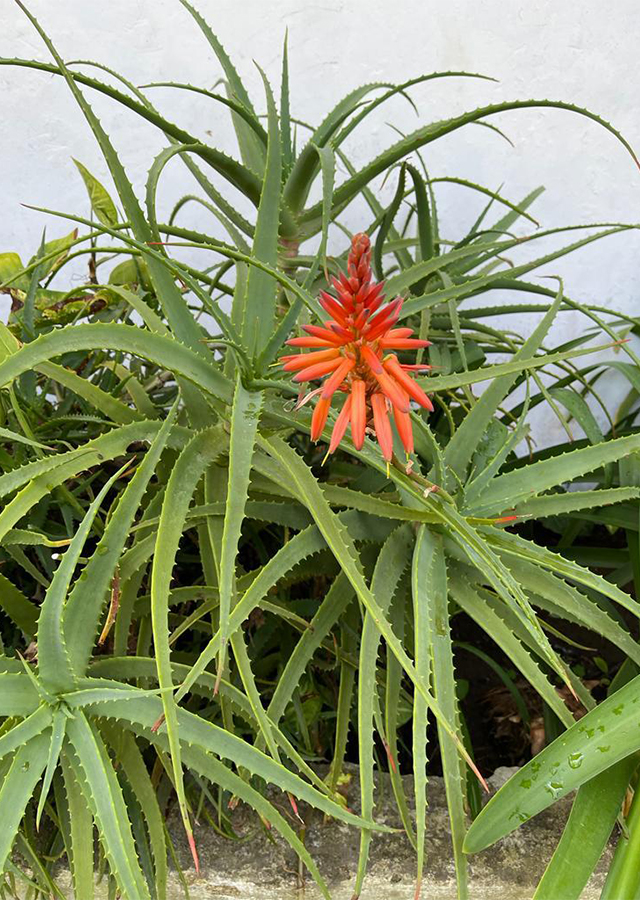
Candelabra aloe (Aloe arborescens) is a succulent up to 5 meters tall from the Asphodelaceae family native to South Africa, an ingredient in popular aloe candy in Japan. World attention turned to this plant's gel after it successfully treated the burns of Hiroshima-Nagasaki atomic bomb victims after World War II. Candelabra aloe is traditionally used to treat burns and ease childbirth.
Agroecology
A plant of semi-arid to humid tropical regions, found at elevations up to 2,000 m asl. Grows best in areas where the mean annual daytime temperature is in the range of 18-26°C, but can tolerate 9-38°C. This species is intolerant of low temperatures (temperatures of -1°C or lower). However, as long as the plant is not wet, it can tolerate occasional temperatures down to about -4°C. Its growth favors mean annual rainfall in the range of 400-1,500 mm, but tolerates 300-1,700 mm. Succeeds in full sun or bright shade, requires well-drained, light to medium soil. Prefers a pH in the range of 5-6.5, tolerating 4.2-7. Established plants are drought-tolerant.
Morphology
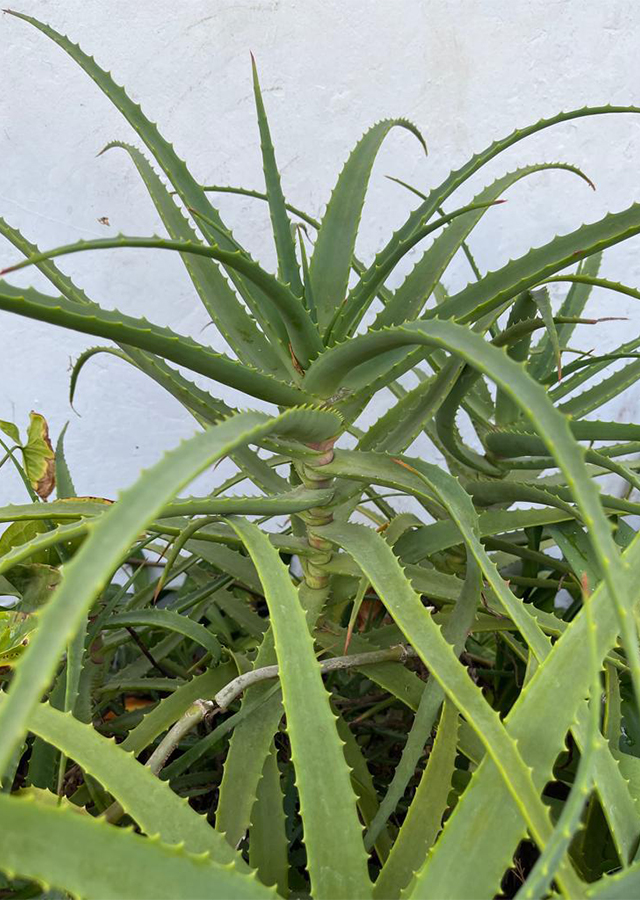
- Stem solitary, branching at or near the base with persistent dead leaves.
- Leaves in a dense rosette, spreading, becoming curved, stipules absent, petiole absent, blade-like lanceolate shape, 60 × 7 cm in size, apex long-tapering, margin sharply deltoid, forward-pointing, teeth yellow, 4 mm long, spaced 1-1.5 cm apart, blade grayish green, reddish tinged under dry conditions.
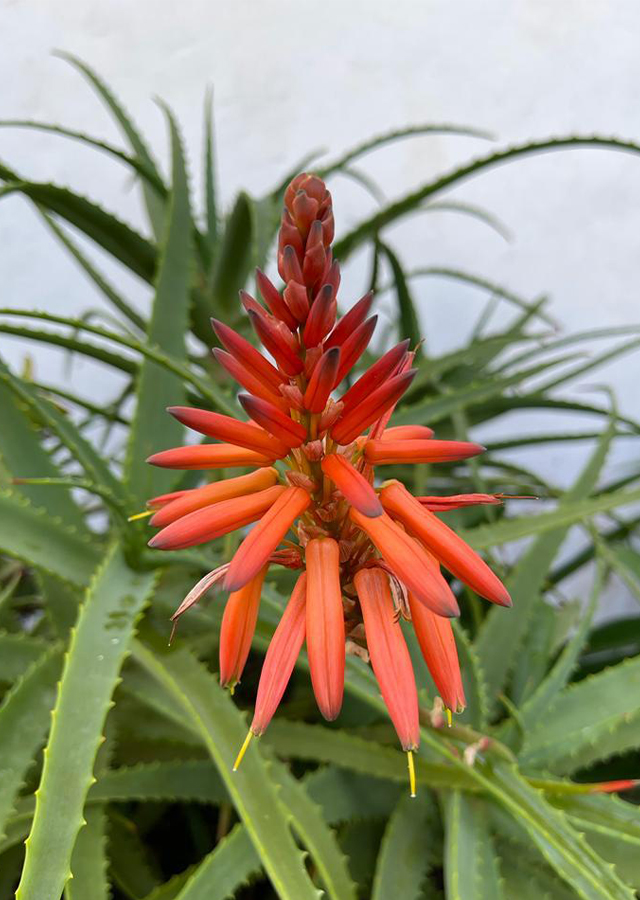
- Flowers bisexual, regular, 3-merous; stalk 1-1.5 cm long; perianth tube-shaped, 3.5-4 cm long, 7 mm in diameter, 6 lobes, free at the base, bright orange to deep red, stamens 6, exserted; ovary superior, 3-celled, style filiform, stigma head-shaped, exserted. Inflorescence in a terminal raceme, 20-40 cm long, 1-4 per rosette, upright, cylindrical-acuminate, very densely flowered, stalk up to 60 cm, simple or rarely with 1 short branch; bracts ovate shaped, 2-5 mm long.
- Fruit an oblong-ovate capsule up to 18 × 7 mm, yellowish brown, splitting loculicidally, many-seeded.
- Seeds 3.5 mm long, with a very narrow wing.
Cultivation
- Aloe arborescens can be propagated by seed and stem cuttings 3-10 cm long. It can also be done by the tissue culture method.
- Seed: seeds are sown in well-drained sandy potting soil in a warm, shaded spot in a standard seed tray. Germination takes about three weeks. Cover with a thin layer of sand (1-2 mm), keep it moist, and seedlings can be planted into individual bags or containers as soon as they are large enough to handle.
- Stem cuttings: 3-10 cm long. A branch or stem can be cut, left to dry for about one day until the wound closes, and then planted in well-drained soil or sand. It does not need to be rooted somewhere else and then transplanted, but can be placed directly in its permanent spot in the garden. It is important to remember not to water the cutting too much. Overwatering can cause the plant to rot.
Chemical Content
Anthrone 10-C-glucosides (anthraquinone derivatives) such as aloin and hydroxyaloin. Aloin is a mixture of the stereoisomers aloin A (barbaloin) and aloin B (isobarbaloin). Exudate contains the pyrone derivative aloenin and free and glucosylated 2-acetonyl-7-hydroxy-5-methylchromone (e.g. aloesone, furoaloesone, aloeresin A, aloeresin B (aloesin), and aloeresin C). Gel contains polysaccharides and glycoproteins. Besides mannan and glucomannan, arboran A and arboran B have been identified, which have hypoglycemic effects. Leaf epidermis contains lectins (aloctin A and aloctin B).
Benefits
Treats burns and wounds, eases childbirth, can treat constipation, speeds up gastric secretion, is laxative, and for dermatological use.
Local Names
Informasi tidak ditemukan. Butuh penelusuran lebih lanjut.
Traditional Recipes
The following recipes reflect traditional knowledge passed down through generations, not a substitute for professional medical diagnosis or advice. Consult a healthcare provider before use.
1. Burns
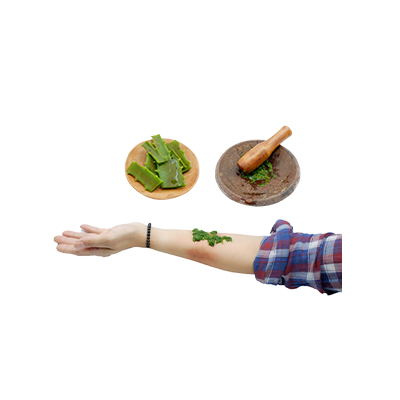
- Prepare fresh candelabra aloe leaves and wash until clean.
- Split or grind the leaves into a paste.
- Apply the leaf paste to burns, even severe ones up to third-degree burns.
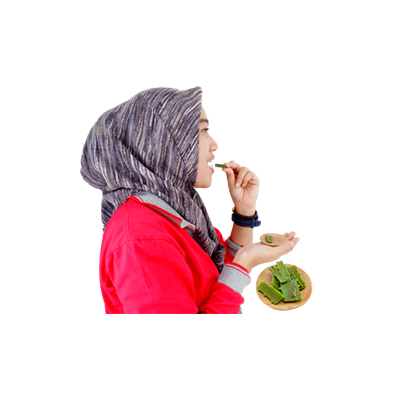
2. Constipation
- Prepare fresh candelabra aloe leaves and wash until clean.
- Boil the leaves until tender.
- Eat the leaves to treat constipation.
Reference Sources
- Royal Botanic Gardens. 2017. Plants of the World Online: Aloe arborescens Mill.. https://powo.science.kew.org/taxon/urn:lsid:ipni.org:names:529214-1#descriptions. 23-02-2021.
- PROTA. 2014. Aloe arborescens (PROTA). https://uses.plantnet-project.org/en/Aloe_arborescens_(PROTA). 23-02-2021.
- Useful Tropical Plants Database. 2022. Aloe arborescens. http://tropical.theferns.info/viewtropical.php?id=Aloe+arborescens. 23-02-2021.