Aloe vera (L.) Burm.f.
Summary
Aloe vera (Aloe vera) is a succulent 30-100 cm tall of the Asphodelaceae family, originating from the Arabian Peninsula and now spread across tropical, semi-tropical, and arid regions worldwide. The clear gel inside its leaves has been used for centuries as a natural skin moisturizer as well as a drink ingredient such as nata de aloe vera. Its polysaccharide enzyme content is also believed to improve digestion and speed up wound healing.
Agroecology
Grows in lowlands to highlands at elevations up to 1,500 m above sea level. However, for best results, it is cultivated at elevations below 1,000 m above sea level. Optimum temperature for growth is 28-32 °C, ideal pH 5.5-6. Soil that is too acidic hinders growth. This plant is drought-tolerant.
Morphology
- Roots short fibrous roots at the soil surface, 50-100 cm long.
- Stem short, densely covered with leaves.
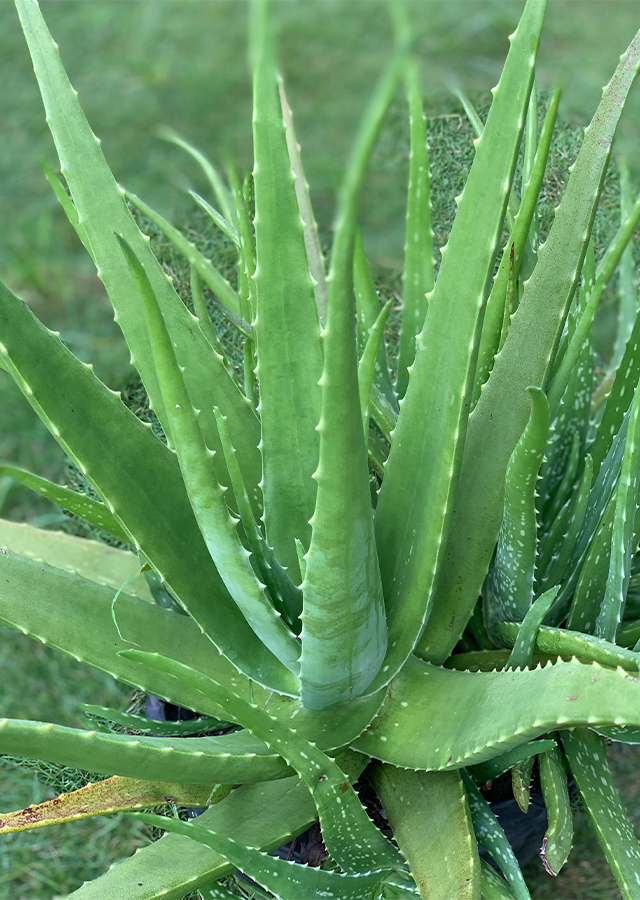
- Leaves long like a sword, tightly coiled around the stem, thick, soft and mucilaginous flesh, tapering tip, watery (succulent), veinless, green in color.
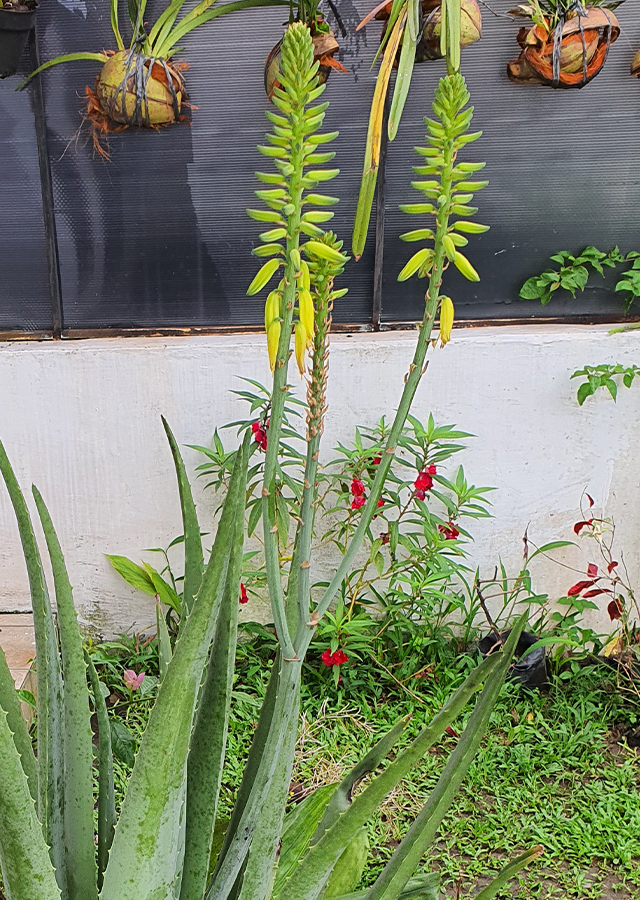
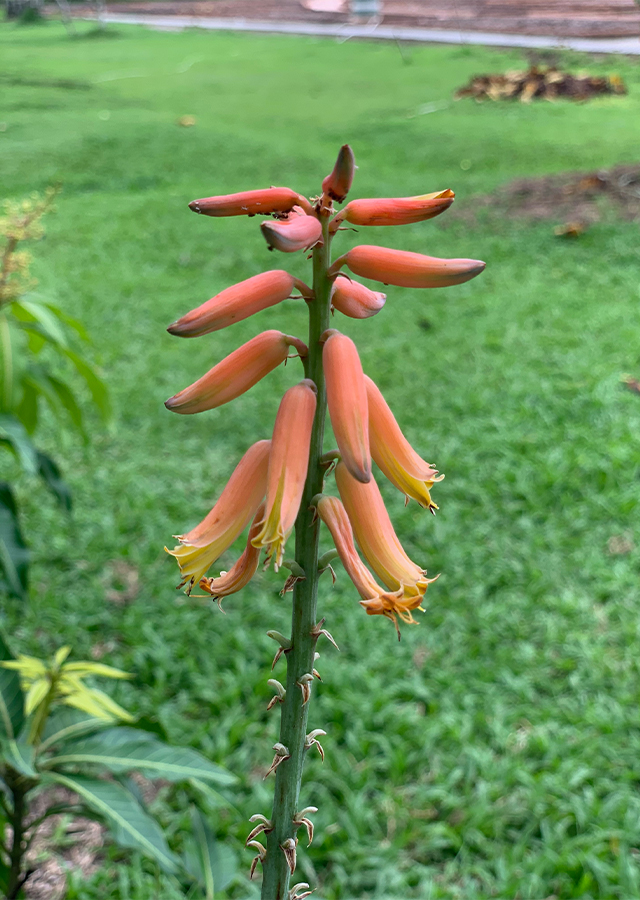
- Flowers stalked, 60-90 cm long, reddish-yellow (orange) in color, emerging from leaf axils.
Cultivation
Propagation can be done by separating offshoots from the parent plant and by leaf cuttings.
Chemical Content
Aloin, barbaloin, isobarbaloin, aloe-emodin, emodin, aloenin, aloesin, β-barboloin, flavonoids, sterols, anthraquinones, saponins, salicylic acid.
Benefits
Treats constipation, maintains digestive health (stomach acid/ulcers), skin care, treats dizziness/headaches, addresses malnutrition, diabetes, hemorrhoids, promotes hair growth, wound healing, reduces dandruff.
Simplisia
Not yet available
Local Names
Ilat baya (Java) and Letah buaya (Sunda).
Traditional Recipes
The following recipes reflect traditional knowledge passed down through generations, not a substitute for professional medical diagnosis or advice. Consult a healthcare provider before use.
1. Maintaining Digestive Health (Stomach Acid/Ulcers)
- Prepare 2 medium-sized aloe vera stalks.
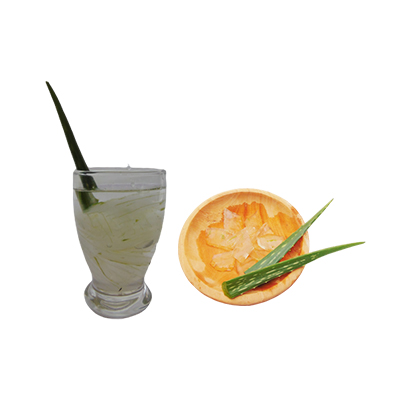
- Take the flesh fiber of the aloe vera and cut into cubes. Put the pieces into a glass of warm water.
- Drink in the morning before eating when stomach acid is flaring up.
- To prevent stomach acid from recurring, drink once a month.
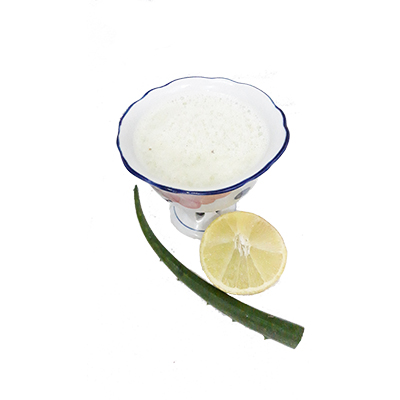
2. Skin Care
- Wash 2 aloe vera stalks thoroughly and cut into small pieces.
- Slice with a sharp knife to extract the flesh and place in a bowl.
- Squeeze 1/2 a lemon and put into a blender. Blend both ingredients for 1 minute then put into the bowl.
- Apply to the face and leave for 20 minutes.
Reference Sources
- Ahmed M, Hussain F. 2013. Chemical composition and biochemical activity of Aloe vera (Aloe barbadensis Miller) leaves. IJCBS. 3: 29-33.
- Royal Botanic Gardens. Plant of the World Online: Aloe vera (L.) Burm.f. https://powo.science.kew.org/taxon/urn:lsid:ipni.org:names:530017-1. 06-07-2019.
- Dharajiya D, Pagi N, Jasani H, Patel P. 2017. Antimicrobial activity and phytochemical screening of Aloe vera (Aloe barbadensis Miller). Int. J. Curr. Microbiol. App. Sci 6(3): 2152-2162.
- Hu Y, Xu J, Hu Q. 2003. Evaluation of antioxidant potential of Aloe vera (Aloe barbadensis Miller) extracts. Agric. Food Chem. 51: 7788-7791.