Alpinia galanga (L.) Willd.
Summary
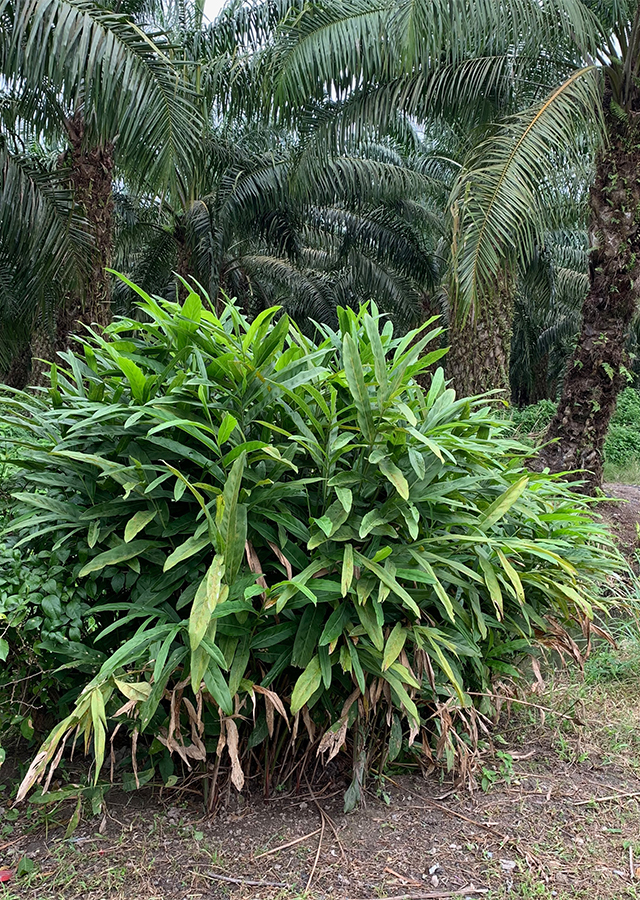
Galangal (Alpinia galanga) is a herb with a pseudostem up to 2 meters tall of the Zingiberaceae family, native to Southeast Asia and now widely cultivated in Indonesia, Malaysia, Thailand, and India. Two varieties are known to communities: red-rhizomed galangal, more often used as medicine, and white-rhizomed galangal, used as a cooking spice. Traditionally, its rhizome is believed to address ringworm, rheumatism, and colds.
Agroecology
Grows ideally at elevations of 1–1,200 m above sea level, rainfall of 2,500–4,000 mm/year, air temperature of 25–29 °C, in areas with high sunlight intensity. Favors moist, loose, well-drained soil.
Morphology
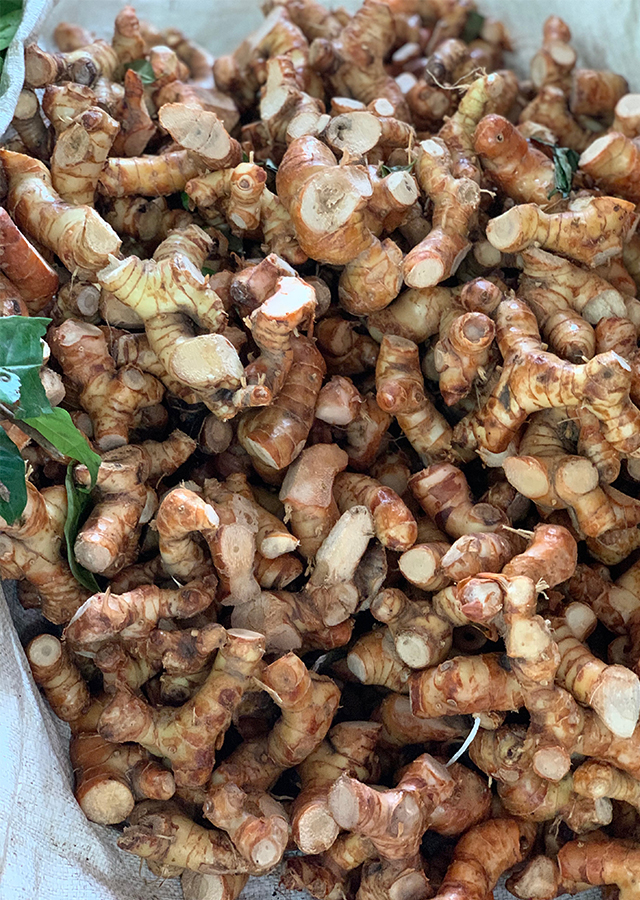
- Rhizome red or light yellow-white, jointed, glossy surface, fleshy, coarsely fibrous, with a distinctive aroma and spicy taste.
- Stem pseudostem, erect, round, a cluster of leaf sheaths, unbranched, reddish-green, smooth surface.
- Leaves simple, short-stalked, lanceolate with a pointed tip, pinnate venation, green, smooth margins.
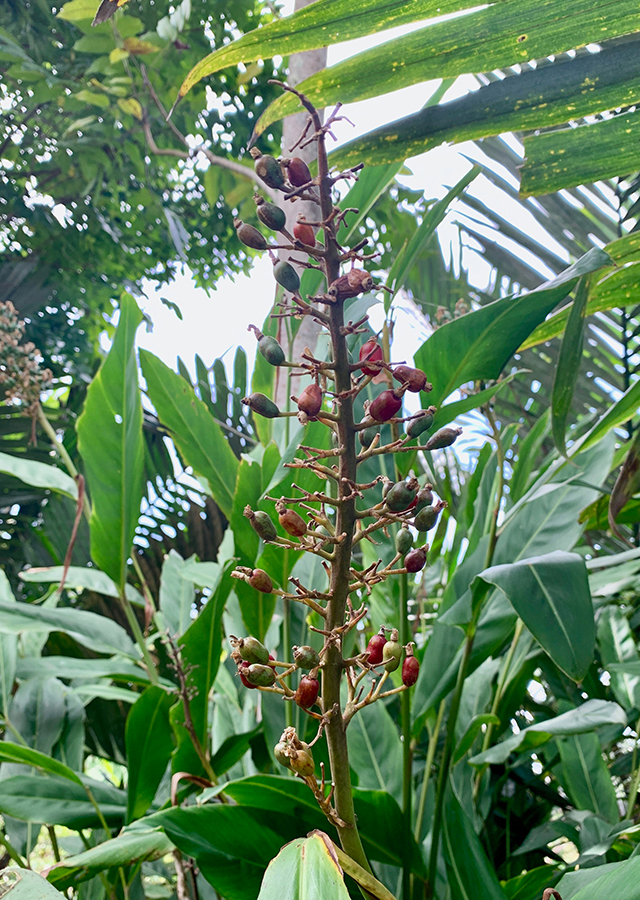
- Flowers an erect raceme, stalked, calyx bell- or funnel-shaped, white to greenish-white. Corolla bud-shaped at the tip, oblong, white.
- Fruit a berry, round, hard, green (young fruit).
- Seeds small, oblong, and black.
Cultivation
Propagated through rhizome sections with shoot eyes. Select mature galangal (9-10 months old), let sprout (2-4 weeks) until shoots and roots grow, then plant in the growing medium.
Chemical Content
Terpenoids, tannins, phenols, flavonoids (galangin, kaempferol, quercetin), saponins, carotol, cineole, fenchyl acetate, β-caryophyllene, methyl cinnamate, camphor.
Benefits
Treats ringworm, diabetes, rheumatism, colds, diarrhea; lowers cholesterol; maintains body stamina; anticancer.
Simplisia
- Wash the rhizome thoroughly and drain.
- Slice the rhizome to a thickness of 0.2-0.5 cm. Arrange the slices on a tray and cover with a dark cloth.
- Sun-dry for ± 2 days.
- Once dry, pack in an airtight container.
Local Names
Halas (Toba), Lengkueueh (Aceh), Halawas (Simalungun), Lakuwe (Nias), Laos (Java, Madura), Lengkueh (Minang), Laja (Sunda).
Traditional Recipes
The following recipes reflect traditional knowledge passed down through generations, not a substitute for professional medical diagnosis or advice. Consult a healthcare provider before use.
1. Rheumatism
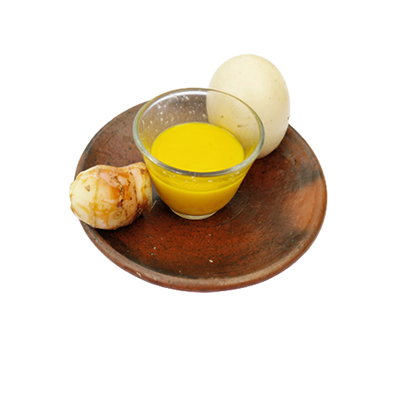
- Prepare 2 thumb-sized galangal rhizomes and 1 free-range chicken egg yolk.
- Grate the galangal and squeeze out the juice, then add the egg yolk. Mix well.
- Drink once a day.
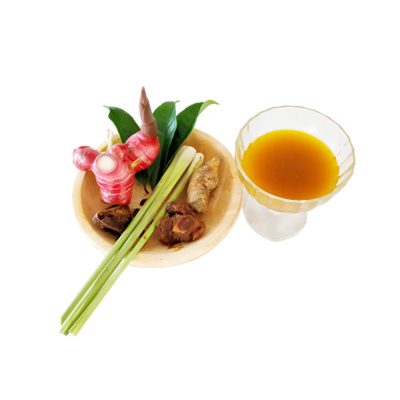
2. Body Stamina
- Take 100 g galangal, 1 liter water, 200 g mature turmeric, 3 lemongrass stalks, 3 bay leaves, 1 piece tamarind, 100 g palm sugar.
- Peel and grate the turmeric. Crush the galangal and lemongrass.
- Boil all ingredients over medium heat for 30 minutes, strain, then drink.
Reference Sources
- Chudiwal AK, Jain DP, Somani RS. 2010. Alpinia galanga Willd. – An overview of phyto-pharmacological properties. India J. Nat. Prod. Resour. 1(2): 143-149.
- Kaushik D, Yadav J, Kaushik P, Sacher D, Rani R. 2011. Current pharmacological and phytochemical studies of the plant Alpinia galanga. J. of Chinese Integrative Med. 9(10):2061-1065.
- Suaib IS, Lakani I, Panggeso J. 2016. Efektifitas ekstrak rimpang lengkuas dalam menghambat aktifitas cendawan oncobasidium theobremae secara in-vitro. E-Jurnal Agrotekbis 4 (5): 506-511.