Alpinia luteocarpa Elmer
Summary
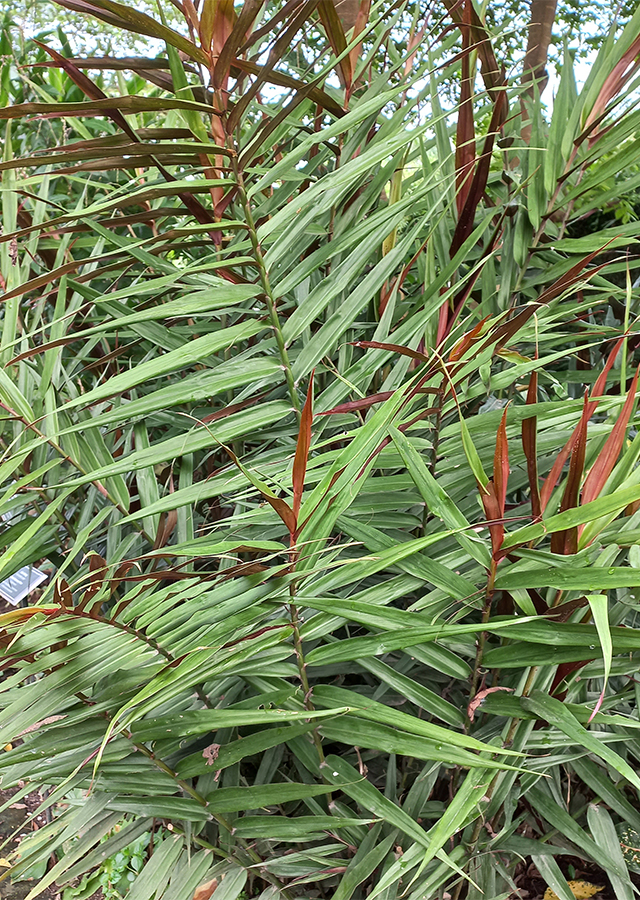
Jahe wulung (Alpinia luteocarpa) is a herb up to 1.5 meters tall from the Zingiberaceae family that originates from the Philippines, also found in India and Thailand. Its unique leaf color, different from other gingers, makes it a favorite ornamental plant. In Chinese medicine, jahe wulung is used for its warming properties, with its rhizome traditionally used to address digestive disorders.
Agroecology
Jahe wulung is usually found growing in humid forests, on steep slopes, at an elevation of 600 m asl. This plant prefers a shaded or partially shaded position with soil conditions rich in organic matter, well-drained, high humidity, and moderate water needs.
Morphology
- Lower rhizome grows horizontally, small and long, reddish-white inside.
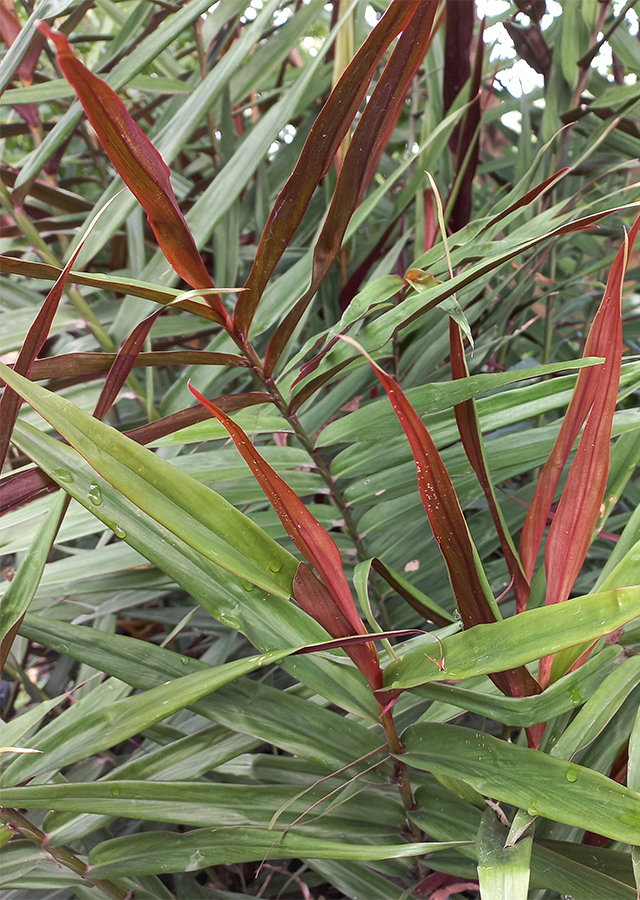
- Pseudostem upright, green at the top, and reddish-purple at the bottom.
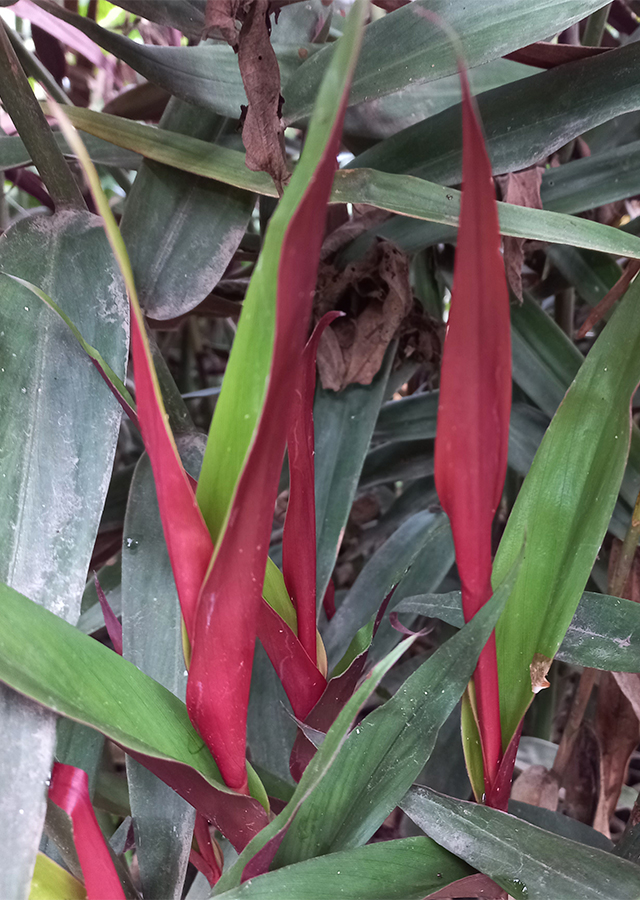
- Leaves lanceolate, green on the upper surface while the lower surface is reddish or reddish-purple, wide at the base and narrowing toward the tip, arranged in a single plane along the stem, smooth leaf surface.
- Flowers have a tubular calyx pink to red that is fused along the length of the calyx, and a corolla white to yellowish-white with lobes joined at the base along half their length. Each flower has several bracts dark brown to purple that clasp the flower stalk, six stamens, with one stamen producing fertile pollen. Inflorescence borne at the branch tips, in groups of 3-5 fragrant flowers.
- Fruit round-oblong, about 3 cm long and 2 cm in diameter, yellow when ripe, splitting into three, containing seeds.
- Seeds numerous within 1 fruit, blackish in color.
Cultivation
- Propagation is done generatively using seeds or vegetatively using division or rhizome cuttings.
- To speed up germination, soak seeds in water for 2 days and dry at a temperature of 22-24 °C.
Chemical Content
Phenylpropanoids, diarylheptanoids, and diterpenoids.
Benefits
Addresses digestive disorders and has antibacterial activity.
Local Names
No information found. Further research needed.
Traditional Recipes
The following recipes reflect traditional knowledge passed down through generations, not a substitute for professional medical diagnosis or advice. Consult a healthcare provider before use.
1. Digestive disorders
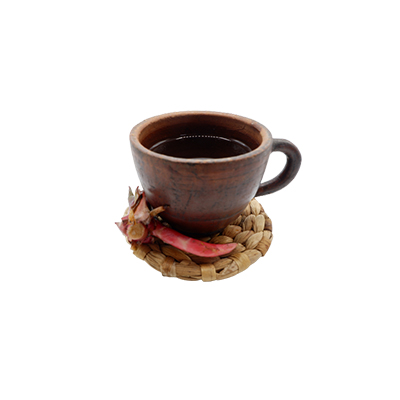
- Prepare fresh jahe wulung rhizome as needed and wash until clean.
- Boil the rhizome until boiling.
- Let stand until warm/cool.
- Strain, then drink.
Reference Sources
- Monaco Nature Encyclopedia. Discover the Biodiversity: Alpinia luteocarpa. https://www.monaconatureencyclopedia.com/alpinia-luteocarpa-2/?lang=en. 27-09-2021.
- Juwitaningsih, T, Roza D, Susanti, N. 2018. Antibacterial Activity of Extract A. luteocarpa on Fresh Meat Flesh Bacteria. Article: Indonesian Journal of Chemical Science and Technology-State University of Medan 1(1): 9-12.
- Stuartxchange. 2015. Philippine Medicinal Plants: Bamboo ginger. http://www.stuartxchange.org/BambooGinger. 27-09-2021.
- Flora Fauna Web. 2019. Alpinia luteocarpa. https://www.nparks.gov.sg/florafaunaweb/flora/3/4/3425. 27-09-2021.