Alstonia scholaris (L.) R.Br.
Summary
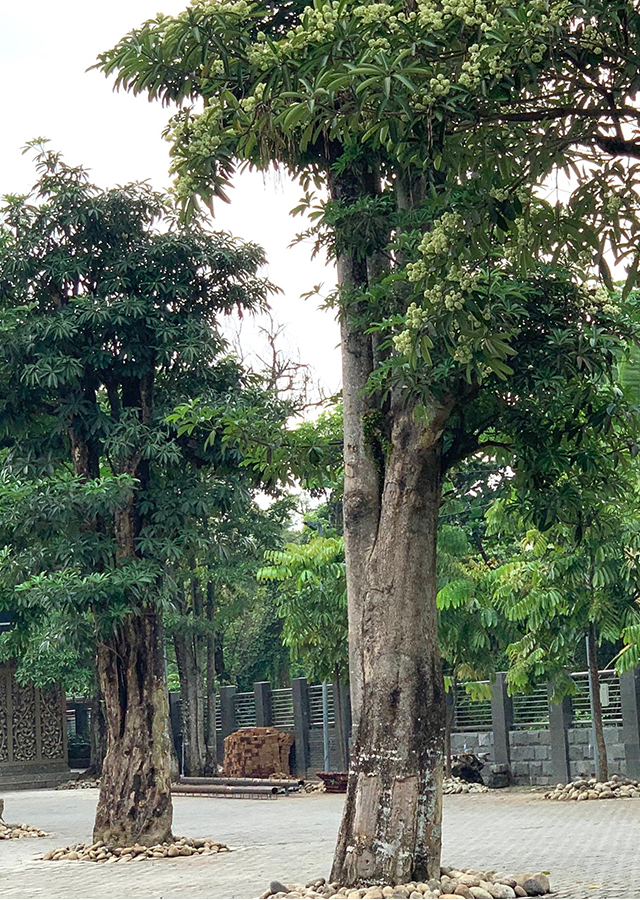
Pulai (Alstonia scholaris) is a large tree up to 40 meters tall of the Apocynaceae family, originating from South China, tropical Asia, and the Indian subcontinent, spread across almost all of Indonesia. In Bali, the pulai tree is considered sacred and is allowed to grow until it reaches a diameter of 200 cm. Traditionally, pulai is believed to relieve sore throats, worm infections, and help promote blood cleansing after childbirth.
Agroecology
Grows in areas at elevations of 1-1,230 m above sea level, annual rainfall of 1,000-3,800 mm/year, and not waterlogged.
Morphology
- Roots taproot, with porous lenticels on the root surface.
- Stem light brown bark with milky white sap inside the bark.
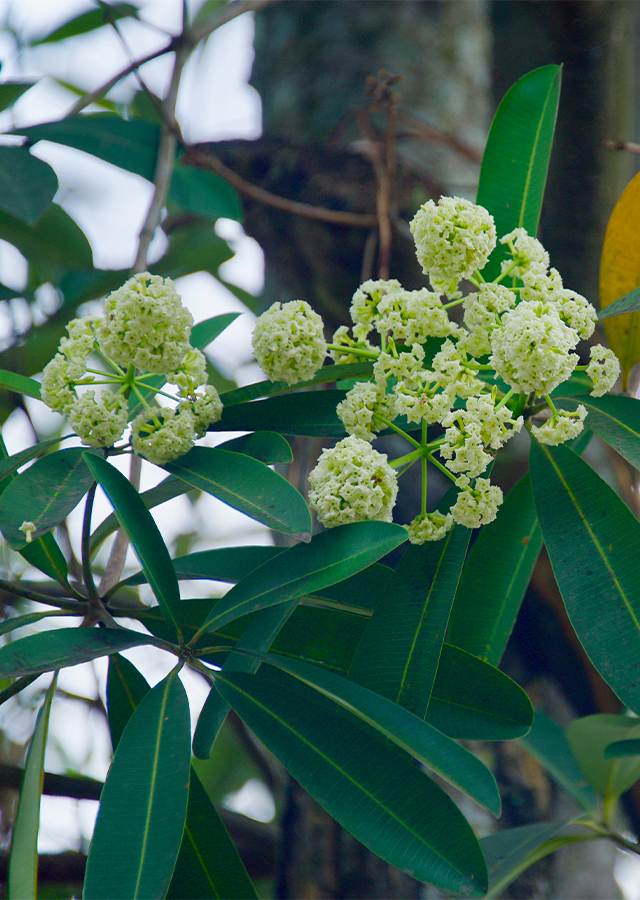
- Leaves oval like a spatula, tapering tip, glossy green with a paler underside.
- Flowers bisexual, compound, clustered at the leaf tips, oval calyx, yellowish-white.
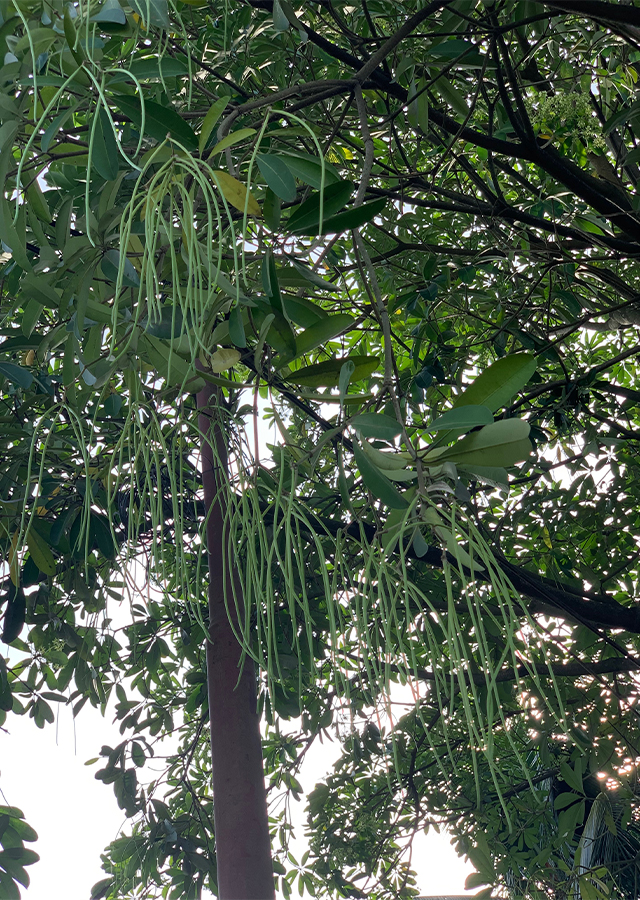
- Fruit ribbon-shaped, white, 20-50 mm long.
- Seeds oblong, hairy, small, white, 1.5-2 cm long.
Cultivation
Propagated generatively (by seed) and vegetatively (stem cuttings and shoot cuttings).
Chemical Content
Tannins, glycosides, triterpenoids, flavonoids, and phenols. Bark: alkaloids (echitenine, ditamine, ditaine, alstonine, reserpine, tetrahydroalstonine, alstonidine, yohimbine).
Benefits
Treats sore throat, worm infections, fever reducer, pus-filled ulcers, wounds, promotes blood cleansing after childbirth (postpartum), syphilis remedy, kidney stones, toxoplasmosis, aphrodisiac. Has antimalarial, antidiarrheal, anticancer, and antioxidant activity.
Simplisia
- Select a sufficiently mature stem, then cut into 10 cm pieces. Wash the material and drain. Make lengthwise incisions at two opposing points. Peel the bark away from the wood.
- Dry under shade for several days. Store in a clean container.
Local Names
Tewer (Aceh), Lame (Sunda), Polay (Madura), Hanjalatung (Kalimantan), Kita (Minahasa), Rite (Ambon), Aliag (Papua), Hange (Ternate).
Traditional Recipes
The following recipes reflect traditional knowledge passed down through generations, not a substitute for professional medical diagnosis or advice. Consult a healthcare provider before use.
1. Fever
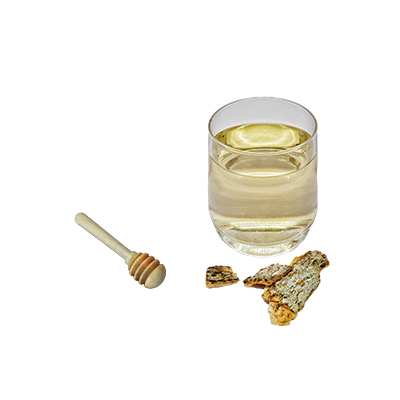
- Prepare 3 g pulai bark, 1 glass of water.
- Wash and boil the pulai for 15 minutes over low heat, cool and strain.
- Drink and add 1 tablespoon of honey or to taste.
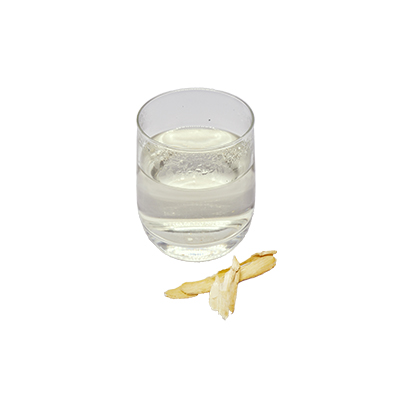
2. Aphrodisiac (Men's Vitality Remedy)
- 5-10 g inner bark, 2-3 glasses of water.
- Boil until it comes to a boil.
- Drink 1-3 times a day, 1 glass each time.
Reference Sources
- Arulmozhi S, Mazumder PM, Ashok P, Narayanan LS. 2007. Plant review pharmacological activities of Alstonia scholaris Linn. (Apocynaceae) - A review. Pharmacognosy Rev. 1(1): 163-170.
- Dey A. 2011. Alstonia scholaris R.Br. (Apocynaceae): phytochemistry and pharmacology: a concise review. J. Appl. Pharm. Sci. 1(6): 51-57.
- Rahmawati F. 2015. Optimasi Penggunaan Kromatografi Lapis Tipis (KLT) Pada Pemisahan Senyawa Alkaloid Daun Pulai (Alstonia scholaris L.R.Br). Skripsi. Universitas Islam Negeri Maulana Malik Ibrahim Malang.
- Shang JH, Caia XH, Zhaob YL, Fenga T, Luo XD. 2010. Pharmacological evaluation of Alstonia scholaris: anti-tussive, anti-asthmatic and expectorant activities. J. Ethnopharmacol. 129: 293–298.