Alternanthera sessilis (L.) R.Br. ex DC.
Summary
Kremah, or sessile joyweed (Alternanthera sessilis), is a herb up to 50 cm tall of the Amaranthaceae family, native to the Americas and widely distributed in tropical and subtropical Southeast Asia. Its leaves and shoots are commonly eaten as a vegetable, besides being grown as a yard ornamental. Traditionally, kremah is believed to boost immunity, improve blood circulation, and prevent premature graying.
Agroecology
Kremah grows in various soil types, but favors clay conditions with a soil pH of 5-7.5. In Indonesia, it is found from elevations of 0-2,650 m above sea level. Tolerant of extremely dry conditions and favors sunlight with an annual temperature of 15-30 °C.
Morphology
- Roots taproot, white and brownish.
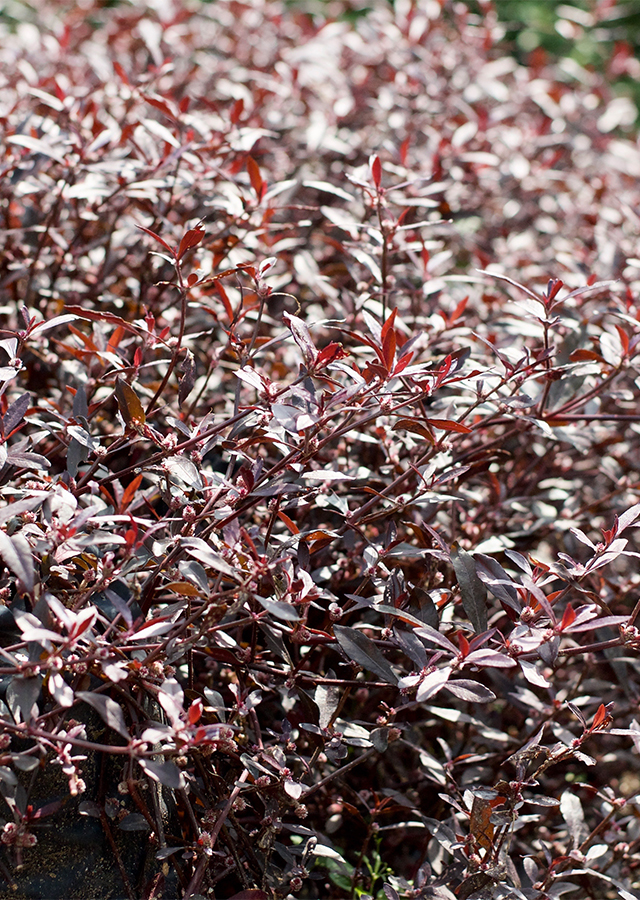
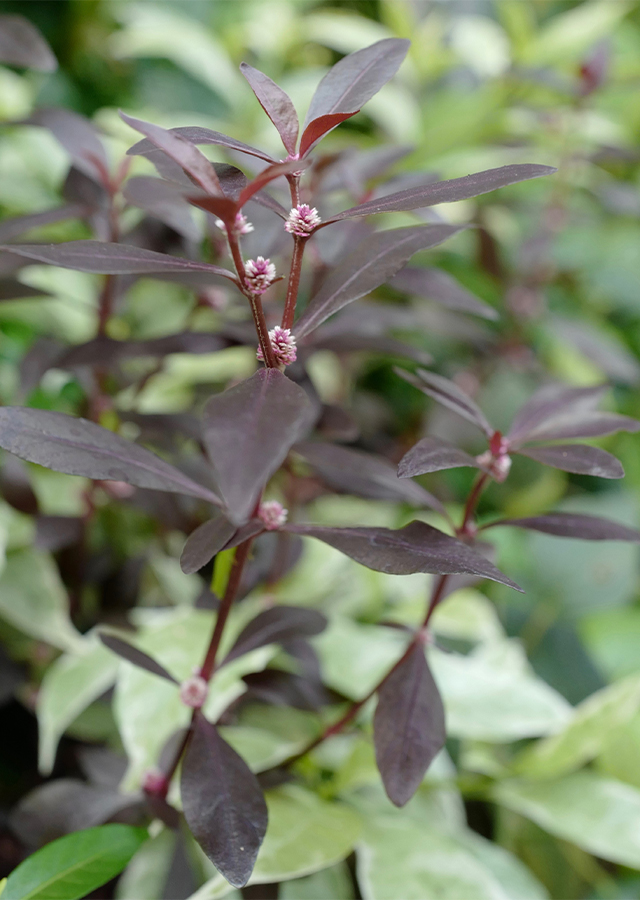
- Stem cylindrical, jointed, roots emerge at the nodes, smooth, reddish-purple.
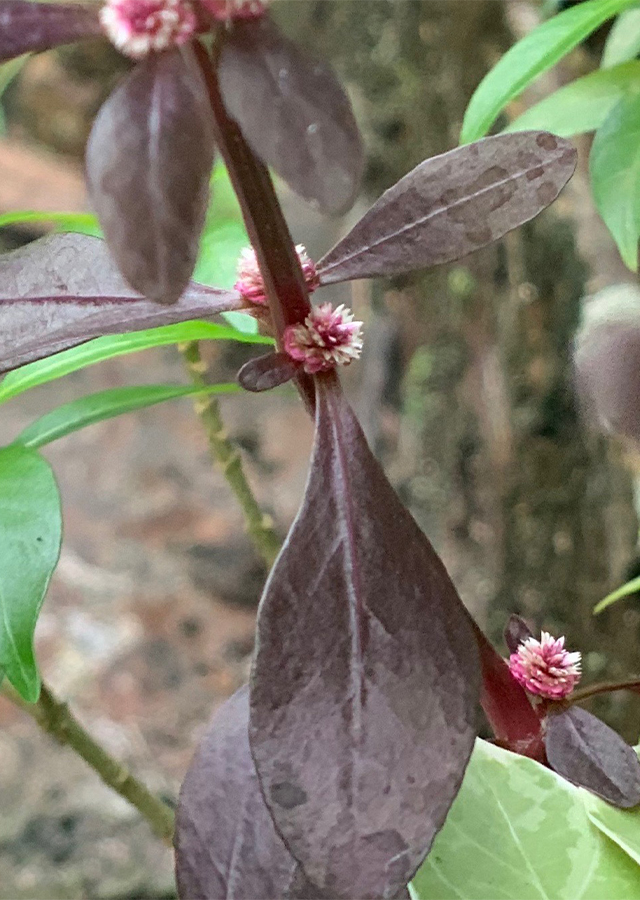
- Leaves compound, opposite, oblong, pointed tip and base, ± 2 cm long, ± 5 mm wide, pinnate venation, reddish-purple.
- Flowers small, compound, spike-shaped, pom-pom shaped, pink or reddish-white, five stamens, emerging in the leaf axils and at the stem tip.
- Fruit small box-shaped, brown.
- Seeds round, black, glossy.
Cultivation
Propagated generatively (by seed) or vegetatively (by stem cuttings).
Chemical Content
Sterols (stigmasterol, campesterol, β-sitosterol, α and β-spinasterol, α-stigmastanol, palmitate sterol), 24-methylenecycloartanol, flavonoids, cycloeucalenol, alkaloids, saponins, polyphenols.
Benefits
Stimulates appetite; warms the body; improves blood circulation; boosts the immune system; prevents premature graying; treats stomach ache or diarrhea, headache; helps prevent stomach ulcers; boosts breast milk production; acts as an antipruritic (relieves itching).
Simplisia
- Wash kremah stem and leaves thoroughly under running water, then drain.
- Dry the material using an oven (around 40-60 °C) until evenly dry.
- Once dry, grind the material into a powder.
- Pack in a clean, airtight container or bag.
Local Names
Omak (Batak), Juruk demah (Lampung), Daun keremak, Daun rusa, Sayor udang (Malay), Bayem kremah, Matean (Java).
Traditional Recipes
The following recipes reflect traditional knowledge passed down through generations, not a substitute for professional medical diagnosis or advice. Consult a healthcare provider before use.
1. Stomach Cramps
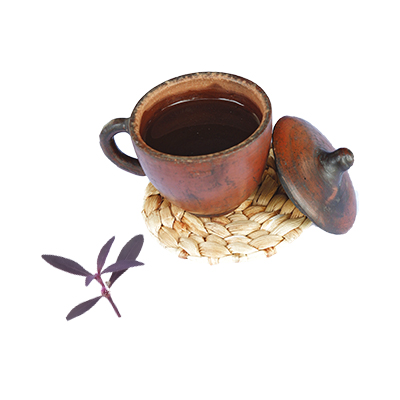
- ± 10 g fresh kremah stem and leaves.
- Wash and boil in 1 cup of water until boiling, reduce heat and simmer for 15 minutes.
- Strain the decoction. Drink the strained liquid all at once.
Reference Sources
- Arollado EC, Osi MO. 2010. Hematic activity of Alternanthera sessilis (L.) R. BR. (Amaranthaceae) in Mice and Rats. E-Int. Sci. Res. J. 2(2): 111-117.
- Hossain AI, Faisal M, Rahman S, Jahan R, Rahmatullah M. 2014. A preliminary evaluation of antihyperglycemic and analgesic activity of Alternanthera sessilis aerial parts. BMC Compl. and Alt. Med. 14:169-174
- Subhashini T, Krishnaveni B, Reddy CS. 2010. Anti- inflammatory activity of leaf extracts of Alternanthera sessilis. Hygeia. J.D. Med. 2(1):54-56.
- Walter TM, Merish S, Tamizhamuthu M. 2014. Review of Alternanthera Sessilis with reference to traditional siddha medicine. IJPPR. 6(2):249-254.
- Cara Profesor. 10 Manfaat daun kremah untuk kesehatan yang jarang diketahui. https://www.caraprofesor.com/manfaat-daun-kremah-untuk-kesehatan/. 05-06-2019.