Amaranthus spinosus L.
Summary
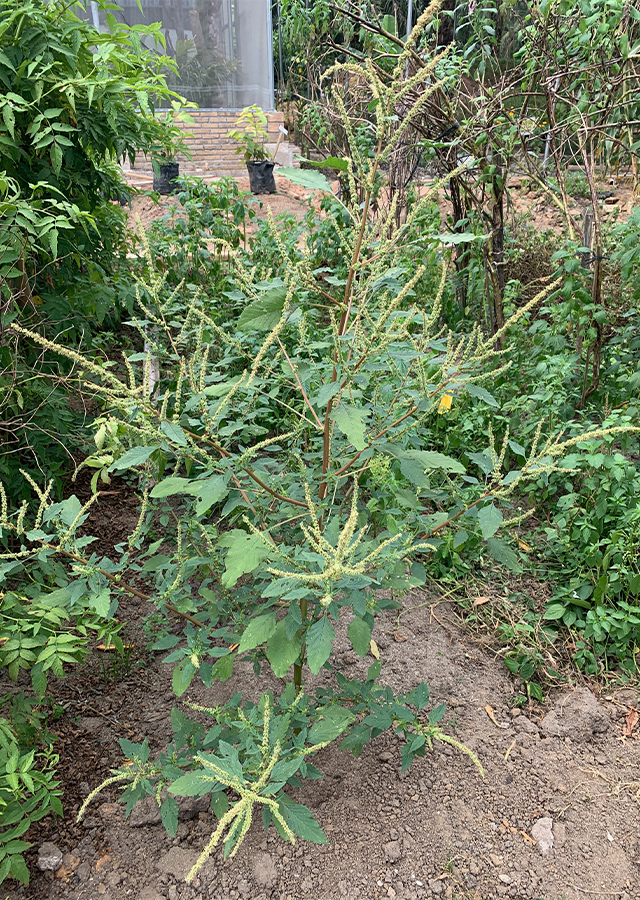
Bayam duri (Amaranthus spinosus) is an annual upright herb up to 100 cm tall of the Amaranthaceae family, originating from tropical America, now often considered a nuisance weed on agricultural land. Its young leaves can be eaten as a substitute for regular spinach, while the plant also produces a natural red food coloring. Bayam duri is traditionally believed to help heal broken bones and relieve boils.
Agroecology
Bayam duri grows wild in gardens, roadsides, vacant land from lowlands up to elevations of 1,400 m above sea level. Prefers somewhat open places, gets adequate sunlight, air temperature between 25-35 °C, fertile, moist soil, not waterlogged and soil pH between 6-7.
Morphology
- Roots taproot.
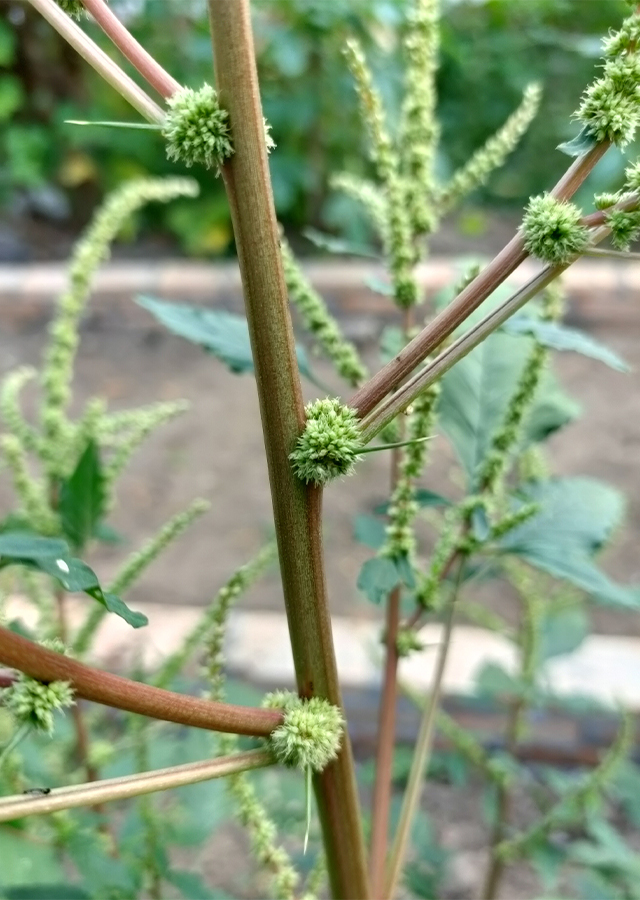
- Stem soft, contains water, heavily branched, thorny, round shaped, and smooth.
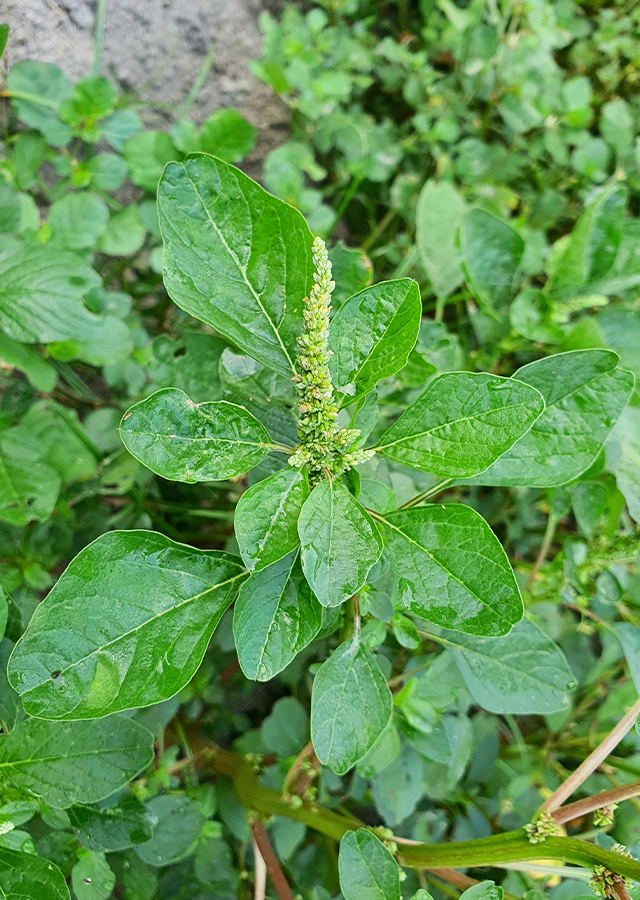
- Leaves single, greenish, elongated egg shaped, leaves arranged alternately, stalked.
- Flowers single-sex, numerous, sessile, green or greenish-white in color. Male flowers form spikes, female flowers round shaped.
- Fruit round elongated.
- Seeds round shaped, small, black in color, and glossy.
Cultivation
Propagated generatively (using seed).
Chemical Content
Anthraquinones, cardiac glycosides, saponins, flavonoids (quercetin 3-0-rutinoside diglycoside, kaempferol), phenolic acids (caffeoylquinic acid), betacyanin (amaranthine, isoamaranthine), isobetanin, betanin, alkaloids, hydroxycinnamate, amino acids, tannins, terpenoids.
Benefits
Treats broken bones, wounds, eczema, boils and burns, eye inflammation, seizures in children, fever reducer, diarrhea and dysentery, toothache and sore throat, hemorrhoids, cough, anemia, antidote for snake venom, diuretic.
Simplisia
- Prepare bayam duri roots and wash thoroughly with running water, then chop finely.
- Dry the root slices in direct sunlight and cover using black cloth.
- Once dry, grind the bayam duri root into powder form.
Local Names
Podo maduri (Bugis), Bayem cucuk, Bayem eri, Bayem raja, Bayem roda, Bayem cikron (Java), Bayam keruai (Lampung).
Traditional Recipes
The following recipes reflect traditional knowledge passed down through generations, not a substitute for professional medical diagnosis or advice. Consult a healthcare provider before use.
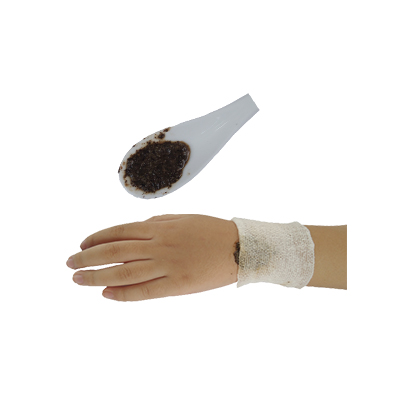
1. Treating Broken Bones
- Prepare an adequate amount of bayam duri seeds and wash thoroughly.
- Pound the bayam duri seeds, then apply to the broken body part. Wrap using a bandage.
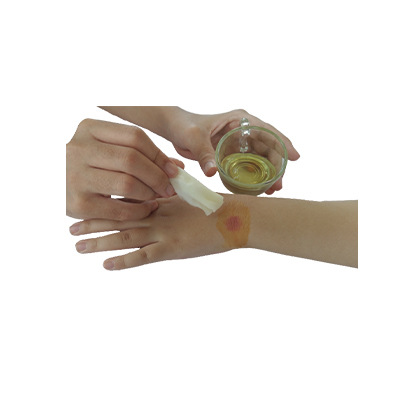
2. Cleaning Boils and Wounds
- Prepare 60-120 g fresh bayam duri plant.
- Boil the material in 2-3 glasses of water until the decoction is reduced by half.
- Once warm, use the decoction to clean the boil or wounded body part.
Reference Sources
- GBIF. (2019). Amaranthus spinosus L. https://www.gbif.org/species/5384401. 28-02-2021.
- CABI. (No date). Invasive Species Compendium. Amaranthus spinosus (spiny amaranth). https://www.cabi.org/isc/datasheet/4653 28-02-2021.
- Globinmed. (No date). Amaranthus spinosus. https://www.globinmed.com/index.php?option=com_content&view=article&id=79369:amaranthus-spinosus&Itemid=139. 28-02-2021.
- Stuartxchange. (2018). Philippine Medicinal Plants. Uray. http://www.stuartxchange.org/Uray.html. 28-02-2021.
- Pl@nt Use. Amaranthus spinosus (PROSEA). https://uses.plantnet-project.org/en/Amaranthus_spinosus_(PROSEA). 28-02-2021.