Amomum dealbatum Roxb.
Summary
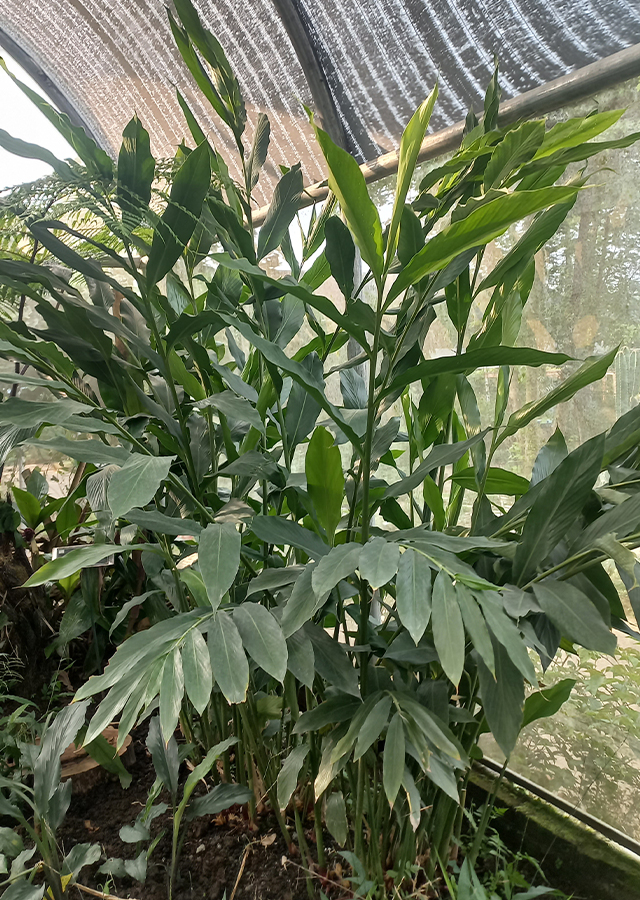
Parahulu (Amomum dealbatum) is a herb up to 3 meters tall with a thick rhizome from the Zingiberaceae family, distributed from India to Yunnan and Indonesia. Its sweet fruit is commonly eaten fresh, while its young shoots and tips are boiled as a vegetable. The rhizome of parahulu is traditionally used by postpartum women to cleanse themselves and remove the odor of postpartum blood.
Agroecology
Parahulu is distributed in forests, especially in moist, humus-rich soil, at elevations of 600-800 m asl.
Morphology
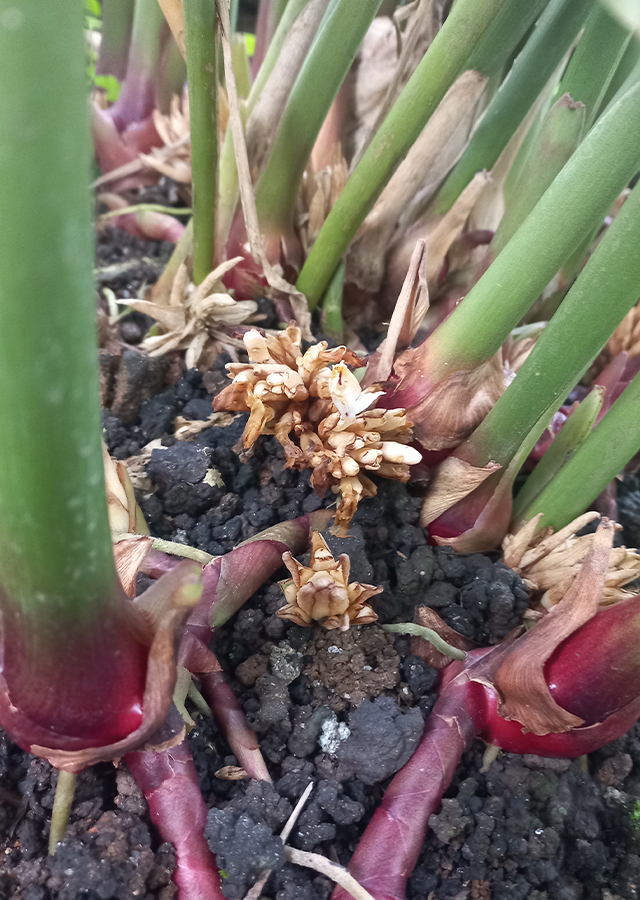
- Roots perennial, knobby, bent, jointed, creeping, like common ginger, with strong fleshy fibers, the inside of the tuber pale yellow and quite aromatic when freshly cut.
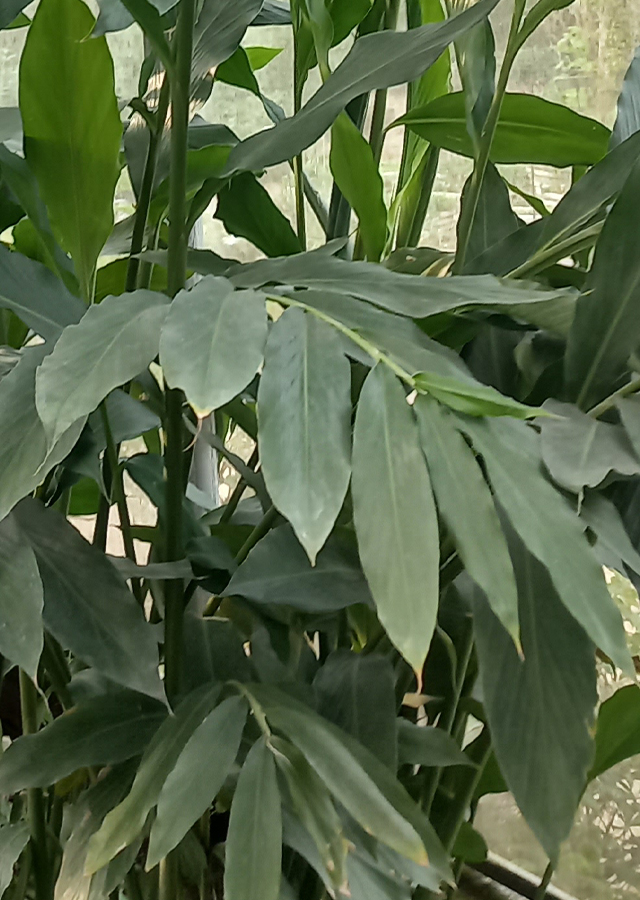
- Leaves elliptic or oblong-elliptic shaped, 30-90 × 10-20 cm, hairless on the upper side, finely white-hairy on the underside.
- Flowers compound, arranged in a nearly round cluster, about 5 cm in diameter, emerging from the rhizome near the base of the pseudostem. Corolla tube slightly longer than the calyx, white, elliptic in shape. Labellum white, with yellow in the center and reddish streaks at the base, ovate in shape, about 3.5 cm long.
- Fruit a capsule, green to purplish in color, ovoid, 2.5-3 × 1.8-2.4, with 9 (7-13) angles, finely hairy.
- Seeds small, blackish brown, nearly entirely wrapped in a grayish white fleshy aril, containing plenty of juice.
Cultivation
Parahulu can be propagated through seeds and root (rhizome) cuttings.
Chemical Content
Fruit contains flavonoids, terpenoids, alkaloids, steroids, and saponins. Rhizome contains flavonoid and terpenoid compounds. Leaves contain flavonoid, alkaloid, and tannin compounds.
Benefits
Treats joint pain and abscesses, relieves muscular rheumatism, treats cough, treats diarrhea, used by postpartum women to cleanse the genital area, used as bathwater for postpartum women as it is believed to remove the odor of postpartum blood. Has antiseptic activity.
Local Names
Wresah, Wersah or Resah (Java), Resak (Malay), Hanggasa, Hangasa, Ranggasa (Sunda), and Langkasa (Kangean).
Traditional Recipes
The following recipes reflect traditional knowledge passed down through generations, not a substitute for professional medical diagnosis or advice. Consult a healthcare provider before use.
1. Cough
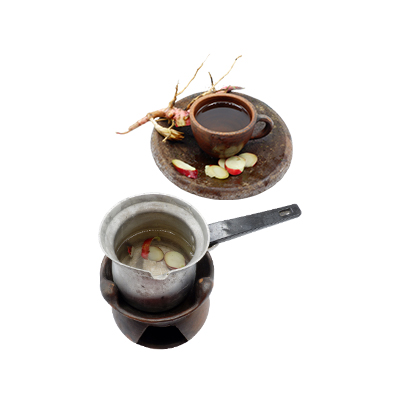
- Prepare an adequate amount of parahulu rhizome and wash until clean.
- Boil the rhizome until it boils.
- Let it cool to warm/cold.
- Strain then drink to treat cough.
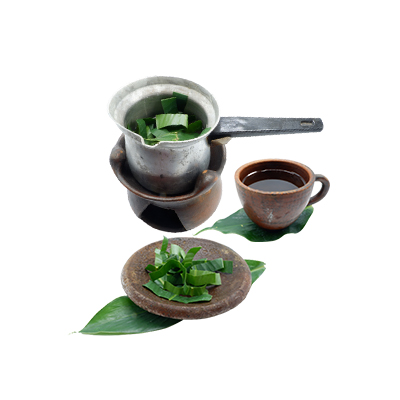
2. Diarrhea
- Take an adequate amount of fresh parahulu leaves and wash until clean.
- Boil the leaves until it boils.
- Let it cool to warm/cold.
- Strain then drink to treat diarrhea.
Reference Sources
- Useful Tropical Plants. 2021. Amomum dealbatum. https://tropical.theferns.info/viewtropical.php?id=Amomum+dealbatum. 13-11-2021.
- Roxburgh, W. 1820. Flora Indica, or, Descriptions of Indian plants 1:42. (Ed. 2, edited by W. Carey) 1:43. Serampore :Printed for W. Thacker, 1832.
- Ensiklopedia Dunia. Wresah. https://p2k.itbu.ac.id/id3/3064-2950/Wresah_103180_stiki-malang_p2k-itbu.html#cite_note-eflora-3. 13-11-2021.
- Pereira, J. 1853. Amomum maximum Roxburgh —The Great-winged Amomum, petikan dari The Elements of Materia Medica and Therapeutics, Vol. II, 3th American ed.
- Hanifa Nisa Isneni, Dyke Gita Wirasisya, Arinda Eka Muliani, Septia Budi Utami, Anggit Listyacahyani Sunarwidhi. 2021. Phytochemical Screening of Decoction and Ethanolic Extract of Amomum dealbatum Roxb. Leaves. Hanifa, et al. (2021). Jurnal Biologi Tropis, 21 (2): 510 – 518 DOI: http://dx.doi.org/10.29303/jbt.v21i2.2758. https://jurnalfkip.unram.ac.id/index.php/JBT/article/view/2758/1833. 13-11-2021.