Amorphophallus titanum (Becc.) Becc.
Summary
Corpse flower (Amorphophallus titanum) is a giant herb up to 4 meters tall from the Araceae family, a plant endemic to Sumatra discovered by Italian researcher Odoardo Beccari in 1878 in the Anai Valley, West Sumatra. Its glucomannan-rich tuber is processed into a food ingredient after a long process removing the itch-inducing sap. Corpse flower is traditionally used to treat stomach ache, fever, and help with weight control.
Agroecology
A. titanum mostly grows at elevations of 301-341 m asl, on slopes of 25-45% (steep). The soil type is latosol, or characterized by a fertile soil layer full of leaf litter on its top layer. A. titanum tends to be commonly found in places with low light intensity so the soil and surrounding environment become moist, at an average temperature ranging between 24-25°C with an average relative humidity ranging between 80-83%.
Morphology
- Roots of Amorphophallus titanum consist of a tuber. The tuber is roundish-flattened in shape, about 65 cm in diameter and about 40 cm tall, weighing up to 100 kg, with a somewhat rough surface and many accessories such as budding shoots, light brown in color, without side shoots.
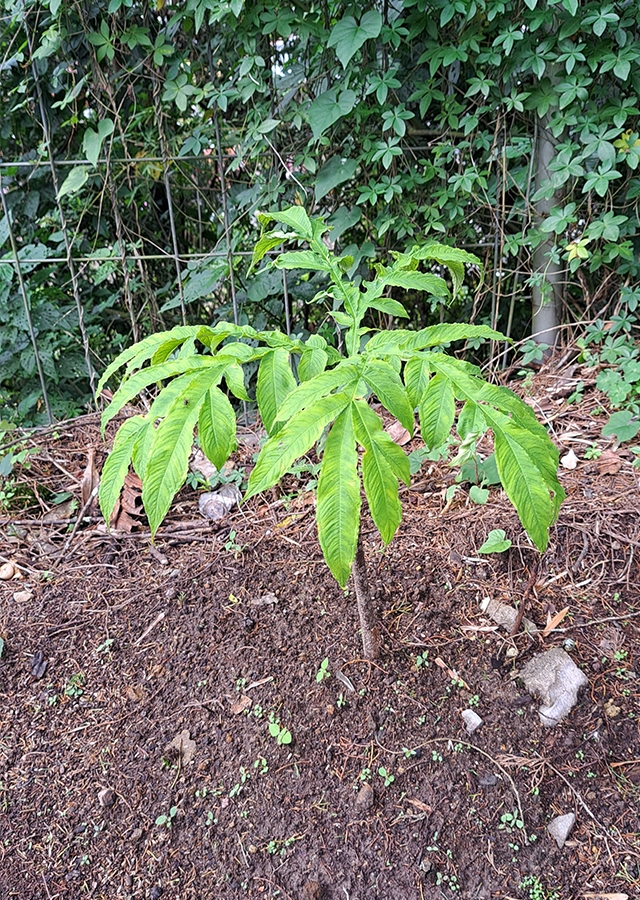
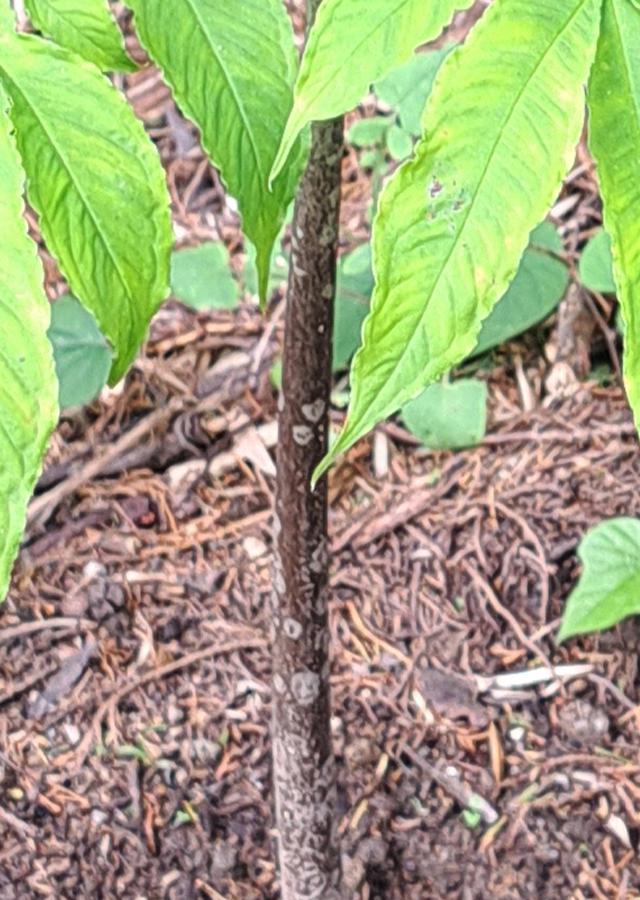
- Stem is a pseudostem composed of leaf sheaths clasping each other.
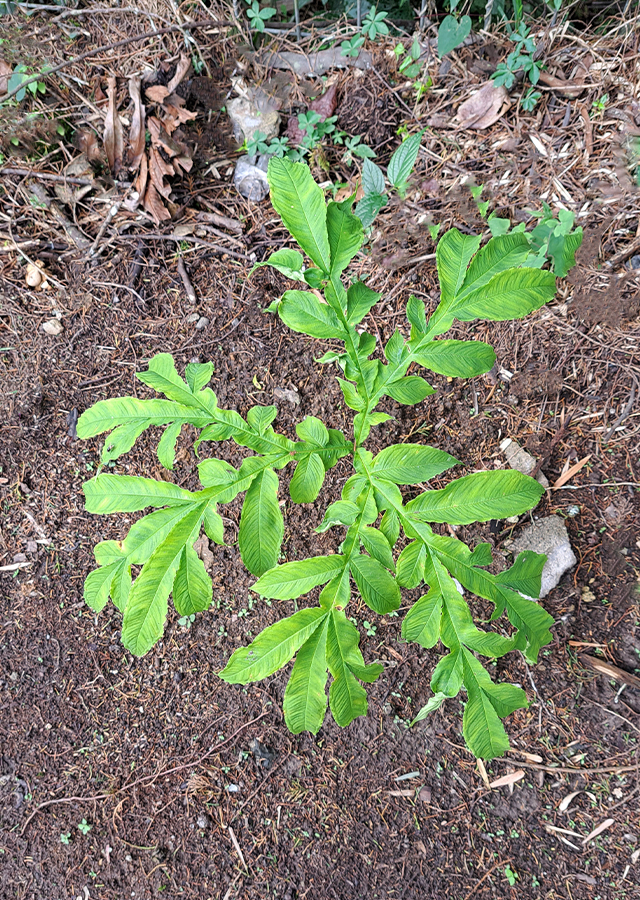
- Leaves about 7 m in diameter, leaflets lanceolate-elliptic, up to 40 cm long, apex tapering, leathery to the touch, upper surface green, somewhat glossy. The petiole of a mature plant can grow up to 3 m tall. There are white ring-shaped spots on the petiole. Leaves can last 9 to 24 months. Leaves on young plants last only 6 months.
- Flowers have a single inflorescence, a short flower stalk, about 30-70 cm long and about 10-15 cm in diameter, with a pattern and color similar to the petiole. The inflorescence of the corpse flower is a group of small male and female flowers arranged in a spike-like form attached to the spadix. The flowers attach at the base of the spadix. The spadix is yellow and surrounded by a purplish-red spathe. The spadix can reach a height of 3 m, earning the corpse flower the nickname 'Giant Flower.' The flower is monoecious, but the male and female flowers do not mature simultaneously. The flower blooms fully (female flowers mature) at night and emits a corpse-like odor. The male flowers mature the next day producing yellow pollen, making natural self-pollination difficult. When pollination of the corpse flower does not occur, the flower withers as if dying. The flower and its stalk decay leaving no trace. The corpse flower does not die, but enters a resting or dormant period. It subsequently grows into the leaf phase. A unique feature of this plant is that it has two life phases, generative (in the form of a flower) and vegetative (in the form of a leaf), which cannot be seen simultaneously in one plant. So while in leaf form it will not flower, and when it is time to flower it has no leaves.
- Fruit bright red or dark orange. The fruit shape is oblong-roundish, growing in clusters with one seed each.
- Seeds elliptical shaped, reddish orange, and sometimes a somewhat whitish blue.
Cultivation
Propagation can be done with seed and its tuber. The tuber is cut lengthwise. The growing tip section must be included so that the tuber cutting can sprout. Care must be taken to prevent the tuber cutting from rotting due to bacterial and fungal attack.
Chemical Content
Glucomannan.
Benefits
Treats stomach ache, fever, swelling, diarrhea, maintains digestive health, aids in absorbing toxic substances in digestion and acts as a weight control agent, neutralizes blood sugar levels. Has anticholesterol activity.
Local Names
Suweg raksasa, Kibut, Kehubut, (Bengkulu).
Traditional Recipes
The following recipes reflect traditional knowledge passed down through generations, not a substitute for professional medical diagnosis or advice. Consult a healthcare provider before use.
1. Swelling
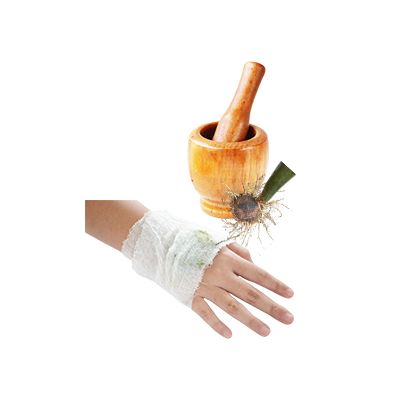
- Prepare corpse flower tuber and wash until clean.
- Grind until it becomes a paste.
- Apply then wrap with gauze.
Reference Sources
- Royal Botanic Gardens. 2021. Plants of the World Online: Amorphophallus titanum (Becc.) Becc. https://powo.science.kew.org/taxon/urn:lsid:ipni.org:names:84456-1. 17-12-2021.
- Nursanti, Cory Wulan, Monica Ria Felicia. 2019. Bioekologi Bunga Bangkai (Amorphophallus titanum (Becc.) Becc.) Di Desa Muara Hemat Resort Kerinci Selatan Taman Nasional Kerinci Seblat. Jurnal Silva Tropika Vol. 3 No. 2 Desember 2019. e-ISSN 2621-4113 p-ISSN 2615-8353. 17-12-2021.
- Istiqomah Widyawati, Umroh Fudolla, Wahyu Mustika Fitri. Amorphophalus titanum Bunga Endemik Sumatra. Pendidikan Biologi, Fakultas Keguruan dan Ilmu Pendidikan. Universitas Sebelas Maret. https://cbs.umn.edu/conservatory/corpse-flower/fast-facts. 17-12-2021.