Ananas comosus (L.) Merr.
Summary
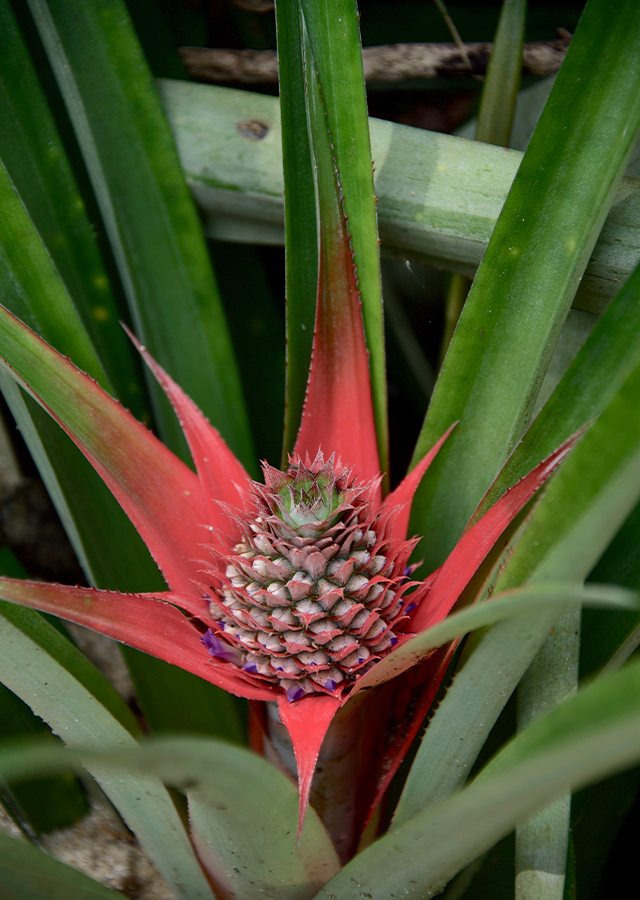
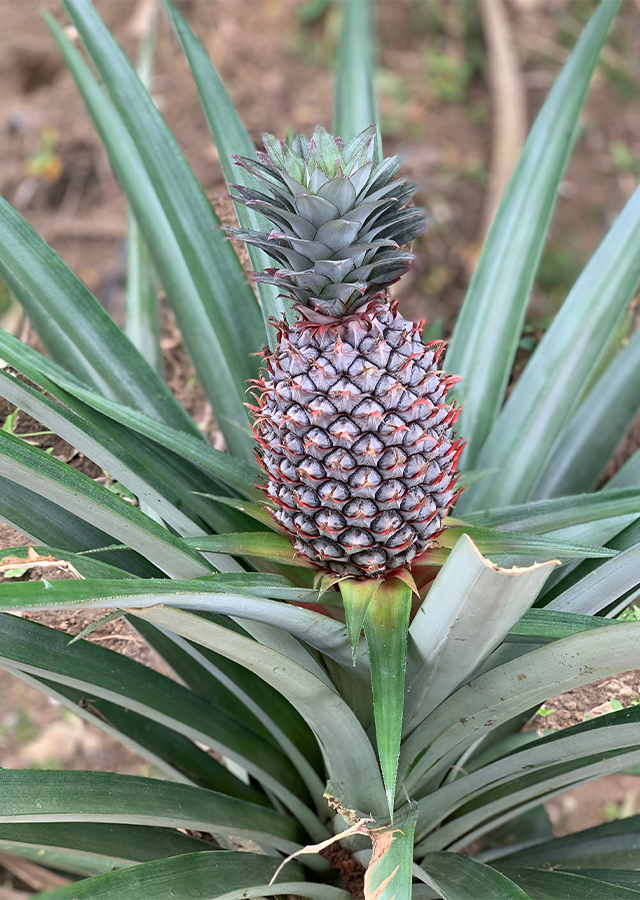
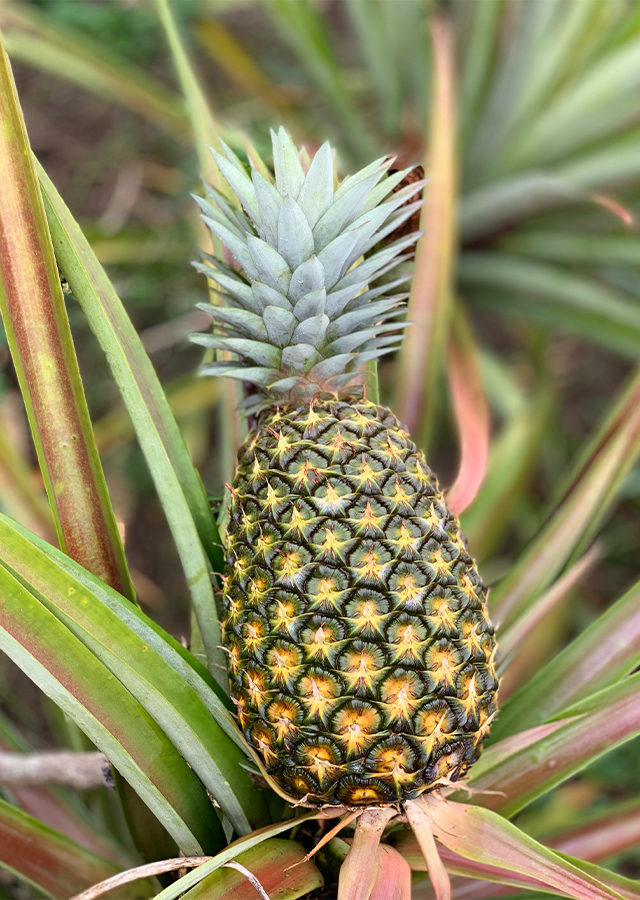
Pineapple (Ananas comosus) is a herb 50-100 cm tall of the Bromeliaceae family, originating from Brazil, brought by the Spanish to the Philippines in the 16th century before entering Indonesia in the 15th century. Europeans nicknamed it 'pina' because its shape resembles a pine cone. The bromelain content in pineapple is believed to help reduce inflammation, besides being rich in vitamin C and manganese.
Agroecology
Grows well at elevations of 100-800 m above sea level, rainfall between 1,000-1,500 mm/year, air temperature 21-27 °C with adequate sunlight. Prefers sandy clay soil, high in organic matter, pH 4.5-6.5. Drought-tolerant because it has water-storing cells.
Morphology
- Roots shallow, fibrous, at the base of the stem.
- Stem covered by leaf sheaths. The fruit stalk is an extension of the stem.
- Leaves long, ribbon-shaped, tapering leaf tip, stiff, without a main vein, generally sharply serrated edges.
- Flowers compound, hermaphrodite, has 100-200 flowers in one pineapple fruit.
- Fruit green (young), yellowish-green (ripe). Scaly skin, with many eyes.
Cultivation
Propagated generatively (by seed) and vegetatively (suckers, stem shoots, slips or fruit-base shoots, crown, stem cuttings).
Chemical Content
Alkaloids, flavonoids, tannins, phytosterols, phenolic glycosides, bromelain enzyme, citric acid, malic acid.
Benefits
Inhibits tumor growth, fights free radicals, aids weight loss, treats worm infections, sprains, boils, itching, skin inflammation, dandruff, constipation, beriberi, burns, diabetes, sore throat, digestive disorders, has antifungal activity.
Simplisia
- Prepare pineapple peel, wash thoroughly then separate from the fruit flesh and thorns, cut into small pieces.
- Dry the peel pieces by air-drying at room temperature away from direct sunlight. Drying is done for several days, until the peel pieces are completely dry.
- Store the dried material in a clean, airtight container.
Local Names
Henas, Kenas, Honas, Hanas (Batak), Anes (Aceh), Ganas, Danas (Sunda), Naneh (Minangkabau).
Traditional Recipes
The following recipes reflect traditional knowledge passed down through generations, not a substitute for professional medical diagnosis or advice. Consult a healthcare provider before use.
1. Beriberi
- Prepare 2 pineapples, peel then wash thoroughly.
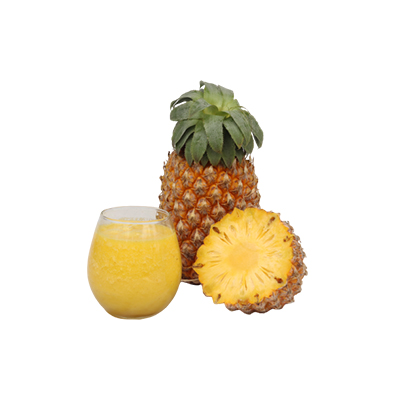
- Make pineapple juice or grate the pineapple. Squeeze and collect the fruit extract. Drink all at once.
- Drink in the morning or afternoon after eating.
- Diabetics should limit consumption because pineapple's sugar content is very high.
Reference Sources
- Kalpana M, Prasath GS, Subramanian SP. 2014. Studies on the antidiabetic activity of Ananas comosus leaves in STZ induceddiabetic rats. Der Pharmacia Lettre 6(1): 190-198.
- Lopes-Garcia B, Herna´ndez M, Segundo BS. 2012. Bromelain, a cysteine protease from pineapple (Ananas comosus) stem, is an inhibitor of fungal plant pathogens. Letters in Appl. Microbiol. 55: 62-67.
- Maa C, Xiao S, Li ZG, Wang W, Dua LJ. 2007. Characterization of active phenolic components in the ethanolic extract of Ananas comosus L. leaves using high-performance liquid chromatography with diode array detection and tandem mass spectrometry. J. Chromatography A. 1165: 39–44.
- Xie W, Xing D, Sun H, Wang W, Din Y, Du LJ. 2005. The Effects of Ananas comosus L. leaves on diabetic-dyslipidemic rats induced byalloxan and a high-fat/high-cholesterol diet. Amer. J. Chin. Med. 33(1): 95–105.