Anethum graveolens L.
Summary
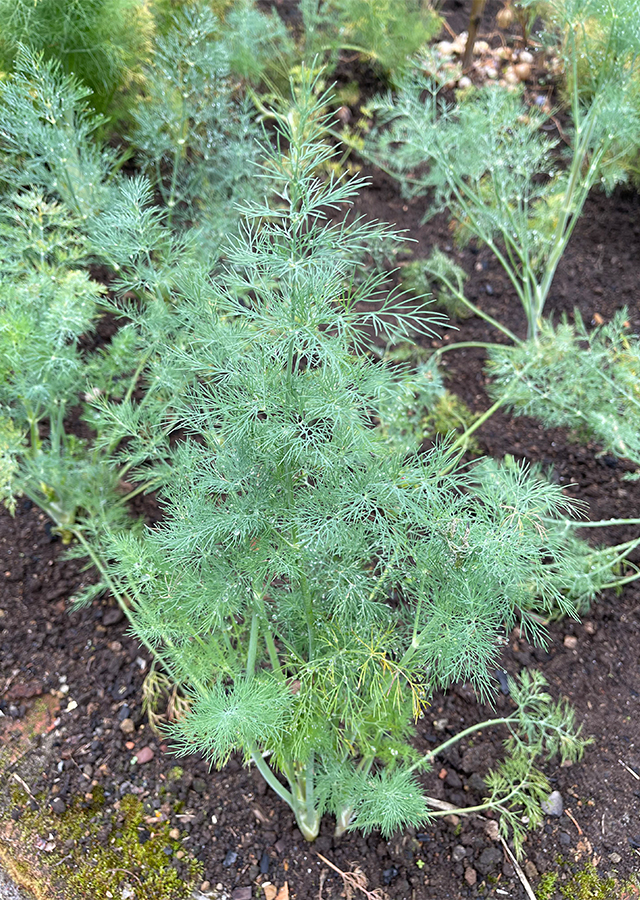
Dill (Anethum graveolens) is an annual herb up to 1.5 meters tall of the Apiaceae family, native to the region from Algeria to Saudi Arabia, brought throughout Europe by monks since Roman times. This plant became a cooking spice as well as an important medicine in Ayurveda, Unani, and Siddha traditions. Dill is traditionally believed to address bloating in children and promote breast milk flow.
Agroecology
Dill is a summer plant in temperate climate regions while in tropical regions it grows better at elevations of 200-2,000 m above sea level. Prefers loose, fertile soil, well-drained, protected from wind, and tolerates soil pH in the range of 5.3 to 7.8. The plant will be sturdier in full sunlight compared to semi-shade.
Morphology
- Root a taproot up to 12 mm in diameter.
- Stem subterete, many-branched, sulcate, segments often hollow.
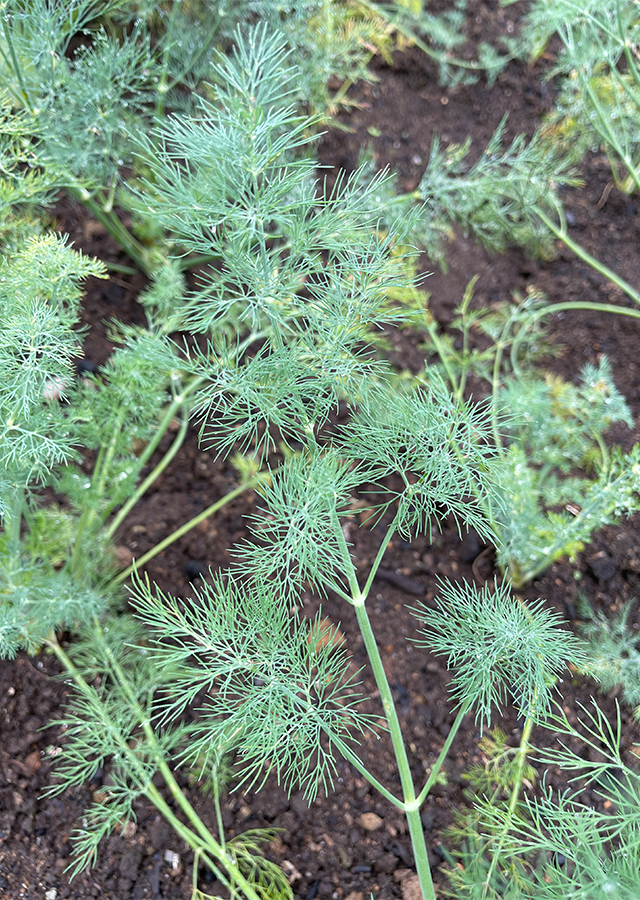
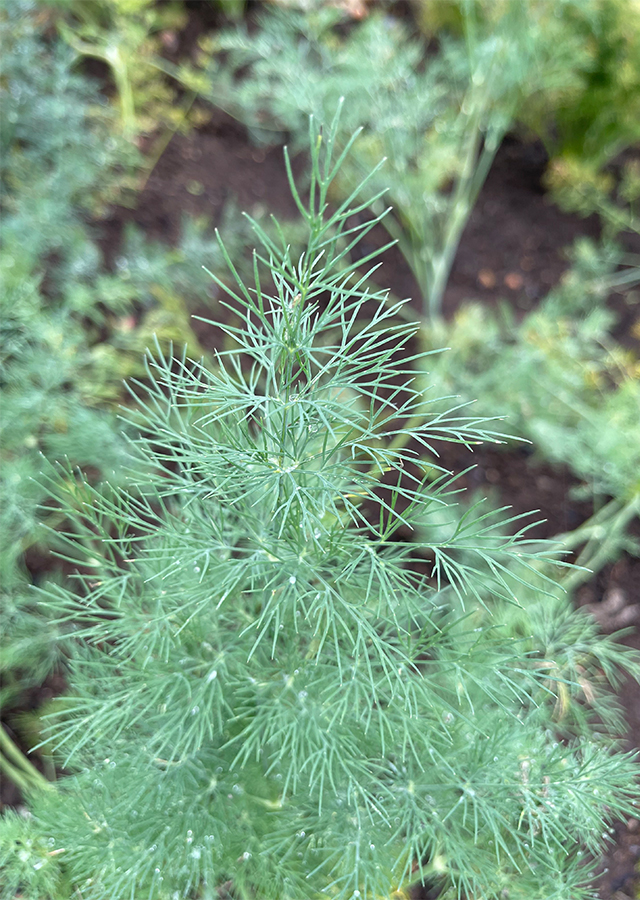
- Leaves filiform, dividing into three or four pinnate parts, similar to and wider than fennel leaves.
- Flowers an umbel (an inflorescence consisting of a number of short flower stalks (called pedicels) spreading from the same point, somewhat like umbrella ribs). Yellow color.
- Fruit oblong, solid, winged, about 2 cm wide, with three elongated protrusions on the back and three dark lines on the flat surface.
- Seeds small, oval, flat, has a pungent fragrance, and a slightly bitter sweet taste.
Cultivation
Dill reproduces generatively using seed. Seeds germinate within 2 weeks if the soil is warm.
Chemical Content
Tannin, terpenoid, saponin, steroid, flavonoid, cardiac glycoside, anthraquinone, coumarin, essential oil (carvone, limonene, phellandrene including pinene, diterpene, cineole, myrcene, myristicin, apiol).
Benefits
Addresses bloating in young children, colic, stomach acid, cough remedy, colds and flu, removes bad breath, promotes breast milk flow in nursing mothers.
Simplisia
- Prepare dill seeds, wash thoroughly with running water then drain.
- Dry in direct sunlight for several days or with an oven at 40°C until moisture content reaches 10%.
- Store the simplisia in a clean, airtight plastic or container.
Local Names
Adas manis, Ender.
Traditional Recipes
The following recipes reflect traditional knowledge passed down through generations, not a substitute for professional medical diagnosis or advice. Consult a healthcare provider before use.
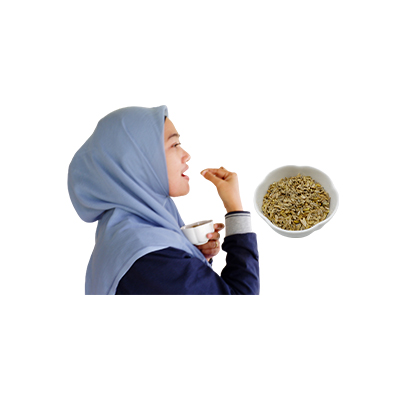
1. Bad breath
- Take dill seeds then wash thoroughly with running water.
- Chewing the seeds directly can help reduce bad breath.
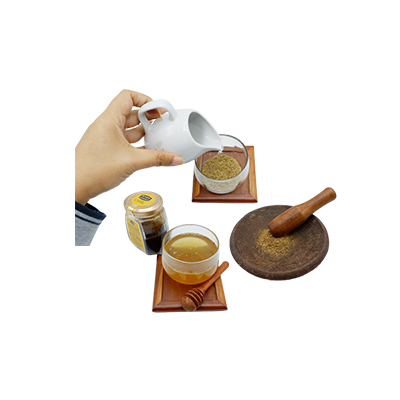
2. Promoting breast milk flow
- Prepare 10 g dried dill fruit/seeds then pound until fine and steep with hot water.
- Add pure honey as needed.
- Drink this dill plant concoction regularly twice a day (morning and night) for 3 days, after that as needed.
Reference Sources
- Stuartxchange. 2021. Philippine Medicinal Plants: Dill. http://www.stuartxchange.org/Dill. 31-08-2021.
- Royal Botanic Gardens. 2017. Plants of the World Online: Anethum graveolens L. http://powo.science.kew.org/taxon/urn:lsid:ipni.org:names:837530-1. 31-08-2021.
- Useful Tropical Plants. 2021. Anethum graveolens. https://tropical.theferns.info/viewtropical.php?id=Anethum+graveolens. 31-08-2021.
- CAB International. 2021. Anethum graveolens (dill). https://www.cabi.org/isc/datasheet/3472. 31-08-2021.