Angelica acutiloba (Siebold & Zucc.) Kitag.
Summary
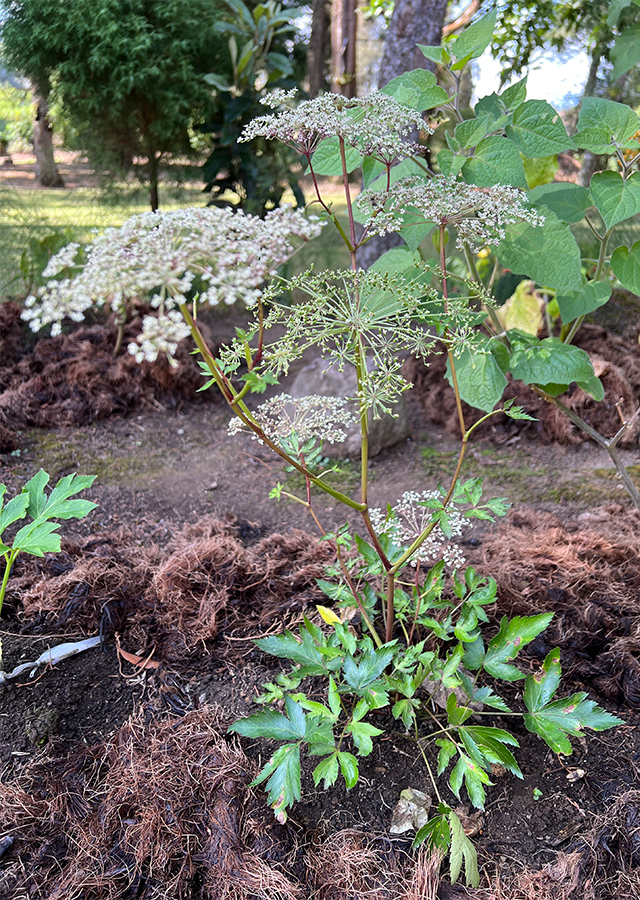
Angelica acutiloba or ganti is native to Central Japan, and in Indonesia is only found in the highland yards of Java and Madura. Its root or stem is used as a natural red dye when mixed with ingredients such as masoyi, black cumin, and nutmeg, and also serves as an ingredient in param (herbal rub) and jamu mixtures. As a renowned Chinese herbal remedy, ganti is widely known as a 'blood tonic' for women, its reputation second only to ginseng, with a root bearing a distinctive sweet, spicy aroma.
Agroecology
Species in this genus generally grow best in deep, moist marginal soil, at elevations of 2,000 m asl, under dappled shade or full sun.
Morphology
- Roots elongated, irregularly shaped, with a short knob and several thickened secondary roots.
- Stem small and jointed, hairless, striate, solid.
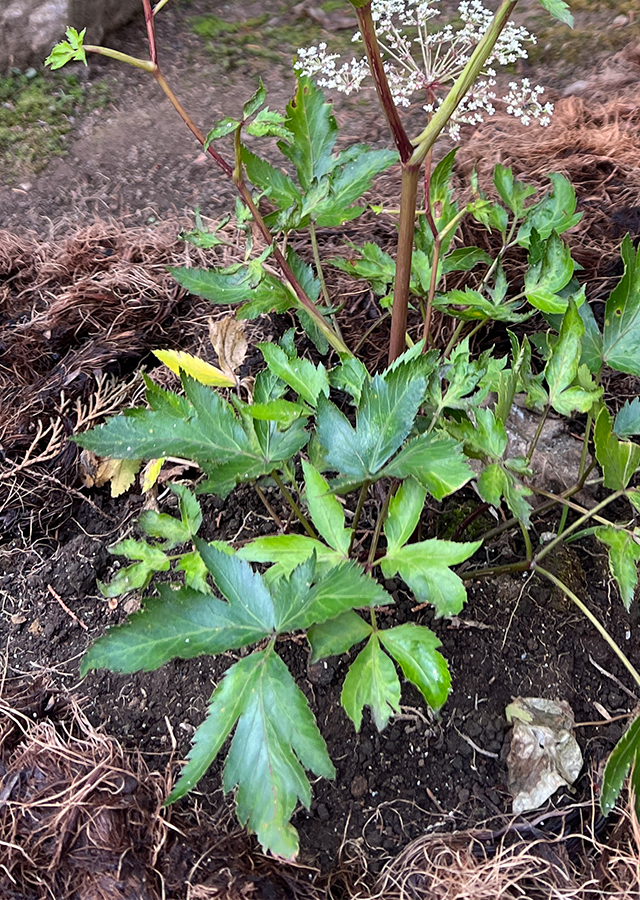
- Leaves broadly alternate, long petiole at the lower part of the stem, 1-2 times pinnate, deltoid in outline, 10-25 cm long, hairless, with a leaf sheath, no stipules. Leaflets trifid, 5-10 cm × 1-2.5 cm, acute, truncate or rounded at the base, final segments lanceolate, long-acute, margin dentate, venation prominently reticulate.
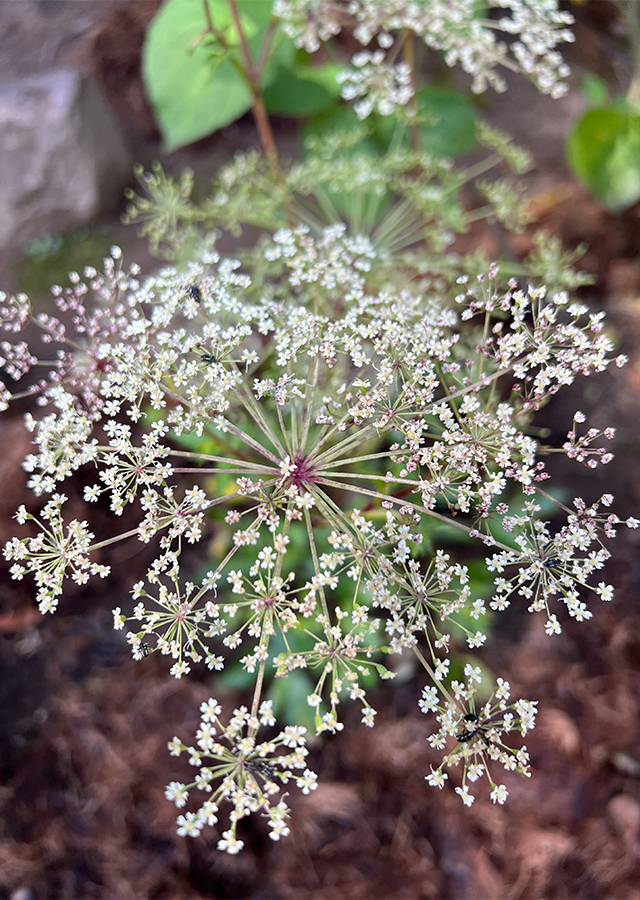
- Flowers yellow. Inflorescence at the tip of the stem, clustered resembling an open umbrella with a diameter of ±20 cm, the flower stalk also long, reaching ±25 cm.
- Fruit elongated, resembling a small tube, ±8 mm long, ±3 mm wide, fruit color green to yellowish brown.
Cultivation
Propagation is done generatively using seed. Seed is best sown in a cold frame as soon as ripe because the seed has only short viability. This plant needs light for germination. When large enough, move seedlings into individual pots and grow on in a cold frame. Seed can also be sown in place as soon as ripe.
Chemical Content
Polysaccharides, lactones, and alkynes. A. acutiloba root contains two anticholinergic compounds: ligustilide and butylidenephthalide. They also contain seven analgesic compounds: falcarinol, falcarindiol, and falcarinolone (polyacetylenes), and choline, scopoletin, umbelliferone, and vanillic acid.
Benefits
Used in Japan and China as a general tonic and prescribed in the treatment of dysmenorrhea, phthisis, and bleeding. It is also used as an emmenagogue, a remedy for anemia, to reduce pain during childbirth, and in Indochina, is carminative and galactagogue. Has antioxidant activity.
Simplisia
- Prepare ganti plant root and wash clean with running water.
- Dry under the sun or with an oven at 40°C until the moisture content reaches 10%.
- Grind using a blender until it becomes powder.
- Store in a clean, airtight container.
Local Names
Gante (Madura).
Traditional Recipes
The following recipes reflect traditional knowledge passed down through generations, not a substitute for professional medical diagnosis or advice. Consult a healthcare provider before use.
1. Regulates menstruation and relieves pain
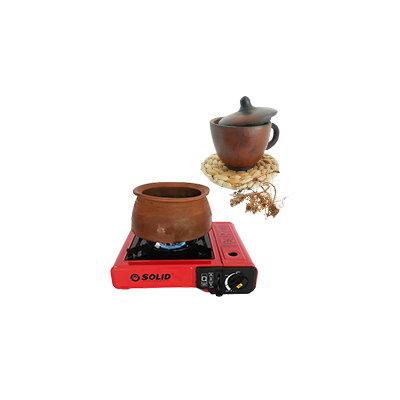
- Take ganti plant root and wash until clean.
- Boil until it boils.
- Let it cool to warm/cold.
- Strain then drink.
Reference Sources
- Kebun Raya Kerajaan. Tanaman Dunia Online: Angelica acutiloba (Siebold & Zucc.) Kitag.. https://powo.science.kew.org/taxon/urn:lsid:ipni.org:names:837548-1#synonyms. 13-09-2022.
- Tumbuhan sedang yang berguna. 2022. Angelica acutiloba. https://temperate.theferns.info/plant/Angelica+acutiloba. 13-09-2022.
- Pejuang Keanekaragaman Hayati. 2015. Angelica acutiloba: Ganti tanaman pewarna alami. https://biodiversitywarriors.kehati.or.id/artikel/angelica-acutiloba-ganti-tanaman-pewarna-alami/. 13-09-2022.
- PROSA. Angelica acutiloba (PROSEA). http://uses.plantnet-project.org/en/Angelica_acutiloba_(PROSEA). 13-09-2022.