Angelica keiskei (Miq.) Koidz.
Summary
Ashitaba (Angelica keiskei) is a biennial or perennial herb up to 1.5 meters tall from the Apiaceae family, a plant endemic to Japan known as one of the secrets of Japanese longevity. Its leaves are used in soba, tempura, and herbal tea, rich in vitamins, minerals, and chlorophyll. Research shows ashitaba has anti-inflammatory, antiobesity, and antidiabetic activity.
Agroecology
Ashitaba is a plant that grows wild in barren, rocky, sandy areas, and in humid coastal habitats. In Indonesia, ashitaba plants grow well in cool-climate areas at elevations above 500 m asl. This species prefers deep, fertile, moist, well-drained soil, and can grow in shaded places, but is also able to survive in open areas or exposed to light.
Morphology
- Roots fibrous and in its development will undergo modification into tuber-shaped roots that make the root appear to have a taproot system. Young roots are whitish-yellowish to light brown and turn dark brown when mature. Rhizome thick and short, with a few elongated roots.
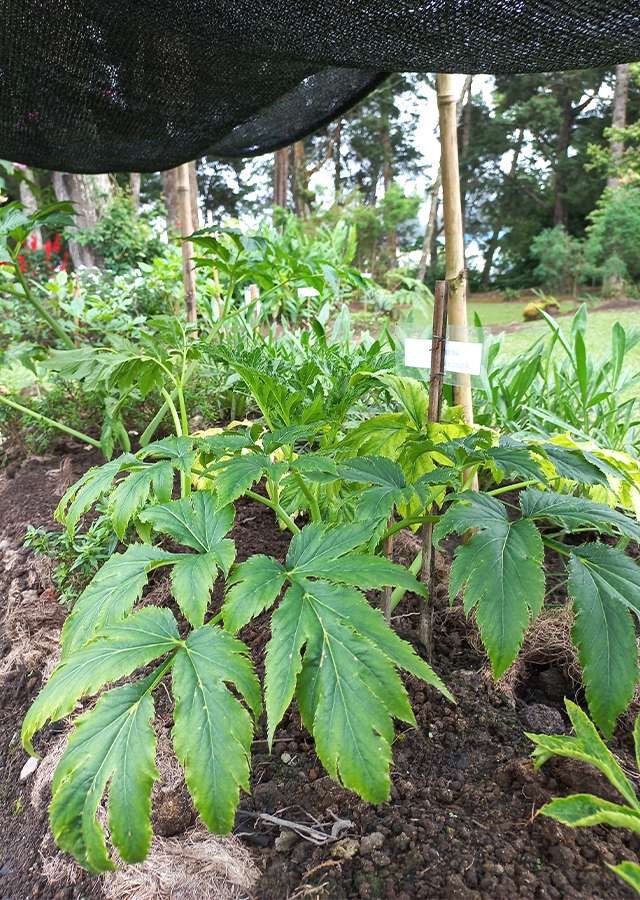
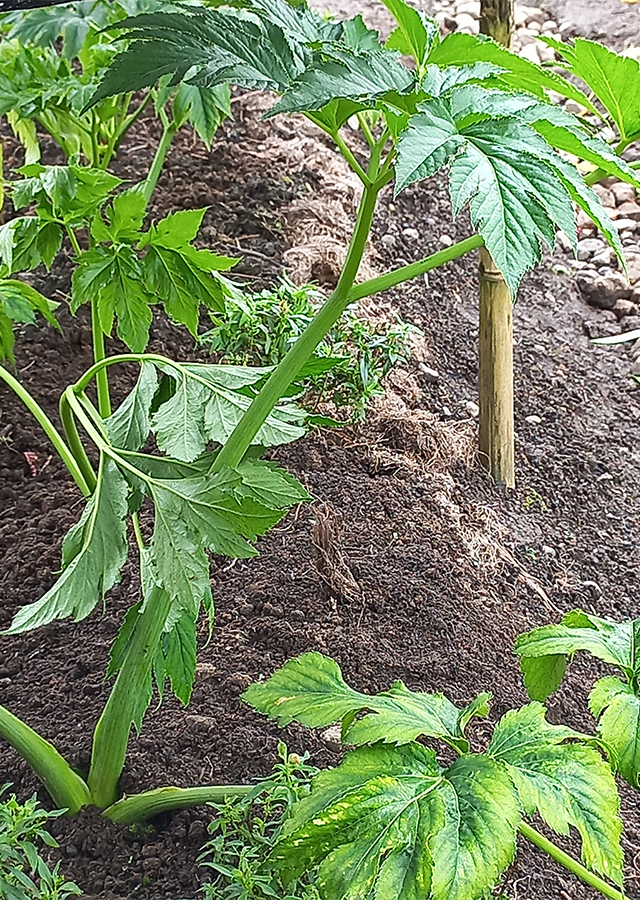
- Stem soft, watery, hairless, round shape, jointed and grooved, green, growing perpendicular, if cut will exude yellow sap.
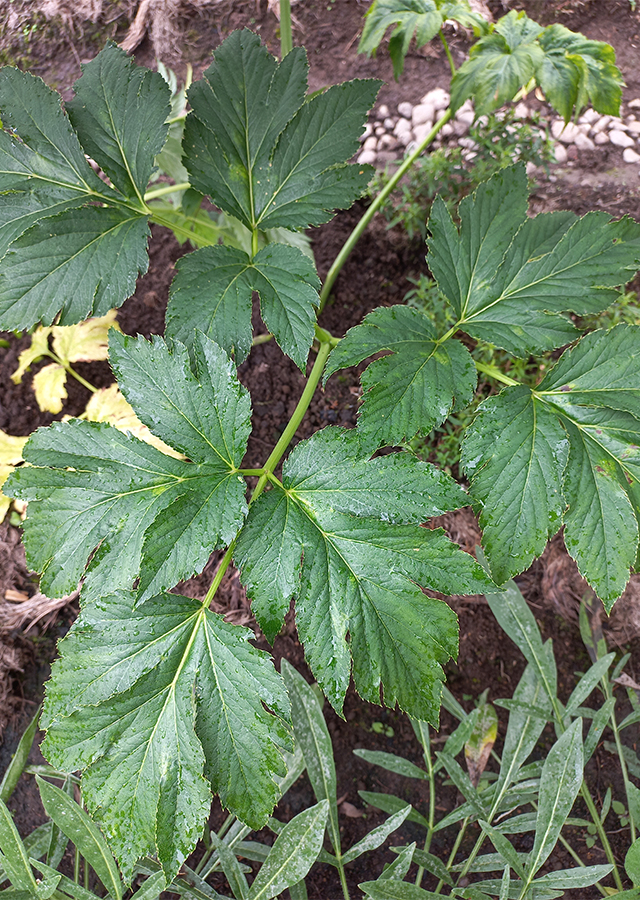
- Leaves compound, leaflets have 3-7 leaflets, glossy green, leaf shape like celery, deltoid, hairless, base and tip of leaf tapering, leaf margin serrated, pinnate veins. Aromatic like ginseng when the leaf is crushed.
- Flowers hermaphroditic (male and female organs in one flower), small, white petals arranged in a radiating pattern found in a single plane. Inflorescence type is a compound umbel, flower arrangement grows at the stem tip.
- Fruit a schizocarp consisting of 2 mericarps that separate when ripe, oblong shape, hairless, short and somewhat thick dorsal ribs, lateral ribs winged.
- Seeds oblong, pointed at both ends, green and turning brown when old, seed coat fused with the pericarp, endosperm oily.
Cultivation
- Propagation is done generatively using seeds, by soaking them first before sowing. Soaking is done in cold water overnight then drained.
- During the nursery period, the sand is kept moist and after about 15 days, the seeds will germinate. After being about 2 months old, the seedlings can be transplanted to the field.
- Harvesting can be done at 4-6 months of age.
Chemical Content
Furocoumarins, psoralen, bergapten, xanthotoxin, angelicin, 1-cerotol, daucosterol, stigmasterol, quercetin-3-O-β-D-glucopyranoside, luteolin-7-rhamno-glucoside, luteolin-7-O-α-D-glucopyranoside, steviol-13-O-β-glucopyranoside 19-β-glucopyranosyl ester octaacetate, chalcone compounds (2′,4′,4-trihydroxy-3′-[2-hydroxy-7-methyl-3-methylene-6-octaenyl]chalcone, 2′,4′,4-trihydroxy-3′-geranylchalcone, 2′,4′,4-trihydroxy-3′-[6-hydroxy-3,7-dimethyl-2,7-octadienyl]chalcone, 2′,4-dihydroxy-4′-methoxy-3′-[2-hydroperoxy-3-methyl-3-butenyl]chalcone, 2′,4-dihydroxy-4′-methoxy-3′-geranylchalcone, and 2′,4-dihydroxy-4′-methoxy-3′-[3-methyl-3-butenyl]chalcone), chalcones 4-hydroxyderricin, xanthoangelol.
Benefits
External treatment of smallpox, treats intestinal disorders, dysuria, arthritis, menstrual problems, chronic hepatitis, diabetes, asthma, colds, high blood pressure, anemia, chronic fatigue syndrome, infertility, shoulder stiffness, nerve pain, hemorrhoids, increases breast milk, boosts the body's natural immunity, slows skin aging, helps with weight loss, addresses acne. Has diuretic, laxative, analeptic (respiratory stimulant), anti-inflammatory, antioxidant, antitumor, blood-cleansing, anticoagulant, antimutagenic, antibacterial, anticancer, and hepatoprotective properties.
Simplisia
- Prepare fresh ashitaba stem, wash clean with running water.
- Cut the stem into pieces to make drying easier.
- Dry under sunlight or with an oven at 40 °C until moisture content reaches 10%.
- Blend into powder.
- Store in a clean, airtight place.
Local Names
Seledri jepang.
Traditional Recipes
The following recipes reflect traditional knowledge passed down through generations, not a substitute for professional medical diagnosis or advice. Consult a healthcare provider before use.
1. Increasing breast milk
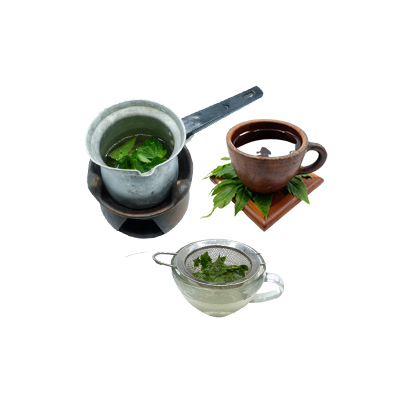
- Prepare fresh ashitaba leaves as needed and wash until clean.
- Boil the leaves until boiling.
- Let stand until warm/cool.
- Strain the decoction, then drink.
2. Smallpox
- Take fresh ashitaba leaves as needed.
- Wash clean with running water.
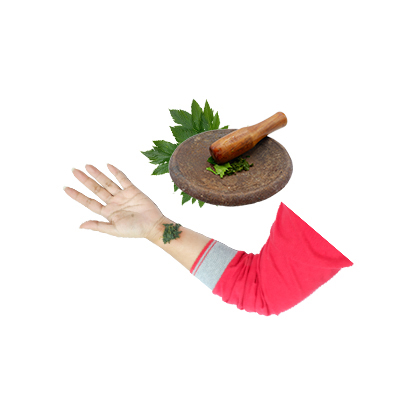
- Mash into a paste.
- Apply the leaf paste to the smallpox lesions.
Reference Sources
- Royal Botanic Gardens. 2021. Plants of the World Online: Angelica keiskei (Miq.) Koidz. http://powo.science.kew.org/taxon/urn:lsid:ipni.org:names:837661-1. 09-11-2021.
- Stuartxchange. 2019. Philippine Medicinal Plants: Ashitaba. http://www.stuartxchange.org/Ashitaba.html. 09-11-2021.
- Flora Fauna Web. 2021. Angelica keiskei Koidz. https://www.nparks.gov.sg/florafaunaweb/flora/6/3/6399. 09-11-2021.
- Useful Temperate Plants Database. 2021. Angelica keiskei. http://temperate.theferns.info/plant/Angelica+keiskei. 09-11-2021.
- Ashitaba Indonesia. 2017. Ashitaba (Angelica keiskei). http://ashitaba-indonesia.blogspot.com/2017/11/tanaman-ashitaba.html. 09-11-2021.
- Kil Y. S., Pham S. T., Seo E. K., Jafari M. 2017. Angelica keiskei, an emerging medicinal herb with various
bioactive constituents and biological activities. Arch. Pharm. Res. 40:655–675. DOI 10.1007/s12272-017-0892-3.