Angelonia angustifolia Benth.
Summary
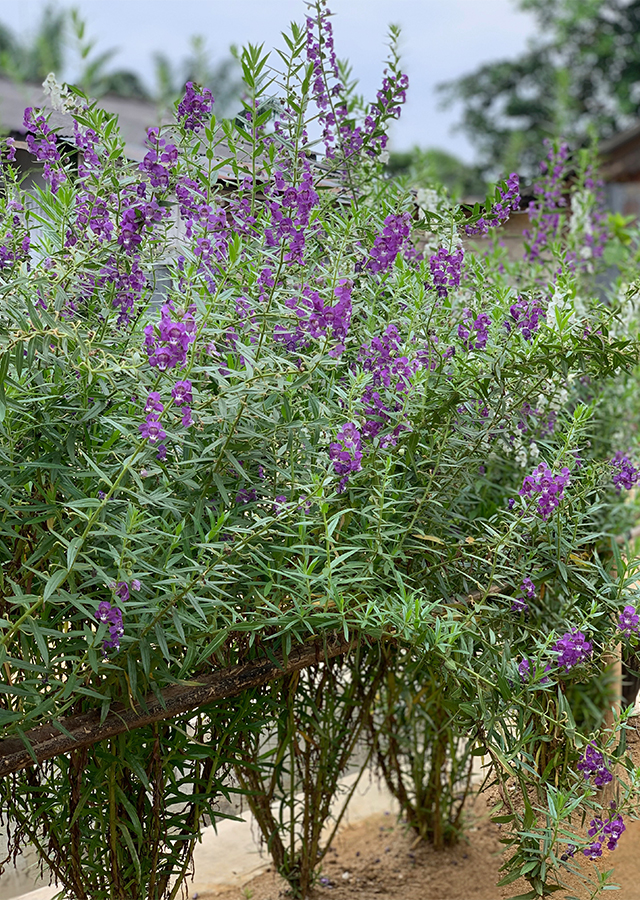
False lavender angelonia (Angelonia angustifolia) is a herb up to 70 cm tall of the Plantaginaceae family, native to Mexico and Cuba. Native Latin American cultures traditionally used it as an anti-inflammatory, and modern research has also proven its analgesic and antihyperlipidemic activity. Angelonia flowers are also popular as cut flowers, lasting up to 14-18 days.
Agroecology
Angelonia plants are found in their native habitat in Mexico at elevations of 0-2,000 m above sea level and grow best in moist but well-drained soil and a position in full sunlight. Prefers fertile loamy soil with a soil pH ranging 5.5-6.2.
Morphology
- Root fibrous.
- Stem small, non-woody, smooth, many branches from the stem base.
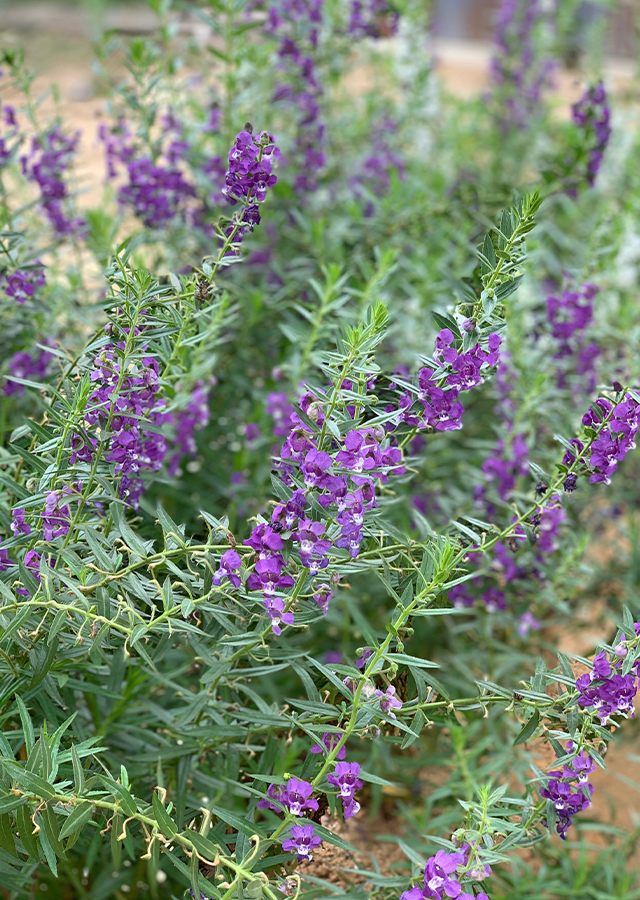
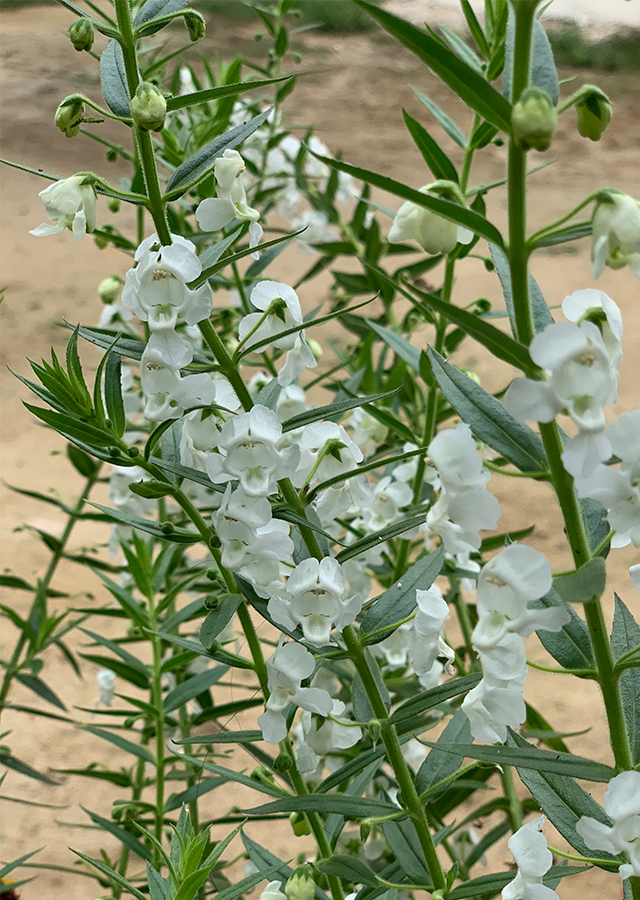
- Leaves narrow linear, with sticky glandular hairs and serrated edges, arranged in opposite pairs, smelling like apple or grape soda when rubbed or cut.
- Flowers bluish-purple, fairly large (2-3 cm), produced in upright racemes from leaf axils, lasting several days on the plant, pollinated by bees, blooming freely year-round.
- Fruit a capsule, brown in color, sub-globose, explosive.
- Seeds small in size.
Cultivation
Propagated generatively using seed while vegetatively using shoot tip cuttings (which root easily within 7-10 days) and clump division.
Chemical Content
Lupeol, phenol, alkaloid, tannin, flavonoid, saponin, steroid.
Benefits
Has anti-inflammatory, analgesic (relieves pain or ache), and antihyperlipidemic activity.
Local Names
No information found. Further research needed.
Traditional Recipes
The following recipes reflect traditional knowledge passed down through generations, not a substitute for professional medical diagnosis or advice. Consult a healthcare provider before use.
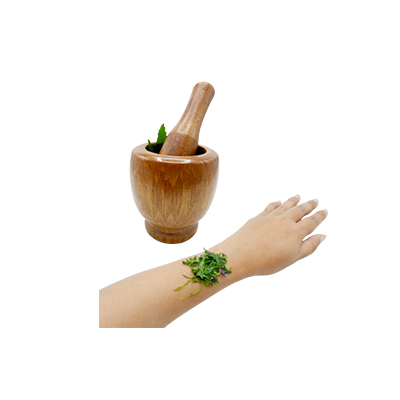
1. Relieving pain
- Take the whole false lavender angelonia plant as needed.
- Wash thoroughly with running water.
- Grind into a paste.
- Apply the paste to the painful area.
Reference Sources
- National Park. Angelonia angustifolia Benth. https://www.nparks.gov.sg/florafaunaweb/flora/1/6/1666. 5-09-2021.
- Royal Botanical Gardens. 2017. Plants of the World Online: Angelonia angustifolia Benth. http://www.plantsoftheworldonline.org/taxon/urn:lsid:ipni.org:names:798919-1. 5-09-2021.
- D. Stephen T, dkk. 2014. National Library of Madacine: Chemical investigation of the medicinal and ornamental plant Angelonia angustifolia Benth. reveals therapeutic quantities of lupeol. https://pubmed.ncbi.nlm.nih.gov/25111011/. 5-09-2021.
- Mungole Arvind, Shailendra Madavi, Mohan Wadekar. 2020. Evaluation of phytochemical constituents and In-vitro regeneration of Angelonia angustifolia (L.): A rich source of secondary metabolites. Int. Res. Journal of Science & Engineering, Special Issue A7 : 569-573.