Annona glabra L.
Summary
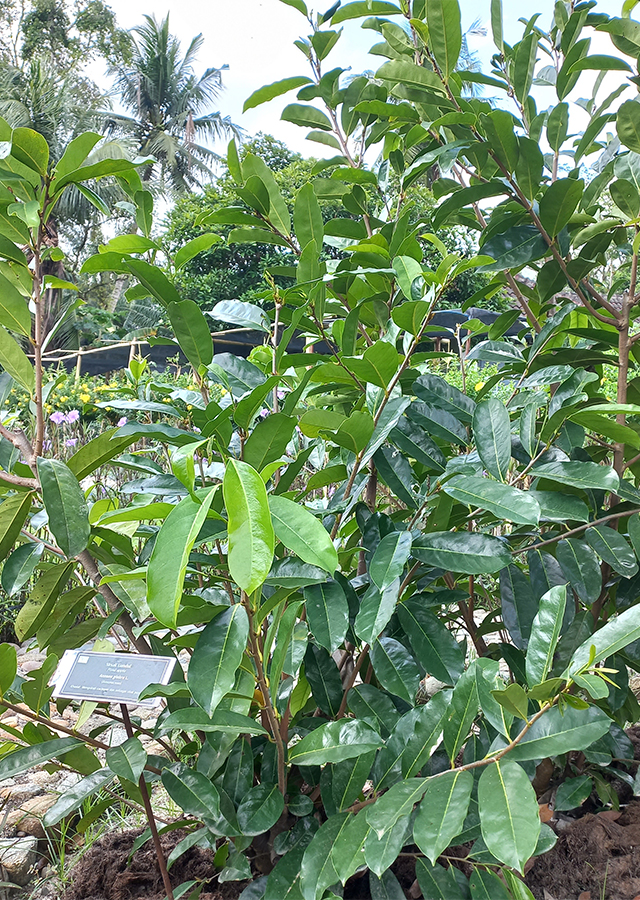
Sirsak gundul (Annona glabra) is a tree up to 15 meters tall from the Annonaceae family that originates from tropical America and West Africa, initially introduced as a rootstock for commercial Annona species. Its fruit can be eaten raw or processed into drinks and jam. In China, sirsak gundul leaves are traditionally used to treat chronic bronchitis, while the whole plant is studied as an anticancer ingredient.
Agroecology
Sirsak gundul is a tropical lowland species, usually found growing in freshwater and brackish wetlands especially in swamps, saltwater areas, mangrove forests, also Melaleuca forests, rainforest areas, riparian areas, riverbanks, floodplains, agricultural drainage systems, beaches, coastal dunes and islands. Its growth prefers moist sandy loam soil with regular freshwater to brackish flooding, and can withstand periods of flooding with its roots submerged for several continuous weeks, but does not thrive in permanently flooded areas, and requires soil conditions with a soil acidity (pH) of about 6.
Morphology
- Roots taproot.
- Stem single, has a base that swells when young, gray with prominent lenticels.
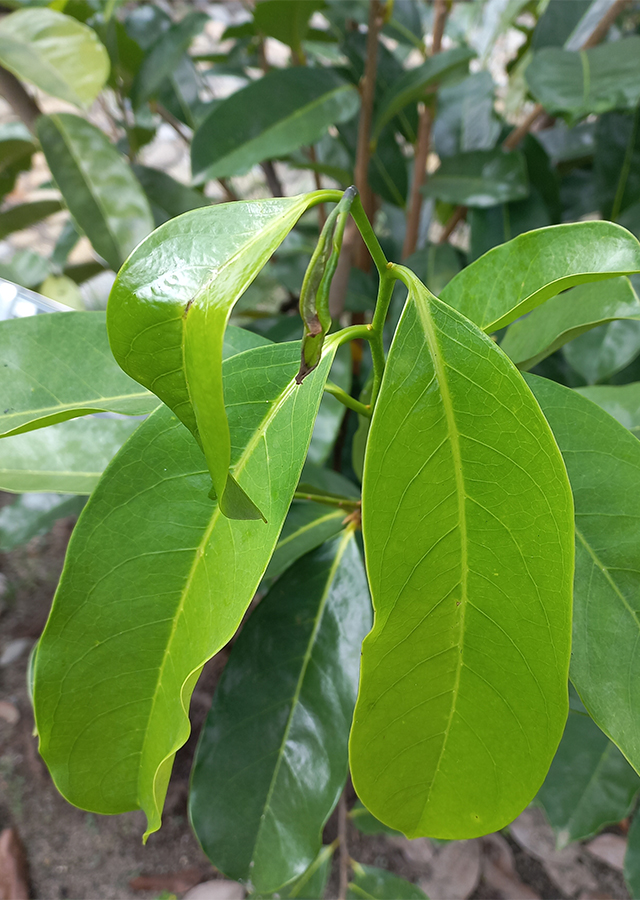
- Leaves alternate, oblong-elliptical, tip pointed or short-tapering, light to dark green above and paler below, with a prominent sheath and a characteristic small fold where the leaf blade joins the petiole.
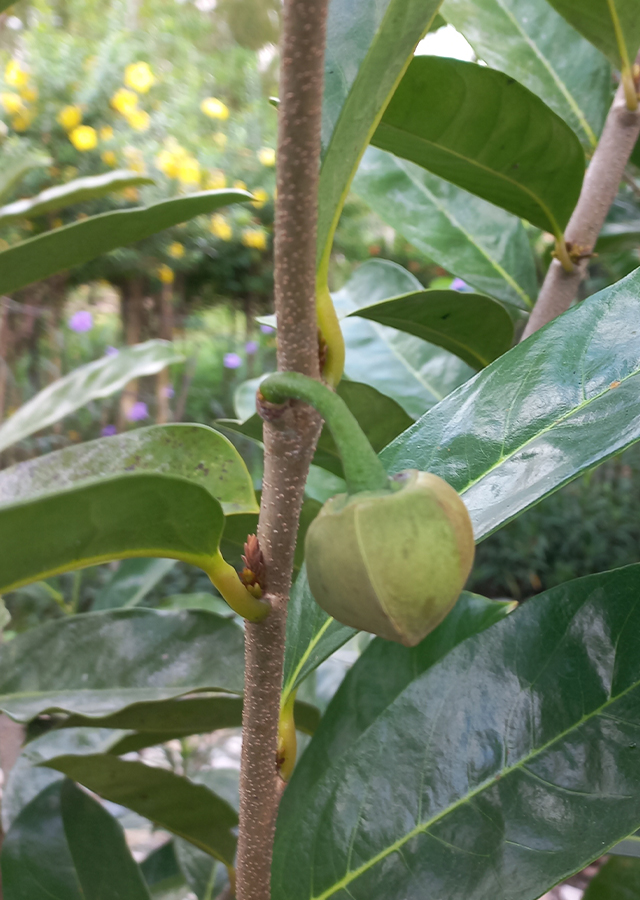
- Flowers pale yellow to cream with three rough outer petals with dark red spots at the base, and three smaller inner petals that are whitish on the outside and bright red to dark red on the inside, curved pedicel.
- Fruit green turning yellow or orange when ripe, round or elongated, resembling a custard apple with smooth skin, flesh orange-pink, somewhat dry, pungent-smelling, containing 100-200 seeds.
- Seeds light brown, oblong and flattened.
Cultivation
- Propagation is done generatively (seeds) and vegetatively (grafting).
- Soak seeds in warm water for 12-24 hours to speed up germination.
Chemical Content
Acetogenins, ent-kauranes, peptides, and alkaloids (liriodenine alkaloid).
Benefits
Eradicates flatworms and nematodes, treats chronic bronchitis, has sedative and cardiotonic (strengthening heart performance) properties, has anticancer activity.
Local Names
Sirsak hutan.
Traditional Recipes
The following recipes reflect traditional knowledge passed down through generations, not a substitute for professional medical diagnosis or advice. Consult a healthcare provider before use.
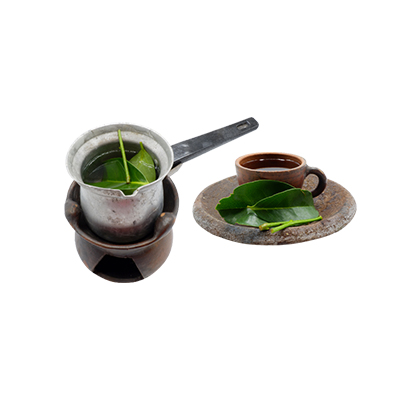
1. Eradicating flatworms
- Prepare fresh sirsak gundul leaves and stem and wash until clean.
- Boil both ingredients until boiling.
- Let stand until warm/cool.
- Strain, then boil.
Reference Sources
- Royal Botanic Gardens. 2021. Plants of the World Online: Annona glabra L. http://powo.science.kew.org/taxon/72208-1. 28-09-2021.
- Flora Fauna Web. 2021. Annona glabra L. https://www.nparks.gov.sg/florafaunaweb/flora/3/5/3539. 28-09-2021.
- CAB International. 2019. Invasive Species Compendium: Annona glabra (pond apple). https://www.cabi.org/isc/datasheet/5811#toidentity. 28-09-2021.
- Useful Tropical Plants Database. 2021. Annona glabra. http://tropical.theferns.info/viewtropical.php?id=Annona%20glabra. 28-09-2021.
- COCHRANE C.B., NAIR P.K.R., MELNICK S.J., RESEK A.P., RAMACHANDRAN C. 2008. Anticancer Effects of Annona glabra Plant
Extracts in Human Leukemia Cell Lines. ANTICANCER RESEARCH 28: 965-972. - Hien N.T.T. et al. 2015. Chemical constituents of the Annona glabra fruit and their cytotoxic activity. Pharmaceutical Biology 53(11): 1602-1607. DOI: 10.3109/13880209.2014.993042.