Annona reticulata L.
Summary
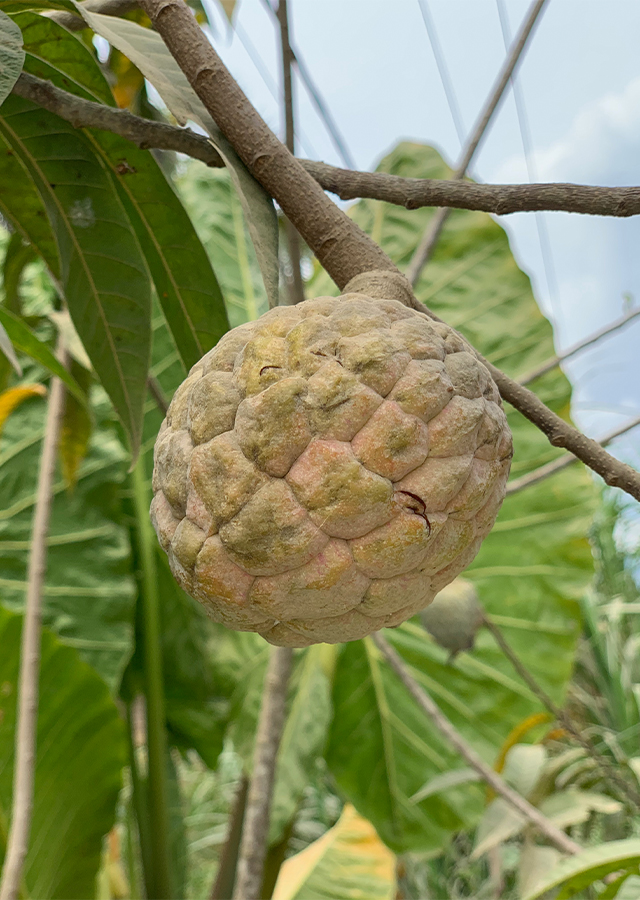
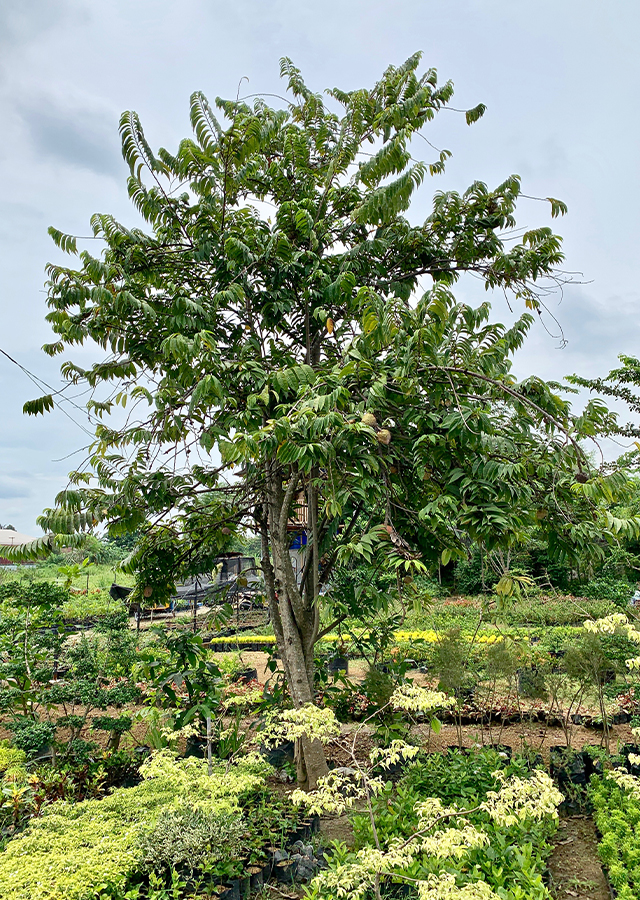
Mulwa (Annona reticulata) is a tree 7-10 meters tall of the Annonaceae family, native to the Caribbean and Central America, now increasingly rare despite being distributed as far as Southeast Asia and Africa. Its fruit can be eaten fresh, while each part of the plant has a different traditional use: the root as a fever reducer, the bark as a tonic, and the leaves as a vermifuge.
Agroecology
The plant requires a tropical climate but can survive in subtropical conditions, and is less tolerant of drought. Grows up to elevations of 1,500 m above sea level. Prefers moist, sandy loamy soil with a pH around 6. Grows well in lowlands.
Morphology
- Root a taproot, dirty white in color.
- Stem woody, round, branched, whitish-brown in color.
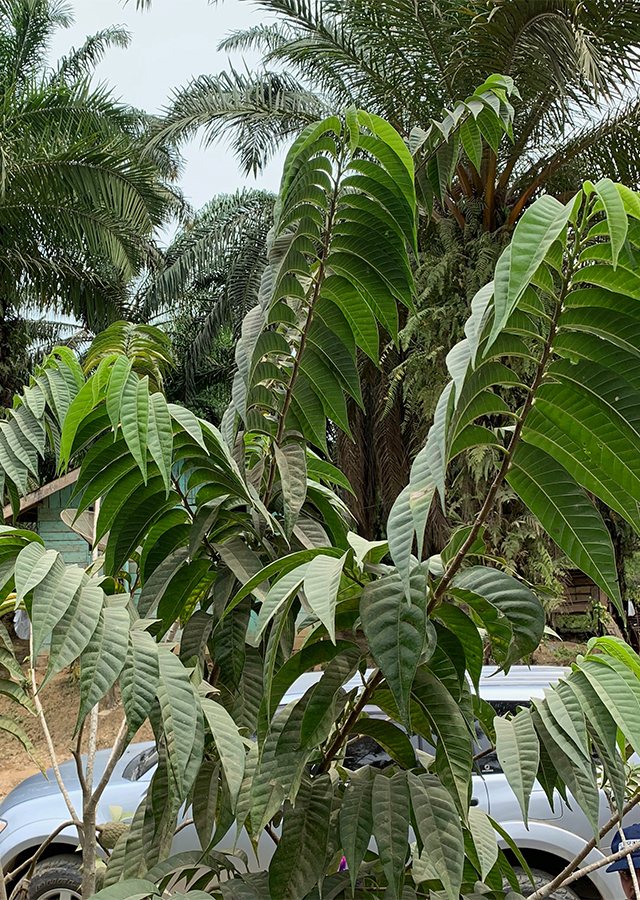
- Leaves single, ovate to lance-shaped, flat edges, tapering base and tip, pinnate venation, green in color.
- Flowers compound, whitish-yellow in color.
- Fruit compound, round, and yellow or reddish-yellow in color.
- Seeds angular, smooth, brown when young and black when mature.
Cultivation
- Propagated vegetatively by air layering, cuttings, and grafting.
- Propagated generatively with seed. Seeds are dried for 2 days then sown with compost and soil 1:1.
Chemical Content
Acetogenin, alkaloid, tannin, phenol, glycoside, flavonoid, steroid, triterpenoid (annonaretin A), kaueronic acid, taraxerol, β-sitosterol, oic acid.
Benefits
Root: fever reducer. Root bark sap: remedy for toothache. Bark: astringent and its decoction is processed into a tonic (strengthener), treats stomach disorders. Leaves: vermifuge, remedy for boils. Fruit: remedy for diarrhea or dysentery, addresses kidney failure.
Local Names
Kudu jawa, Serba rabsa (Aceh), Manowa (Sunda), Mulwo (Central Java), Binuwa (Madura), Anona (Flores), Srikaya doke (Makassar).
Traditional Recipes
The following recipes reflect traditional knowledge passed down through generations, not a substitute for professional medical diagnosis or advice. Consult a healthcare provider before use.
1. Worm infections
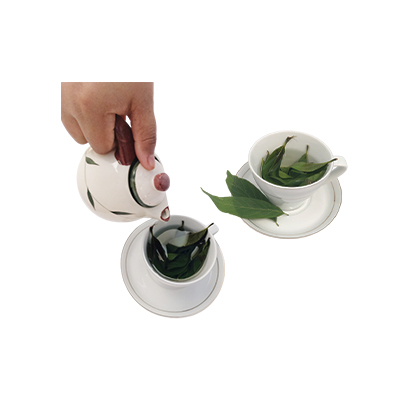
- Steep 4 g fresh mulwo leaves with 100 ml water.
- Drink once a day for 4 days.
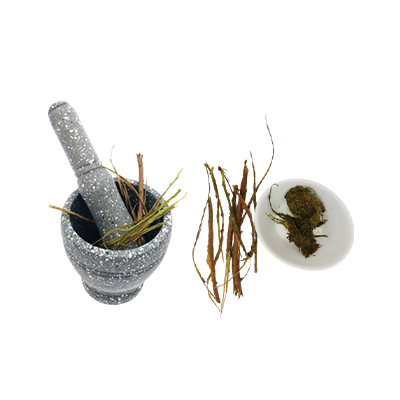
2. Fever or boils
- Wash mulwo bark thoroughly as needed. Grind until fine.
- Apply to the forehead to reduce fever or on the boil to bring it to a head.
Reference Sources
- Hidayat Syamsul. 2015. Kitab Tumbuhan Obat. Naga Swadaya, Jakarta.
- Tran Dinh Thang et al. 2013. Chemical conastituents from the leaves of Annonareticulata and their inhibitory effects on No production. Molecules, 18: 4477-4486. doi:10.3390/molecules18044477. 26-01-2021.