Annona squamosa L.
Summary
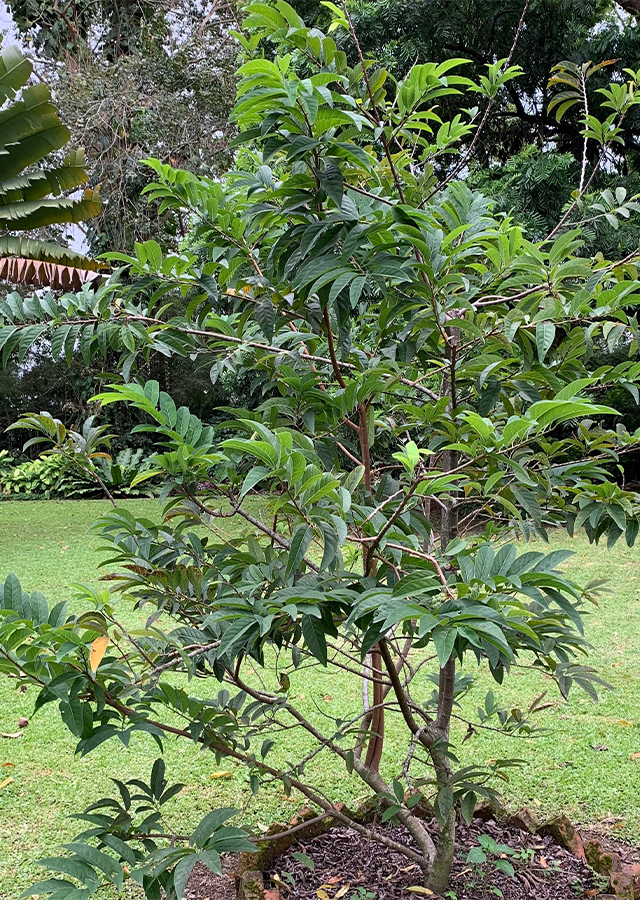
Sugar apple (Annona squamosa) is a small tree or shrub 3-6 meters tall of the Annonaceae family, native to tropical America and now widely distributed in Indonesia. Its sweet fruit is rich in vitamin C and potassium, good for heart health. Beyond the fruit, sugar apple's leaves, seeds, and bark are traditionally believed to relieve fever and diarrhea, and to speed the ripening of boils.
Agroecology
Grows well in regions up to an elevation of 800 m above sea level, temperatures between 21-30 °C, rainfall of 500-1,000 mm/year, soil pH 5.5-7.5. Favors sandy to sandy loam soil texture with a good drainage system.
Morphology
- Roots taproot.
- Trunk light brown, its interior is pale yellow and somewhat bitter.
- Leaves simple, stalked, stiff, alternately arranged, oblong to narrow-elliptical.
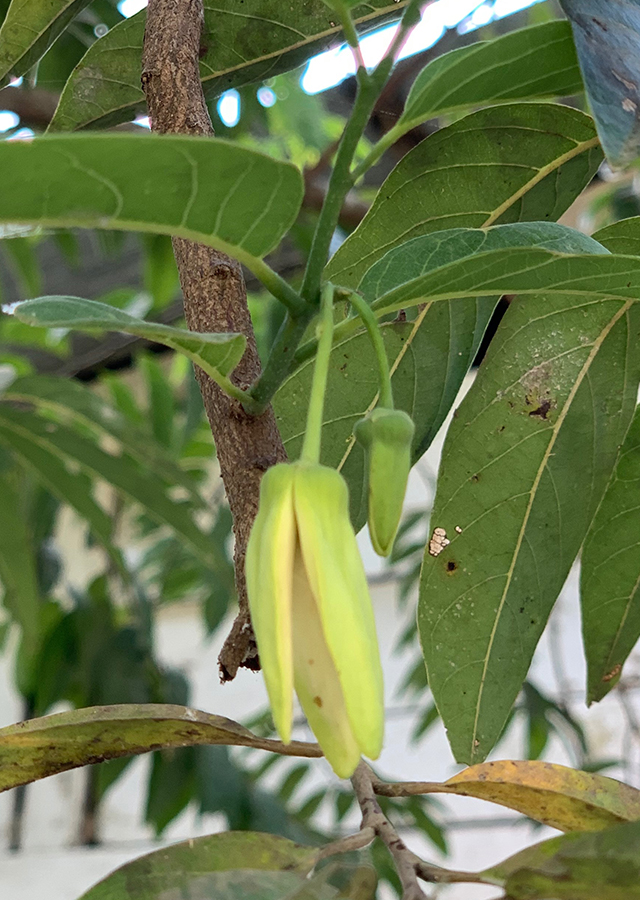
- Flowers extra-axillary, located on young side branches.
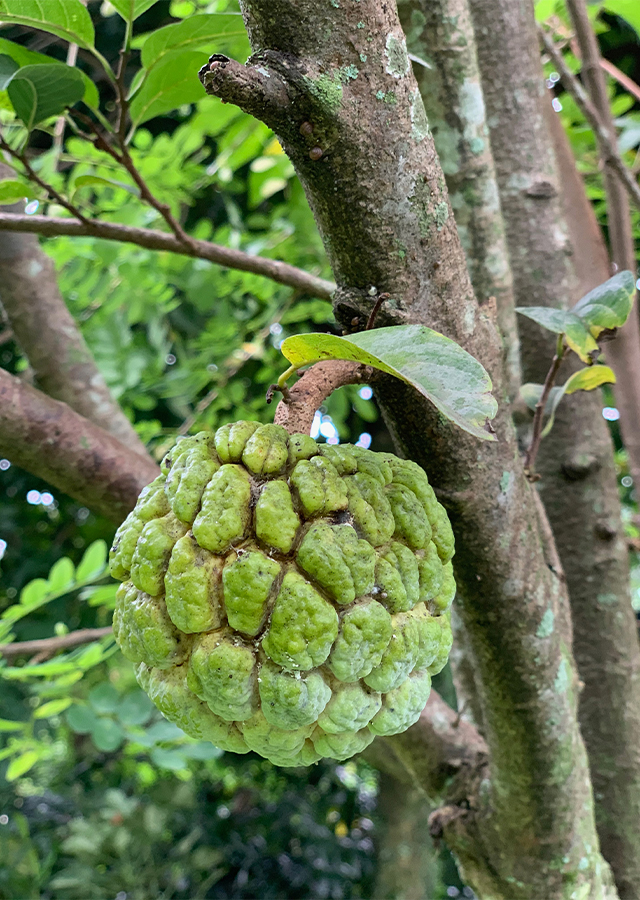
- Fruit a false fruit, round or conical, 5–10 cm in diameter, flesh white with yellow spots.
- Seeds elongated within each section of flesh, dark brown to black.
Cultivation
- Generative propagation (by seed), i.e. seeds are sown in a plastic tray or seed bed. Sugar apple seeds begin to germinate in 2–4 weeks, transplanted to the field after 6 months.
- Vegetative propagation, generally through top grafting, budding, and air layering.
Chemical Content
Flavonoids, borneol, camphor, terpenes, alkaloids, anonaine, saponins, tannins, polyphenols, resin, amino acids, mucilage.
Benefits
Antihypertensive, anti-inflammatory, antidepressant; treats fever, diarrhea, wounds, scabies; speeds ripening of boils and abscesses; treats intestinal worms, cough; eliminates head lice.
Simplisia
- Harvest fresh, undamaged sugar apple leaves.
- Separate the leaves from unused parts, then wash thoroughly.
- Dry indirectly, covered with black cloth and sun-dried until the moisture content is 10%.
- Once dry, store the dried material in a clean, airtight container.
Local Names
Delima bintang, Seraikaya (Sumatra), Serkaya, Srikawis, Serakaja (Java), Garoso, Ata (Nusa Tenggara), Atis soe walanda, Sirikaya, Perse (Sulawesi), Atisi, Hirikaya, Atis (Maluku).
Traditional Recipes
The following recipes reflect traditional knowledge passed down through generations, not a substitute for professional medical diagnosis or advice. Consult a healthcare provider before use.
1. Eliminating Head Lice
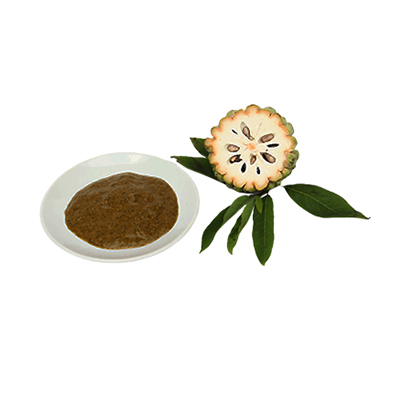
- Prepare 10 sugar apple seeds, 1 handful of fresh sugar apple leaves, and 1 tbsp coconut oil.
- Grind all ingredients, then add coconut oil while mixing well.
- Apply the mixture to the scalp, then wrap with a cloth.
- Remove the cloth wrap, then shampoo thoroughly.
Reference Sources
- Fitria, dkk, 2017. Efek Ekstrak Buah Srikaya (Annona squamosa L.) terhadap Penurunan Tekanan Darah pada Mencit (Mus musculus). Jurnal Akademika Kimia, 6(1): 21 – 27.
- Istianto, M., Y. Irawati. Srikaya (Annona squamosal L.). Balai Penelitian Tanaman Buah Tropika. Pusat Penelitian Pengembangan Holtikultura. Badan Penelitian dan Pengembangan Pertanian.
- Mufihunna, A., H. Lating, 2013. Formulasi Salep Ekstrak Metanol Daun Srikaya (Annona squamosa L.). Dengan Berbagai Variasi Basis. As – Syifa JUrnal Farmasi. 5(1) : 72 – 79.
- Pramitaningastuti, A. S., E. N. Anggraeny, 2017. Uji Efektifitas Antiinflamasi Ekstrak Etanol Daun Srikaya (Annona squamosa L.) Terhadap Udema Kaki Tikus Putih Jantan Galur Wistar. Jurnal Ilmiah Farmasi 13(1): 8-13.
- Resep Herbal Kudis : Daun Srikaya, Mindi Kecil dan Sambiloto. https://www.deherba.com/resep-herbal-kudis.html 31-01-2020.
- Resep Herba l Kutu Kepala unuk Membasmi Sampai Tuntas. https://www.deherba.com/resep-herbal-kutu-kepala.html 31-01-2020.