Arachis hypogaea L.
Summary
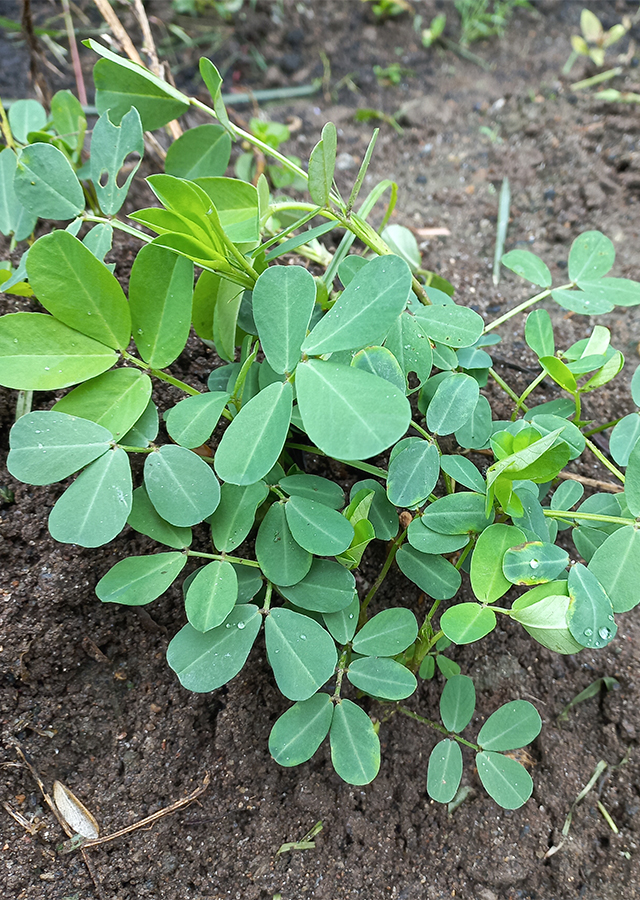
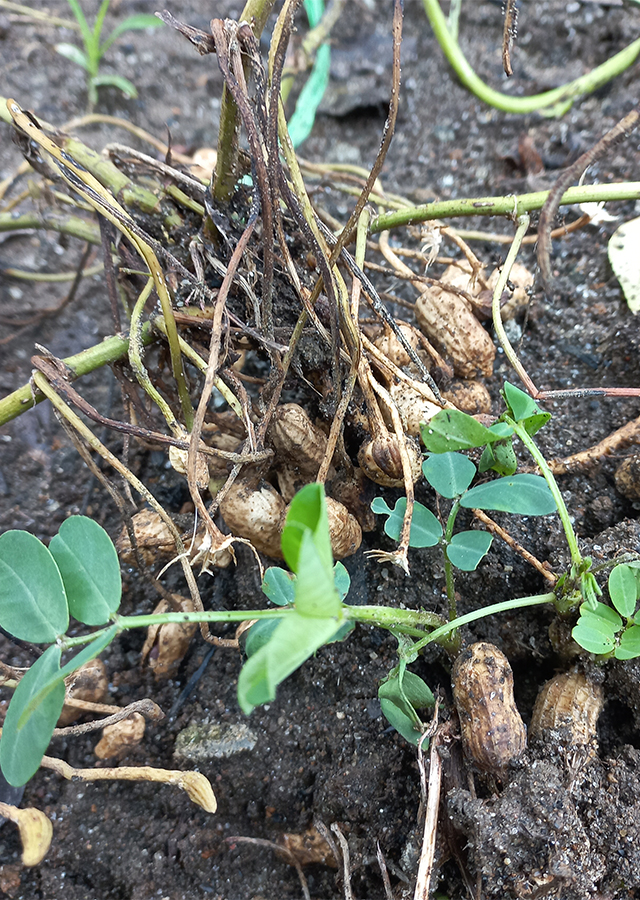
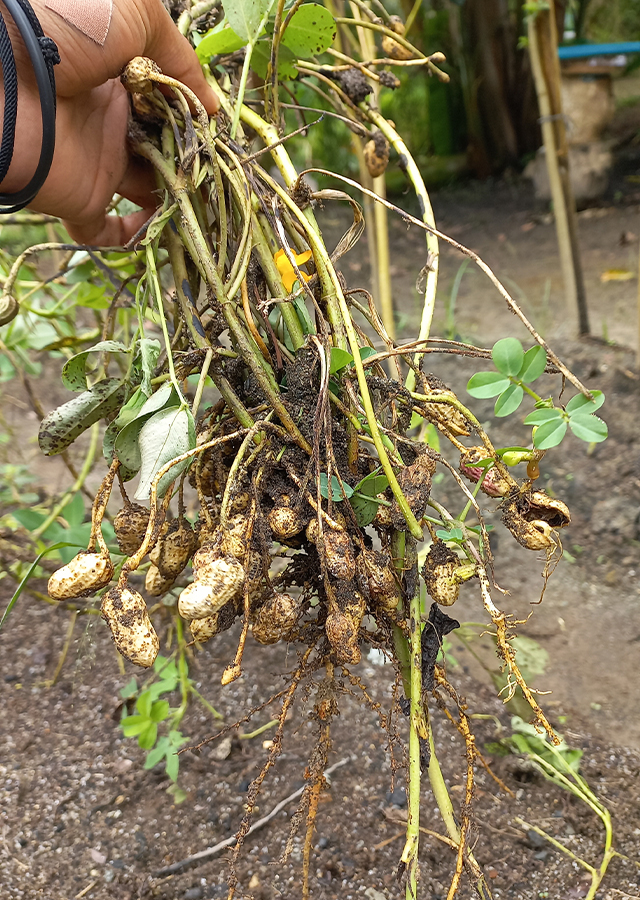
Kacang tanah (Arachis hypogaea) is an annual herb 15-70 cm tall from the Fabaceae family that originates from Southern Bolivia and Argentina, entering Indonesia in the early 17th century brought by Chinese and Portuguese traders, first found in Maluku. Its seeds are rich in protein and oil, becoming one of the most common vegetable oils in the world. Kacang tanah is traditionally used in African and Chinese medicine as a cough remedy and mild laxative.
Agroecology
Peanut can be found growing in areas up to an elevation of 1,500 m asl. This plant grows best in full sun in moist, light, humus-rich but well-drained soil. Peanut is very suitable planted in sandy loam, sandy clay or sandy clay loam soil types with soil acidity (pH) in the range of 6.5-7.0; at soil pH of 7.5-8.5 (alkaline reaction) leaves will yellow and black spots occur on the pods. Average monthly temperatures between 22-27 °C can produce the best plants, while growth stops at temperatures around 15 °C. Peanut prefers areas with annual rainfall ranges between 750-1,250 mm/year and is drought-tolerant and can withstand severe water shortage.
Morphology
- Roots a well-developed taproot with many lateral roots, has nitrogen-fixing nodules.
- Stem short and jointed, branched.
- Leaves green, spirally arranged, pinnately compound, 4-foliolate with two pairs of opposite leaflets. Leaf blade ovate or elliptical, leaf base wedge-shaped (cuneate)-rounded, leaf tip rounded or split (emarginate) and with a small point (mucronate).
- Flowers butterfly-shaped, calyx with 4 upper lobes fused, lower lobe free. Corolla pale yellow to orange-red, rarely white, round standard-shaped. Stamens (8-)10, alternating small round anthers and larger oblong anthers, fused at the base.
- Fruit a pod, oblong, cylindrical, containing 1 to 6 seeds with constriction between seeds, has a hard brown shell.
- Seeds cylindrical to ovate, with pointed or flattened tips, covered by a thin seed coat ranging in color from white to dark purple.
Cultivation
- Generative propagation (seeds). Soak seeds for 12 hours in warm water and sow at a depth of 5-7 cm.
- Selection of superior seedlings comes from healthy, mature, and sufficiently dry parent plants with a moisture content of approximately 12%, and select seeds that are bright in color, not pale, not wrinkled, free of pests and diseases, not defective and plump.
- Soil temperature is an important factor affecting seed germination and early seedling growth. At soil temperatures below 18 °C, germination speed will be slow, conversely soil temperature >40 °C will kill newly planted seeds. Peanut plant growth rate increases with increasing temperature from 20 °C to 30 °C. The temperature for optimum growth ranges between 27 °C and 30 °C depending on the variety.
Chemical Content
Acids (arachidic acid, aspartic acid, behenic acid, chlorogenic acid, stearic acid, gadoleic acid, gentisic acid, lauric acid, linoleic acid, oleic acid, p-coumaric acid, palmitic, palmitoleic, ascorbic acid, caprylic), arachin, lecithin, flavonoids (quercetin, rutin), beta-carotene, amino acids (aspartic acid, glutamic acid, alanine, arginine, cystine, phenylalanine, glycine, histidine, isoleucine, leucine, lysine, methionine, proline, serine, tyrosine, threonine, tryptophan, valine).
Benefits
Good for pregnant women (preventing birth defects), reduces depression, lowers risk of gallstones, eye drops for treating eye wounds and cataracts, gonorrhea, fights syphilis, treats rheumatism, prevents hemophilia tendencies, treatment of certain blood disorders (mucorrhagia and rheumatic bleeding) in hemophilia, ear drops for earwax, addresses female infertility, removes insect bite marks, relieves coughs, treats pleurisy, dysuria (painful urination), enteritis (including colitis), has aphrodisiac, mild laxative, anti-inflammatory, and diuretic properties.
Local Names
Kacang una, Suuk (Sunda), Kacang jebrol, Kacang bandung, Kacang tuban, Kacang kole, Kacang banggala.
Traditional Recipes
The following recipes reflect traditional knowledge passed down through generations, not a substitute for professional medical diagnosis or advice. Consult a healthcare provider before use.
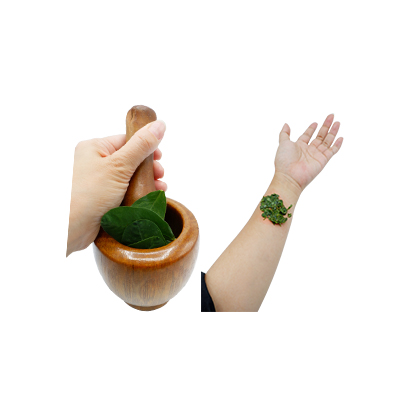
1. Removing insect bite marks
- Take peanut leaves as needed and wash until clean.
- Mash the leaves into a paste.
- Rub the leaf paste onto the insect bite marks.
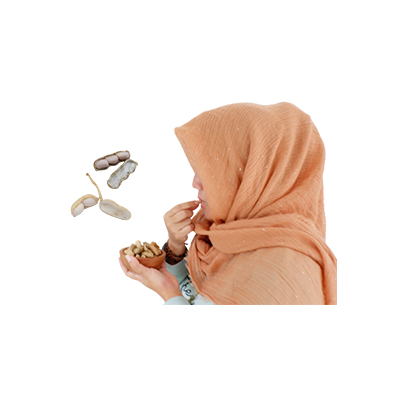
2. Increasing fertility
- Prepare 100 g peanuts and wash until clean.
- Boil the peanuts until cooked and soft, then eat.
- Recommended to consume peanuts daily to increase the chance of pregnancy.
Reference Sources
- Useful Tropical Plants Database. 2021. Arachis hypogaea. https://tropical.theferns.info/viewtropical.php?id=Arachis+hypogaea. 24-09-2021.
- Royal Botanic Gardens. 2021. Plants of the World Online: Arachis hypogaea L. http://www.plantsoftheworldonline.org/taxon/urn:lsid:ipni.org:names:318562-2. 24-09-2021.
- PROTA. 2015. Arachis hypogaea (PROTA). https://uses.plantnet-project.org/en/Arachis_hypogaea_(PROTA). 24-09-2021.
- Flora Fauna Web. 2019. Arachis hypogaea. https://www.nparks.gov.sg/florafaunaweb/flora/1/6/1683. 24-09-2021.
- Geetha K et al. 2013. AN OVERVIEW ON ARACHIS HYPOGAEA PLANT. IJPSR 4(12): 4508-4518.
- Dosen Pertanian.Com. 2019. Kacang Tanah; Klasifikasi, Ciri Morfologi, Manfaat, dan Cara Budidaya. https://dosenpertanian.com/kacang-tanah/. 24-09-2021.