Arachis pintoi Krapov. & W.C.Greg.
Summary
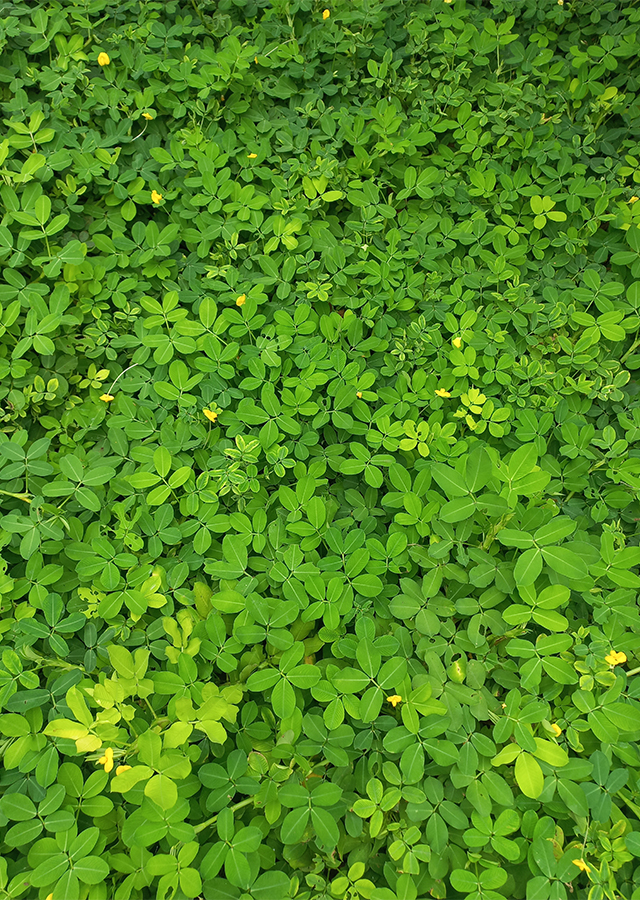
Arachis pintoi or ornamental peanut is native to Brazil and was first introduced from Singapore by golf course entrepreneurs, now commonly found as ground cover in office parks, hospitals, and roadsides. Besides suppressing weed growth, preventing erosion, and enriching soil nitrogen, its protein-rich leaves are also used as livestock feed. In the Bikol region, ornamental peanut is traditionally used as a topical remedy for insect and centipede bites.
Agroecology
Ornamental peanut grows in moist tropical and subtropical regions. This plant is found at elevations up to 1,400 m asl. Grows best in areas with an annual daytime temperature ranging between 22-28°C, but can survive at 12-30°C. Shoot growth stops due to frost, but the plant can regrow from the taproot if the frost is light. This plant prefers mean annual rainfall ranging from 1,500-2,000 mm, but can survive on 900-3,000 mm rainfall, and can withstand dry periods of up to 4 months. This plant grows best in shade, but is also tolerant of full sun. Grows well in most soil types, preferring fertile soil but succeeding in low-fertility soil. This ornamental peanut cannot develop well in heavy clay soil, or any soil that forms a hard crust after rain, because developing pod seeds cannot penetrate the soil and die. This plant can tolerate low salt levels in the soil and prefers well-drained soil, but can tolerate waterlogging. Prefers a pH range of 5.4-6, tolerating 4.5-7.5.
Morphology
- Roots a distinct taproot. Dense fibrous root network, up to 20 cm long, with nodules housing nitrogen-fixing bacteria.
- Stem grows along the ground and roots at the nodes.
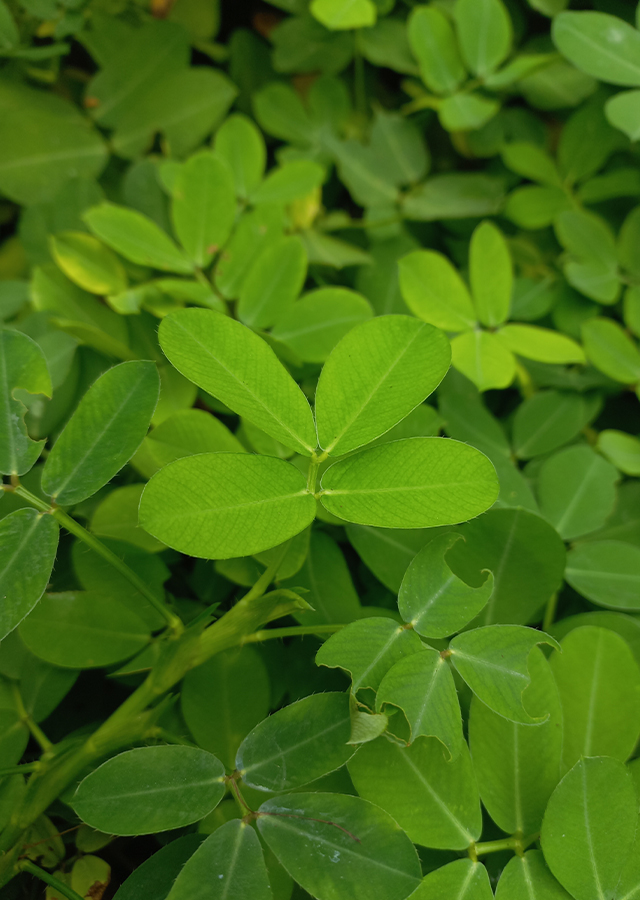
- Leaves pinnately compound, each with 4 small oblong leaflets, puberulent on the lower surface. Leaves shed during prolonged dry seasons.
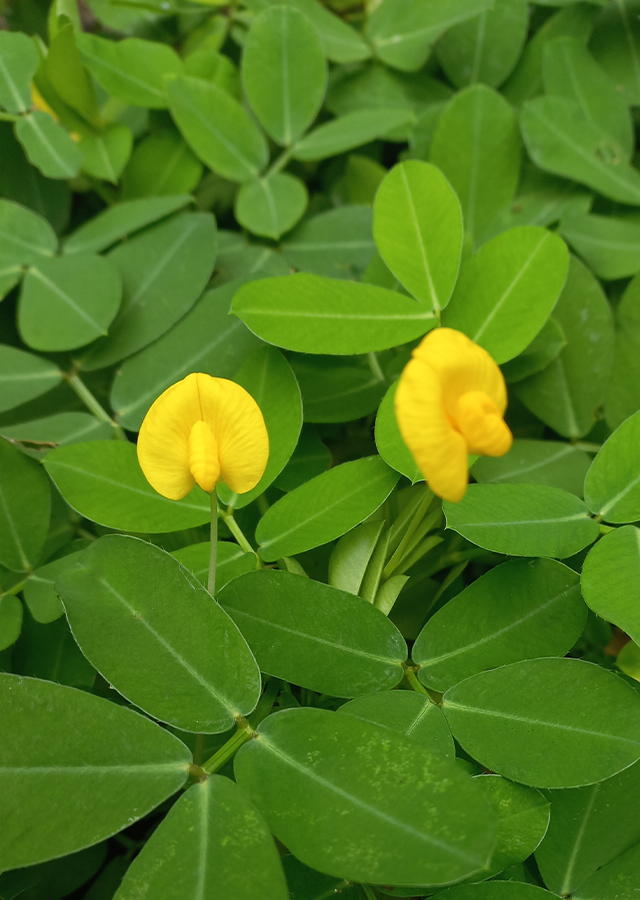
- Flowers yellow, located in short leaf axils. The flower stalk elongates and grows down into the soil.
- Fruit an underground single-seeded pod, light brown, 1-1.5 cm long, 6-8 mm in diameter.
Cultivation
- This plant can be propagated using seed, cuttings, and stolons.
- Fresh seed has a high dormancy level, which can be reduced by drying the seed at 35-40°C for 10 days. When planting in a new area, seed should be inoculated with a specific Bradyrhizobium strain, different from that used on commercial peanuts. Sowing seed in place - a well-prepared nursery bed is helpful but not essential. Seed should be sown at a depth of 2-6 cm.
Chemical Content
Essential oil, tannins, lignin.
Benefits
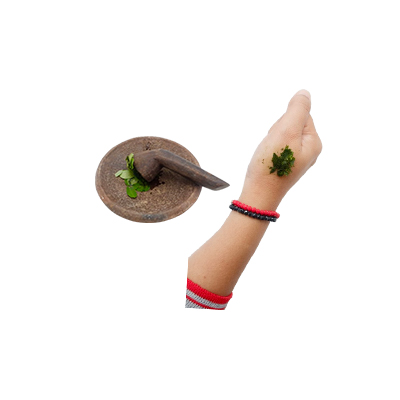
Leaves are pounded and applied to insect and centipede bites. Has antioxidant and anthelmintic activity.
Local Names
Rumput pinto, Kacang pinto.
Traditional Recipes
The following recipes reflect traditional knowledge passed down through generations, not a substitute for professional medical diagnosis or advice. Consult a healthcare provider before use.
1. Treats insect and centipede bites
- Take an adequate amount of ornamental peanut leaves and wash until clean.
- Grind until it becomes a paste.
- Apply to the skin.
Reference Sources
- Royal Botanic Gardens, Kew. 2023. Plants of the World Online: Arachis pitoi. Krapov, & W. C.Greg. Arachis pintoi Krapov. & W.C.Greg. | Plants of the World Online | Kew Science. 19-10-2023.
- BPTUHPT Padang Mengatas. 2022. Arachis Pintoi. Arachis Pintoi (pertanian.go.id). 19-10-2023.
- Flora Fauna Web. 2023. Arachis pintoi. NParks | Arachis pintoi. 19-10-2023.
- Stuartxchange. 2018. Mani-manian. Arachis pintoi Krapov & Greg. GOLDEN GLORY. Mani-manian, Arachis pintoi, GOLDEN GLORY : Philippine Medicinal Herbs / Philippine Herbal Medicines (stuartxchange.com). 19-10-2023.
- Tropical Plants Database, Ken Fern. 2023. Arachis pintoi. Arachis pintoi - Useful Tropical Plants (theferns.info). 19-10-2023.