Arachnis flos-aeris (L.) Rchb.f.
Summary
Arachnis flos-aeris or scorpion orchid is native flora of Indonesia distributed from Sumatra, Kalimantan, Java, Bali, to the Malay Peninsula, named for its flower shape resembling a scorpion. Besides being cultivated as an ornamental and cut flower, the Sarawak community traditionally uses this orchid to relieve toothache, whooping cough, and respiratory tract inflammation.
Agroecology
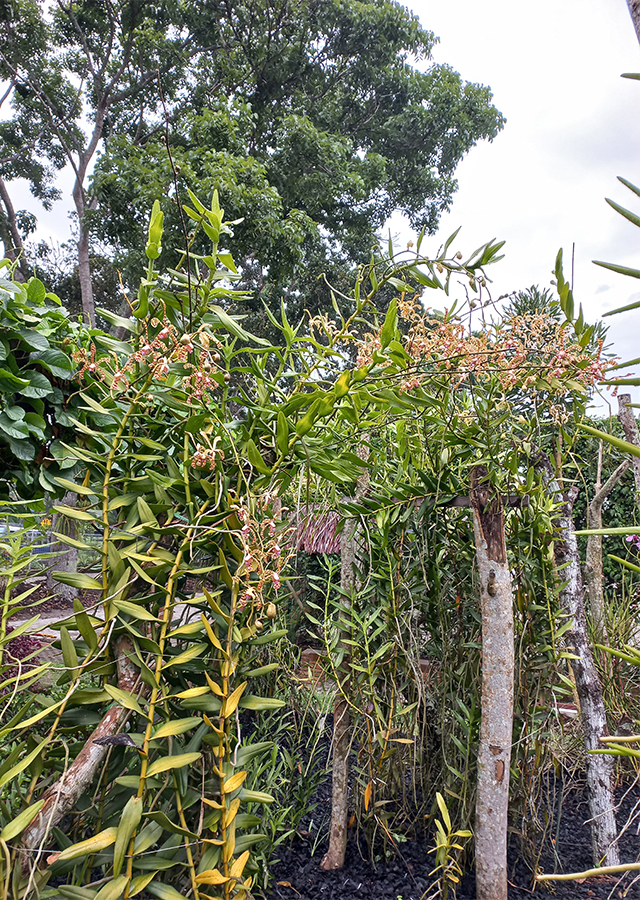
Scorpion orchid is generally found growing in open areas in lowlands, mountains, forests, sometimes in rocky areas, at elevations up to 1,000 m asl. In nature, this plant grows by climbing and attaching itself to tree trunks using its roots. Scorpion orchid greatly prefers direct sunlight and can be planted in open areas.
Morphology
- Roots have climbing aerial roots and roots growing at stem nodes randomly, grayish white in color.
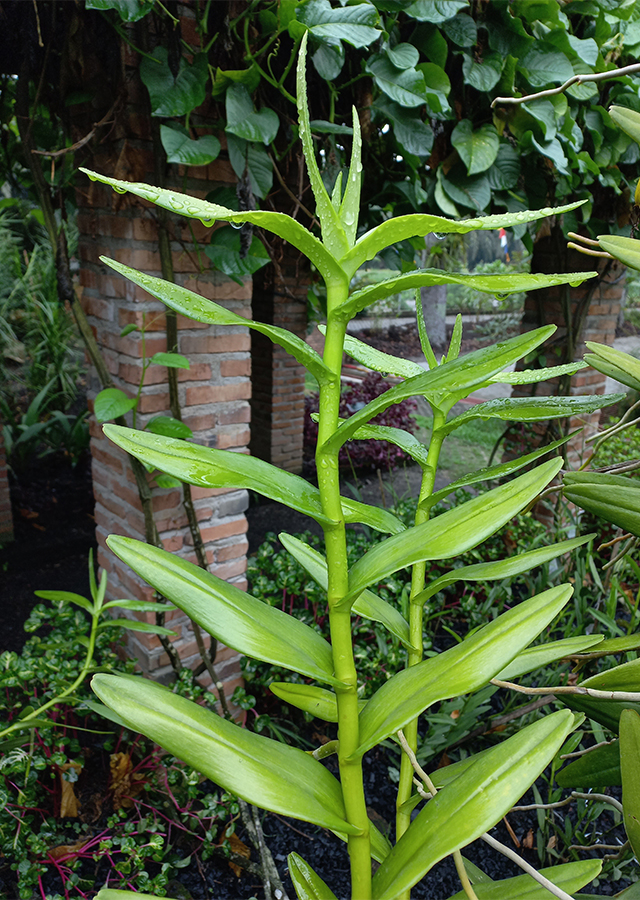
- Stem has monopodial growth type, upright, hard, slender, and non-tuberous. The stem elongates upward with unlimited growth, with internodes 4-10 cm long on each stem. The stem is covered by leaf sheaths.
- Leaves lanceolate shaped, relatively fleshy so appearing thicker and stiffer, base wrapping the stem, leaf length in this orchid can reach up to 30 cm with a leaf width of 5 cm. Leaves dark green.
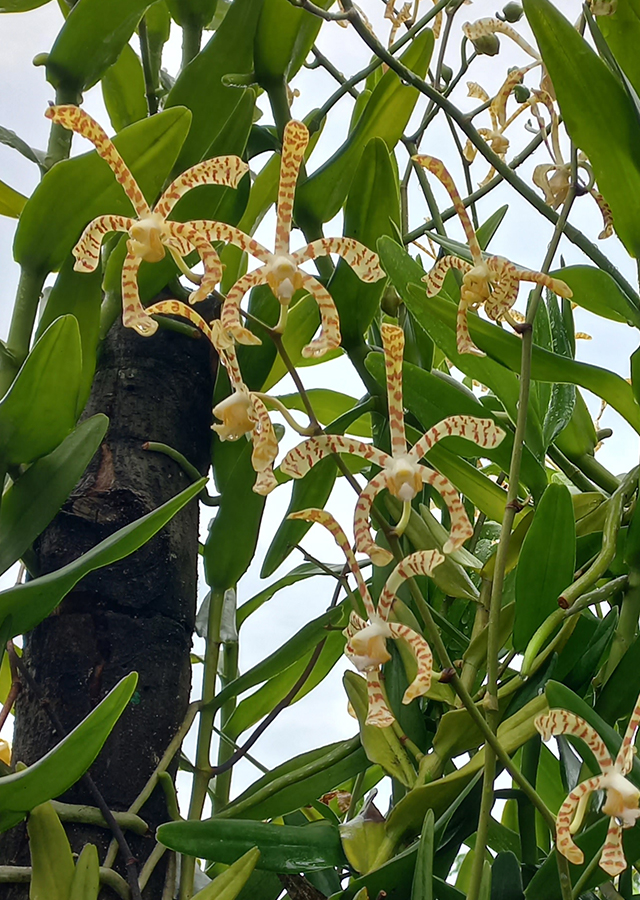
- Flowers at a glance resemble a scorpion, with a flower stalk reaching 150 cm, branched. Sepals and petals narrow, pale yellow-green in color marked with wide, irregular purplish brown or dark brown stripes/spots. Emits a distinctive, fragrant aroma, where the scent of this flower resembles musk.
- Fruit a six-valved capsule consisting of 3 carpels/fruit chambers. The fruit can reach 10 cm in length.
Cultivation
Plant propagation through stem cuttings and tissue culture.
Chemical Content
Terpenoids and phenolics.
Benefits
Relieves toothache, whooping cough (pertussis), respiratory tract inflammation (bronchitis), has anticancer activity.
Local Names
Anggrek ketonggeng.
Traditional Recipes
The following recipes reflect traditional knowledge passed down through generations, not a substitute for professional medical diagnosis or advice. Consult a healthcare provider before use.
1. Toothache
- Take an adequate amount of scorpion orchid plant.
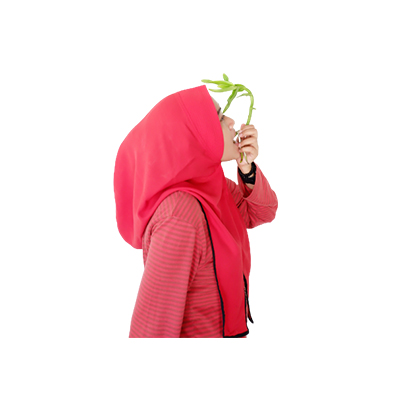
- Apply the sap to the aching area.
Reference Sources
- Royal Botanic Gardens, Kew. Plants of the World Online: Arachnis flos-aeris (L.) Rchb.f. https://powo.science.kew.org/taxon/urn:lsid:ipni.org:names:617011-1. 15-08-2022.
- Gerry Y., Permatasari F., Dewi R. K. 2020. Keanekaragaman Anggrek di Taman Anggrek Badak LNG. ITS Press: Surabaya.
- Nugroho LH, Pratiwi R, Susandarini R, Wardoyo ERP, Megawati O, Handayani S. 2016. Isolation of Bioactive Compounds from Two Orchid Species and Preliminary Test of Their Cytotoxicity against T47D Breast Cancer Cells. Int. J. Pharmacognosy and Phytochem. Res. 8(1):150-155.
- Teoh E. S. 2016. Medicinal Orchids of Asia. Springer International Publishin AG Switszerland.