Archidendron jiringa (Jack) I.C.Nielsen
Summary
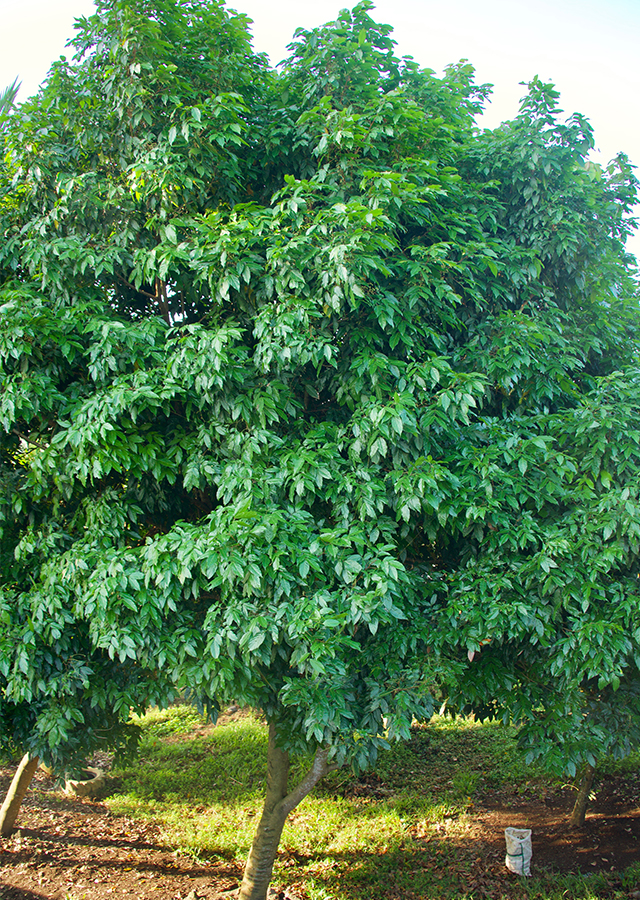
Jengkol (Archidendron jiringa) is a tropical tree native to Indonesia that can grow 10-26 meters tall, of the Fabaceae family, easily found in the forests of Sumatra, West Java, and Central Java. Besides its seeds, popular as a distinctively aromatic food ingredient, this tree also plays a role in soil and water conservation in forest areas. Traditionally, jengkol is used to reduce fever and is believed to help ward off anemia.
Agroecology
Grows well in lowlands and highlands up to an elevation of 1,600 m above sea level, rainfall of 2,000-3,000 mm/year, pH 5.5-6.5, and temperature of 20-30 °C. Favors full sun and sufficient water supply to support growth.
Morphology
- Roots taproot, brown.
- Trunk erect, round, woody, sympodial branching, brown.
- Leaves dark green, compound, opposite leaflets, oblong, smooth margins, pointed tip, rounded base, pinnate venation.
- Flowers compound, cluster-shaped, at the stem tip and leaf axils, cup-shaped calyx, yellow stamens and pistil, yellowish-white oblong corolla.
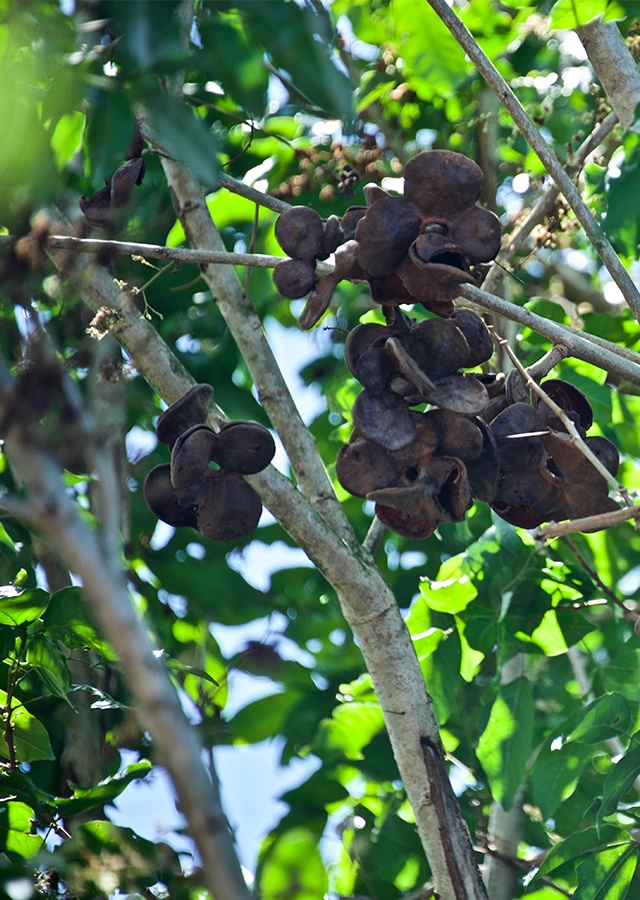
- Fruit round and flat, blackish-brown.
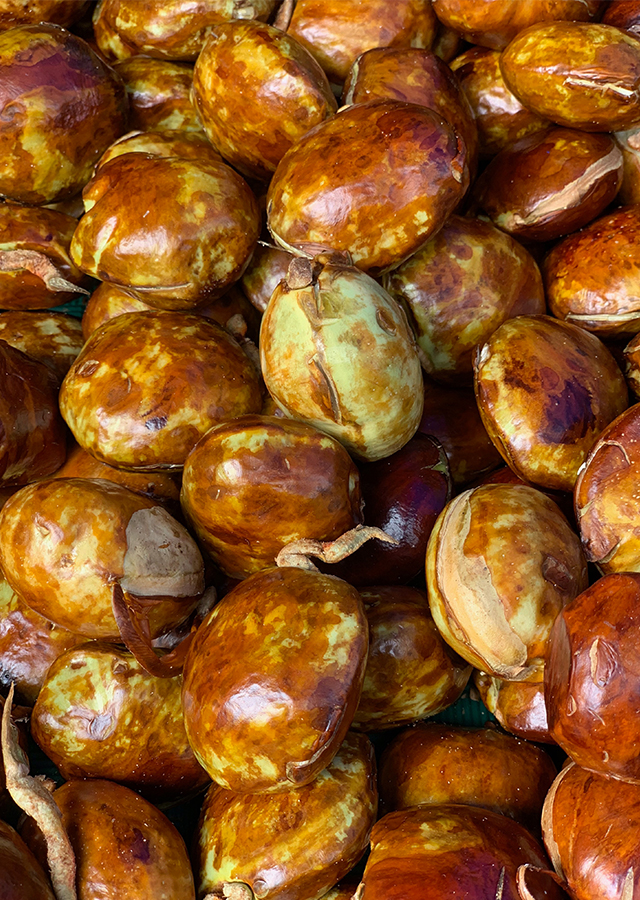
- Seeds round and flat, two-lobed, yellowish.
Cultivation
- Propagated generatively (by seed) and vegetatively (by budding).
- Seedlings come from mature seeds that have fallen naturally. After 2 weeks of planting, the seed will produce roots and shoots.
Chemical Content
Terpenoids, phenolic acid (methyl gallate), djenkolic acid, sulfur, flavonoids, polyphenols, lectins, tannins, saponins.
Benefits
Reduces fever and body weight; supports heart health and stamina; controls blood sugar levels; helps ward off anemia; treats dysentery, scabies, and boils; antioxidant, antimicrobial, antibacterial.
Simplisia
- Prepare jengkol peel, then wash under clean running water.
- Air-dry or use an oven at 40 °C. Grind the material into a powder.
- Pack in plastic or an airtight container, then store at room temperature.
Local Names
Blandingan (Bali), Jaring (Sumatra), Jarieng (Minangkabau), Jengkol (Sunda), Lubi (North Sulawesi).
Traditional Recipes
The following recipes reflect traditional knowledge passed down through generations, not a substitute for professional medical diagnosis or advice. Consult a healthcare provider before use.
1. Scabies and Boils
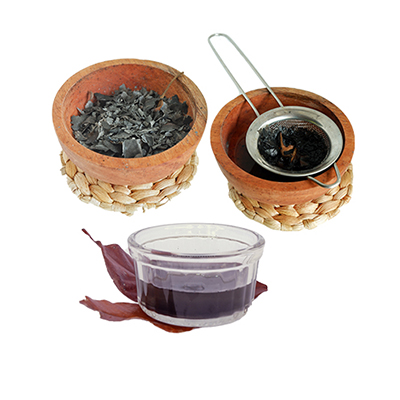
- Prepare 10 g of dried jengkol leaves, 2 cups boiled water.
- Burn the leaves in a container, then steep the ash in water, and strain.
- Use the strained liquid to wash the affected part of the body.
Reference Sources
- Health Benefit Times. (No date). Health benefits of Ngapi Nuts. https://www.healthbenefitstimes.com/ngapi-nuts/. 02-11-2020.
- Lim, T.K. (2012). Edible Medicinal And Non-Medicinal Plants: Volume 2, Fruits. 544.
- PFAF. (No date). Archidendron jiringa (Jack) I.C.Nielsen. https://pfaf.org/user/Plant.aspx?LatinName=Archidendron+jiringa. 02-12-2020.
- Fern, Ken. (2014). Useful Tropical Plants. Archidendron jiringa. http://tropical.theferns.info/viewtropical.php?id=Archidendron+jiringa 09-07-2020.
- Bunawan H, Dusik L, Bunawan SN, Amin NM. 2013. Botany, Traditional Uses, Phytochemistry and Pharmacology of Archidendron jiringa: A Review. Global J. Pharmacol. 7(4): 474-478.
- Charungchitraka S, Petsomab A, Sangvanichab P, Karnchanata A. 2011. Antifungal and antibacterial activities of lectin from the seeds of Archidendron jiringa Nielsen. Food Chem. 126(3): 1025-1032.
- Cholisoh Z, Utami W. 2008. Aktivitas Penangkap Radikal Ekstrak Ethanol 70% Biji jengkol (Archidendron jiringa). Fakultas Farmasi Universitas Muhammadiyah Surakarta.
- Roswaty a. 2013. All about jengkol & petai. Gramedia Pustaka Utama.