Arenga pinnata (Wurmb.) Merr.
Summary
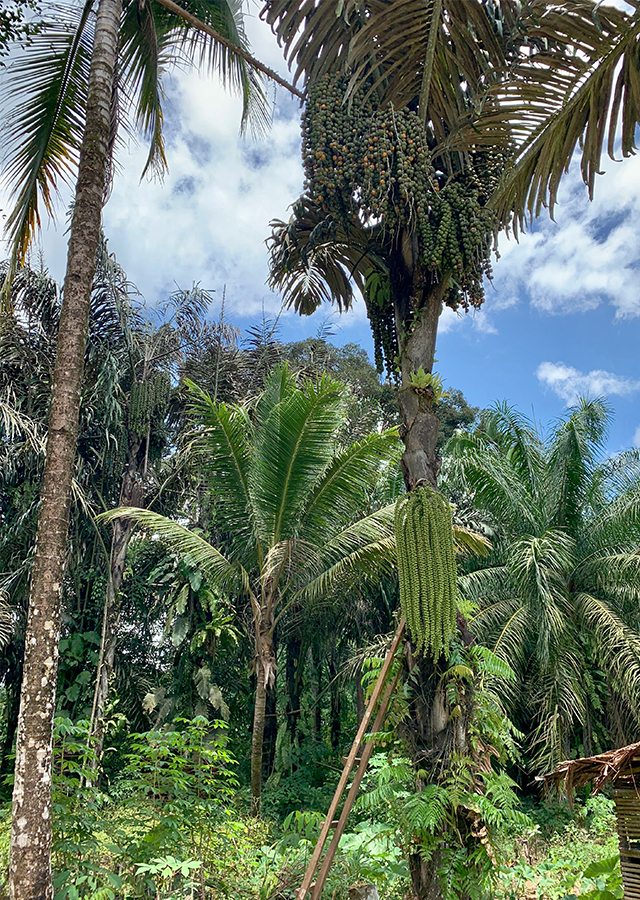
Sugar palm (Arenga pinnata) is a palm native to Indonesia that can grow up to 30 meters tall, commonly found in humid hills and also distributed in Malaysia, India, and the Philippines. The sap tapped from its flower clusters is processed into palm sugar, flour, and traditional beverages. In addition, various parts of this plant have traditionally been used to address kidney stones, canker sores, and body odor.
Agroecology
Sugar palm grows optimally at elevations of 500-700 m above sea level, with rainfall over 1,200-3,500 mm/year and an air temperature of 20-25 °C. This plant is commonly found in mountainous areas, valleys, near streams, rolling terrain, and forests.
Morphology
- Roots fibrous, rigid, tough, and fairly thick.
- Trunk solitary, up to 30 m tall, the upper part covered with black fiber ("ijuk"). The pith is soft and fibrous, with a hard exterior.
- Leaves compound, pinnately veined, fan-like in arrangement, up to 5 m long, with a petiole about 1.5 m long.
- Flowers male and female united on a single spadix.
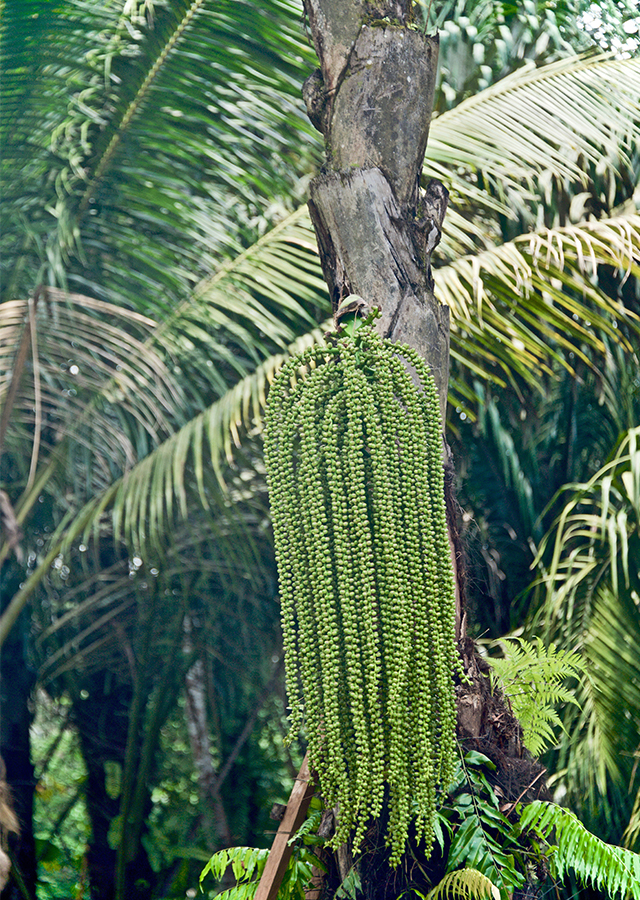
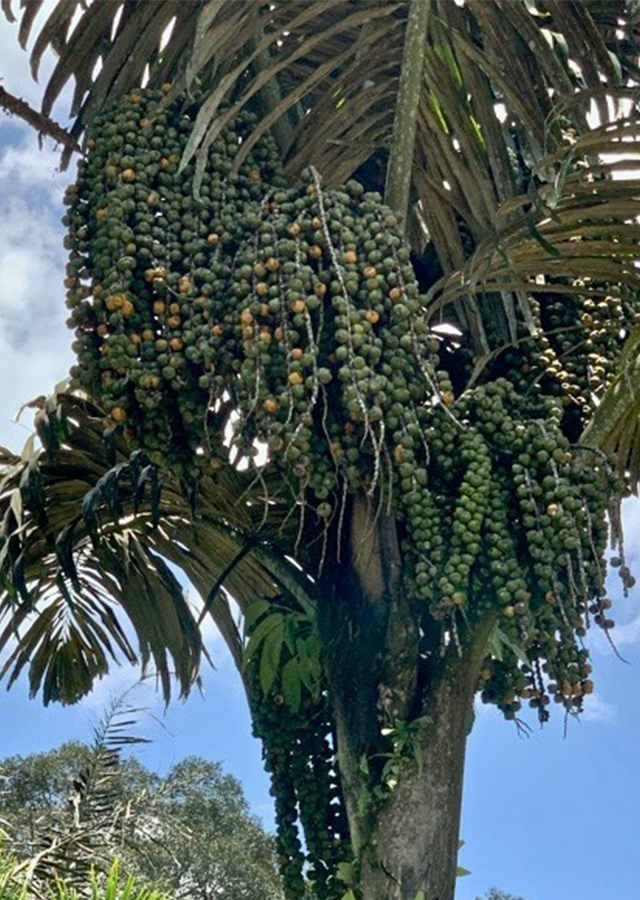
- Fruit a round berry borne in clusters, each stalk bearing about 50 fruits. Contains 2-3 seed kernels, white, coated with a thin, hard shell.
Cultivation
- Propagated generatively (by seed).
- Seeds cleaned of fruit flesh are planted in a nursery medium (2 cm deep).
Chemical Content
Saponins, flavonoids, polyphenols, alkaloids, terpenoids (diterpenes), tannins, quinones, ascorbic acid, carotenoids.
Benefits
Treats kidney stones; acts as an emmenagogue; treats fever, canker sores, constipation; eliminates body odor; treats skin rashes, nosebleeds; strengthens teeth; treats fractures, lower back pain, and intestinal inflammation.
Simplisia
- Select healthy sugar palm roots.
- Remove any adhering debris and wash thoroughly under running water.
- Dry the material in the sun until completely dry.
- Store the dried material in plastic or a tightly sealed container.
Local Names
Bak juk (Aceh), Paula (Karo), Bagot (Toba), Kawung (Sunda), Seho (Manado).
Traditional Recipes
The following recipes reflect traditional knowledge passed down through generations, not a substitute for professional medical diagnosis or advice. Consult a healthcare provider before use.
1. Eliminating Body Odor
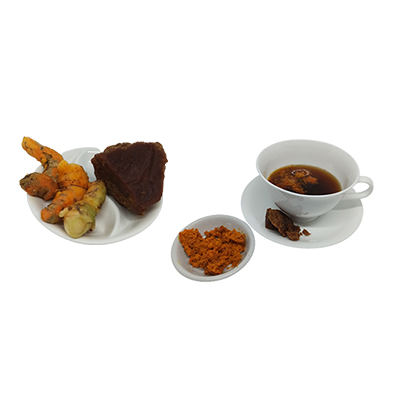
- Prepare 2/3 cup palm sugar water, a 12 cm piece of turmeric.
- Grate the turmeric finely, then add it to the glass of palm sugar water and stir well. Let it sit for a while until the turmeric settles to the bottom of the glass.
- Drink every night before bed. Do this regularly every night.
Reference Sources
- CABI. Invasive Spesies Compendium. Arenga pinnata (sugar palm). https://www.cabi.org/isc/datasheet/3568 05-05-2020.
- Lempang M. 2012. Pohon Aren dan Manfaat Produksinya. Balai Penelitian Kehutanan, Makasar.
- Liu JF, Huo JH, Wang C, Li FJ, Wang WM, Huang LQ. 2019. New diterpenes from Arenga pinnata (Wurmb.) Merr. Fruits. Molecules 24: 87-35.
- Republik Indonesia. 2013. Peraturan Menteri Pertanian Republik Indonesia No. 133 Tahun 2013 tentang Pedoman Budidaya Aren (Arenga pinnata MERR) yang Baik. Lembaran Negara RI Tahun 2014 No. 17. Sekretariat Negara. Jakarta.
- Sovia E, Anggraeny D. 2019. Sugar palm fruits (Arenga pinnata) as potential analgesics and anti-inflammatory agent. Mol. Cell. Biomed. Sci. 3(2): 107-14.
- Zainudin A, Hasanah U, Pemana YR. 2015. Uji Aktivitas Diuretik Ekstrak Akar Aren (Arenga pinnata (Wurmb.) Merr) Terhadap Tikus Putih Galur Wistar (Rattus Norvegicus) dengan Pembanding Furosemid. Jurnal Kesehatan Prima 9(1): 1403-1411 .