Arisaema amurense Maxim.
Summary
Arisaema amurense is an herb from the Araceae family distributed in Korea, Japan, and northern China, generally harvested from the wild for use in traditional Chinese medicine for thousands of years, especially for chest complaints. Its extract is also known to inhibit skin pigmentation, giving it potential as a brightening ingredient, though its consumption requires caution due to its calcium oxalate crystal content, which can cause a stinging sensation if not properly processed through drying or boiling.
Agroecology
Arisaema amurense is generally found growing in forests, wet and shaded areas in the mountains, and riverbanks. In China, it is also commonly found in deciduous forests, mixed forests, under forest canopy, and along riverbanks, at elevations of 50-200 m asl. This species prefers loamy or peaty soil types, and can tolerate a sunny position if the soil is moist but not waterlogged, in a not overly exposed location.
Morphology
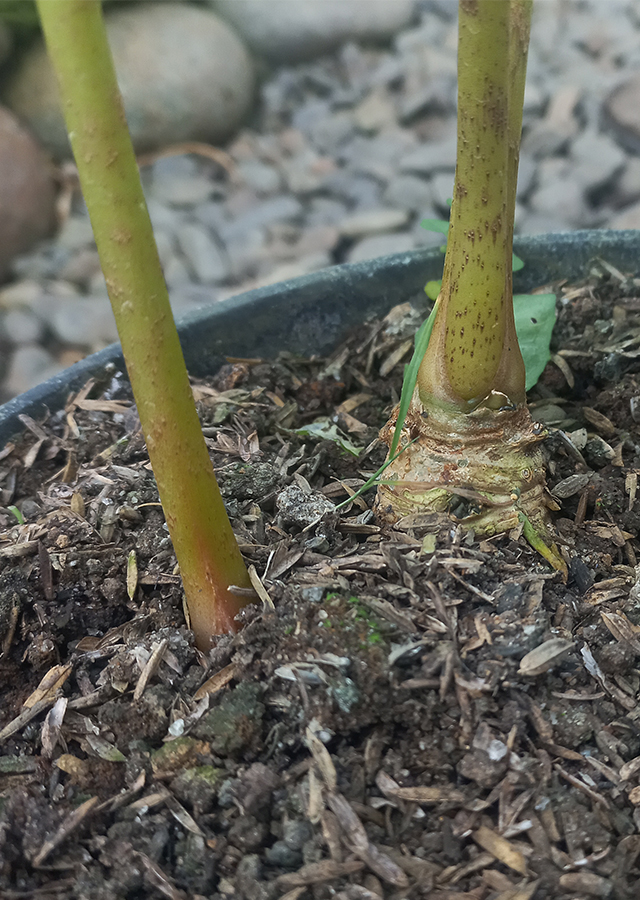
- Tuber depressed or concave, globose shaped, containing 2-3 small tubers. Fibrous roots spread from the top of the tuber.
- Stem absent.
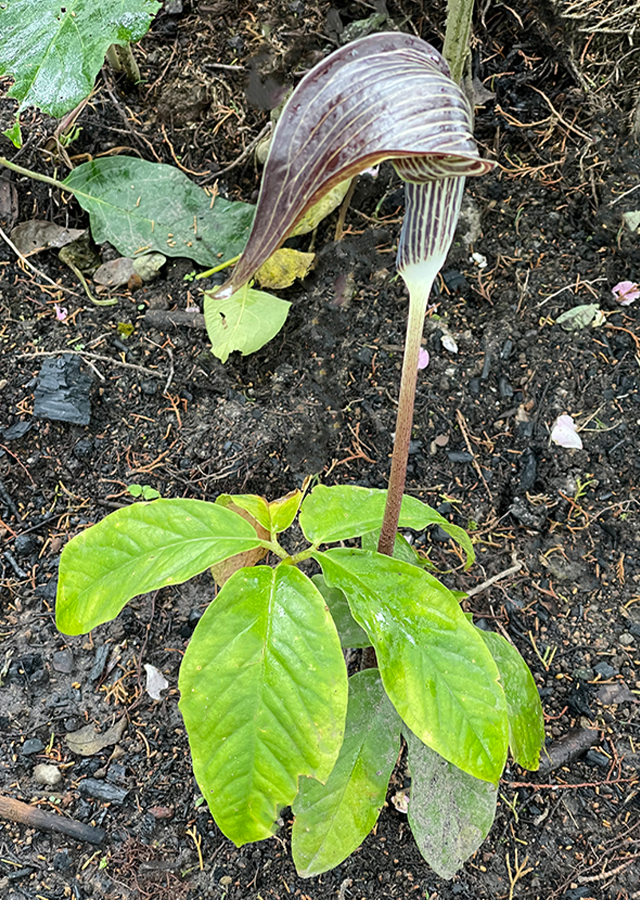
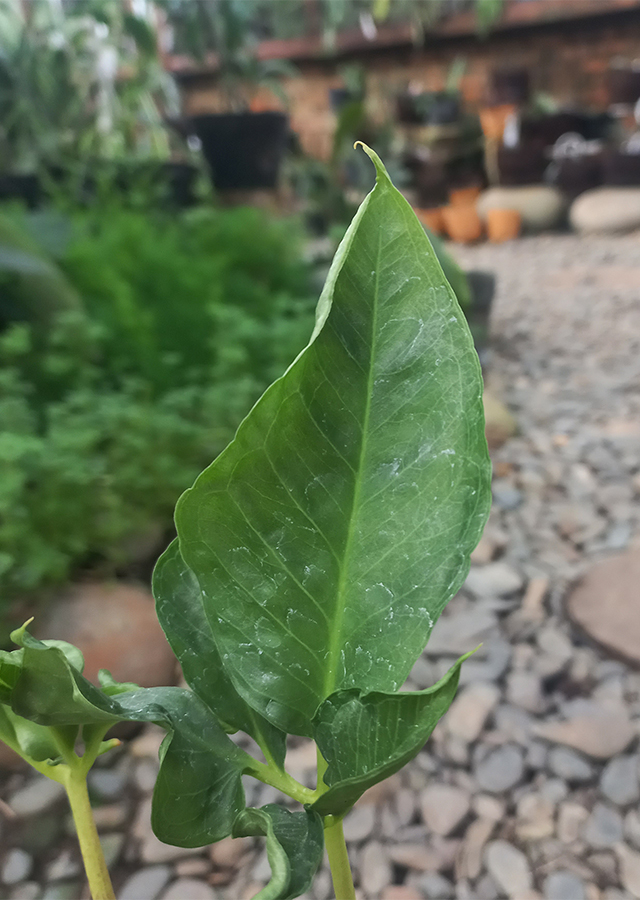
- Leaves sheathing 3/4 of the proximal part and forming a pseudostem, blade 3-foliolate or pedately 5-foliolate, leaflets sometimes covered with fine whitish markings, oblong to narrowly oblong, base cuneate, margin entire or serrate sometimes denticulate, tip acute. Middle leaflet with a petiole of 5-25 mm, obovate. Lateral leaflets oblong-lanceolate, petiole about 15-30 cm long. Outermost leaflets sessile, 9-15 cm, oblique, pointed at the base on the inner side, auriculate or rounded on the outer side. Peduncle shorter than the petiole. Spathe funnel-shaped, tubular to cylindrical, pale green, margin purple, blade upright, greenish, usually with pale purplish stripes, throat obliquely truncate, tip acuminate. Spadix unisexual, with an additional cylindrical terminal appendage, ovules 4, stigma round, anthers 2 or 3.
- Fruit a red berry, narrowly cone-shaped.
- Seeds 4, red, ovoid, smooth.
Cultivation
- Plant propagation through seed and tuber division.
- Seeds are best sown as soon as they are ripe, in a shaded location. Germination usually occurs within 1-6 months at 15°C.
Chemical Content
Saponins, diacylglycerylgalactosides.
Benefits
A sedative, treats productive cough, headache, tumors, cervical cancer, inflammation of the lymph nodes in the groin, dry pleurisy, epilepsy, tetanus and complaints involving muscle spasms, treats boils and other skin complaints. Is anodyne, antibacterial, antifungal, antiphlogistic, antirheumatic, anticancer, antispasmodic (relieving, preventing, or reducing the risk of muscle spasms and relaxing muscles), antitumor, and expectorant.
Simplisia
- Prepare an adequate amount of fresh Arisaema amurense root, wash clean with running water.
- Dry under the sun or with an oven at 40°C until the moisture content reaches 10%.
- Grind using a blender until it becomes powder.
- Store in a clean, airtight container.
Local Names
Informasi tidak ditemukan. Butuh penelusuran lebih lanjut.
Traditional Recipes
The following recipes reflect traditional knowledge passed down through generations, not a substitute for professional medical diagnosis or advice. Consult a healthcare provider before use.
1. Boils
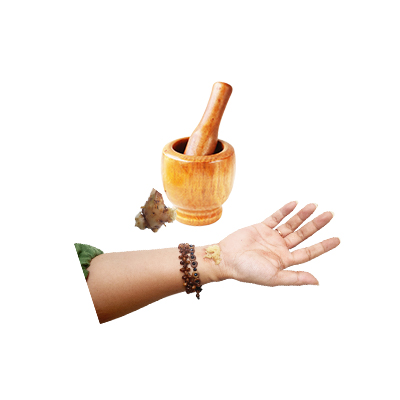
- Take an adequate amount of fresh Arisaema amurense root and wash until clean.
- Grind until it becomes a paste.
- Apply the root paste as a poultice on the boil.
Reference Sources
- Royal Botanic Gardens. Plants of the World Online: Arisaema amurense Maxim.. https://powo.science.kew.org/taxon/urn:lsid:ipni.org:names:85565-1. 17-04-2022.
- Temperate Plants Database, Ken Fern. 2021. Arisaema amurense. http://temperate.theferns.info/plant/Arisaema+amurense. 17-04-2022.
- Natural Products Research Institute Seoul National University. 1998. Medicinal Plants in the Republic of Korea. Information on 150 commonly used medicinal plants. WHO Regional Publications Western Pacific Series No. 21.