Aristolochia littoralis Parodi
Summary
Aristolochia littoralis or bunga angsa is native to tropical South America, including Argentina, Bolivia, Brazil, and Paraguay. Its large, purplish flowers with a unique spotted pattern make it a favorite ornamental climbing plant, while its extract is sometimes added to herbal supplements, believed to be effective against snake bites and infections during childbirth.
Agroecology
Aristolochia littoralis prefers sandy to loamy soil at an acidic-neutral soil acidity (pH) of 5.5-7.0 with average moisture. Mean temperature 7-34°C, and rainfall of 1,000-2,500 mm per year. Prefers a position in full sun to partial shade, at elevations of about 10-1,150 m asl.
Morphology
- Roots a taproot.
- Stem slender and woody, diameter reaching 3 cm, old (dead) bark dark brown, showing distinct layers in cross-section.
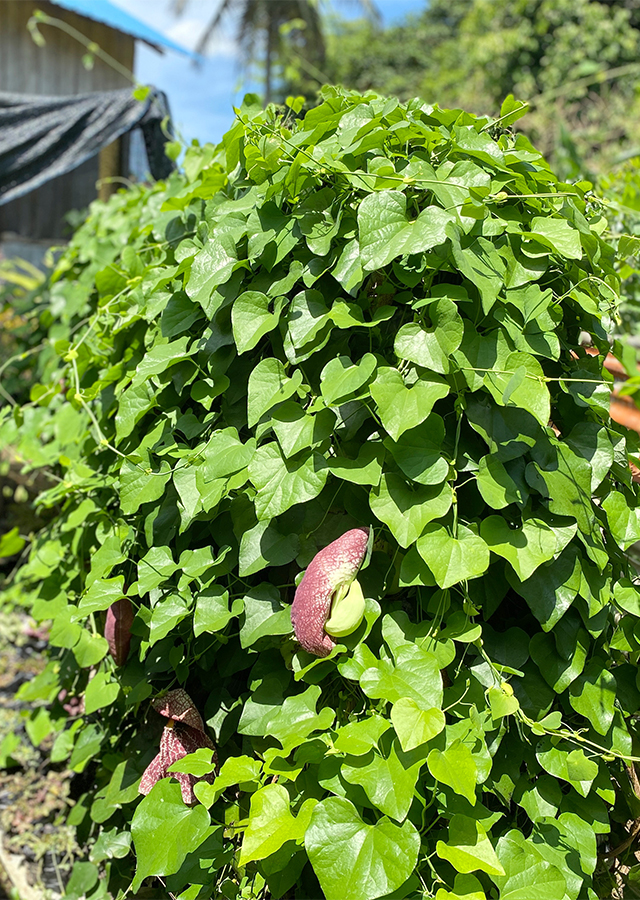
- Leaves smooth, hairless, heart-shaped, bean-shaped or ovate with entire margins (10 cm long, 12 cm wide). They occur in alternate leaf arrangement (single on alternating sides of the stem). Crushed leaves produce an unpleasant odor.
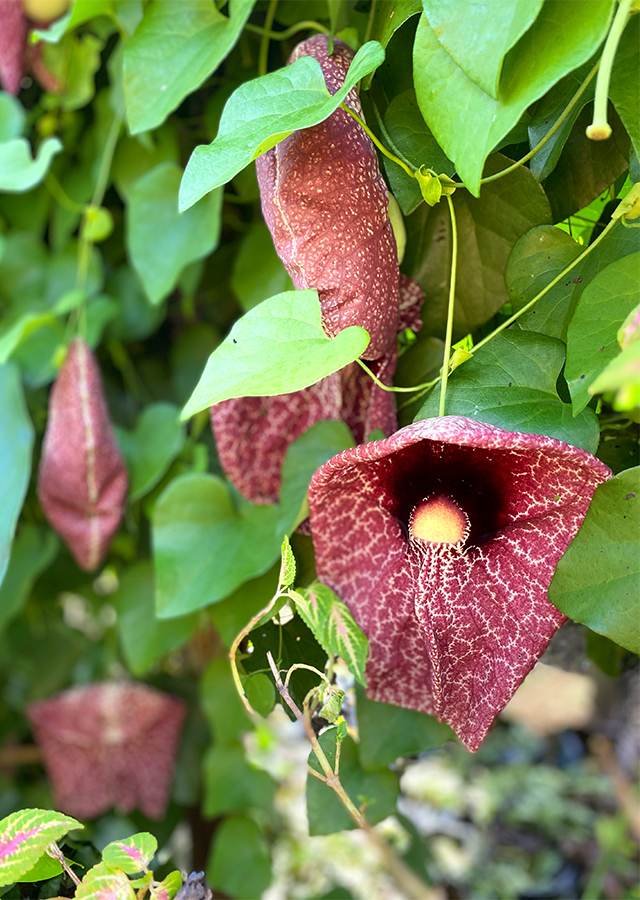
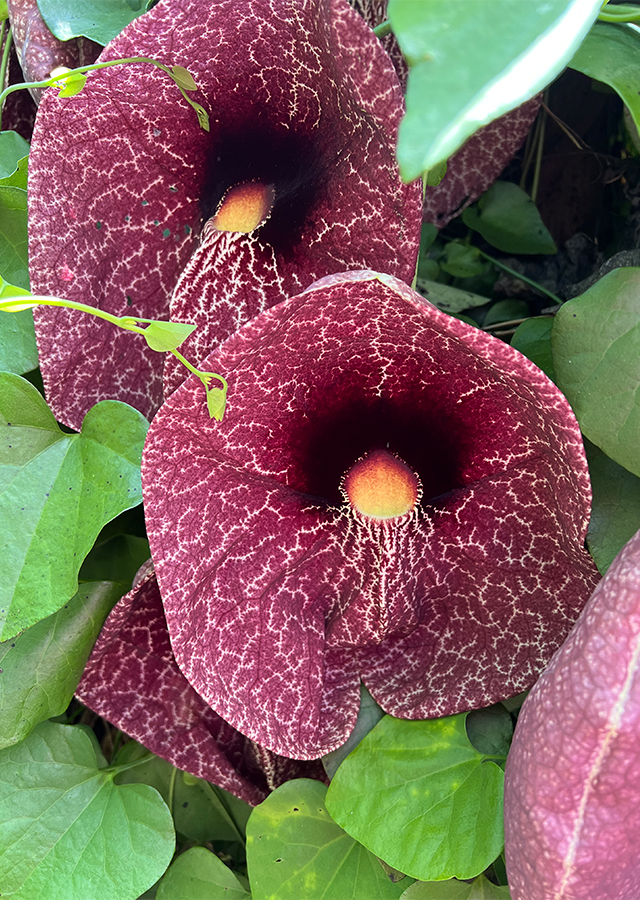
- Flowers pipe-shaped, dark purple/red with zigzag white stripes and appear solitary in the leaf axils. Anthers sessile, stamens 6, fused to form a structure about 6 x 5 mm around the style, style length about 7-8 mm; ovary 6-locular; numerous ovules in each locule. Flowers produce a rotting meat smell to attract pollinating flies.
- Fruit a cylindrical capsule, 4.5 cm long and 2.5 cm in diameter. Pedicel about 5 cm long, splitting lengthwise into 6 strong thread-like cords. The fruit opens from the base into 6 boat-shaped valves, each containing numerous seeds arranged transversely in each locule.
- Seeds flat, heart-shaped, about 5-6 x 4-5 mm, narrowly winged around the edges, wing width less than 1 mm. Embryo about 0.4-0.5 mm long.
Cultivation
Propagation using seed and stem cuttings.
Chemical Content
Alkaloids, lignans, neolignans, monoterpenoids, diterpenoids, sesquiterpenoids, tetralones, isoquinolines, porphyrins, biphenyl ethers, aristololactams, and aristolochic acid dimers.
Benefits
Treats snake bites and scorpion venom poisoning, reduces pain and addresses infection incidents during childbirth. Has antimicrobial, antitumor, antidiarrheal, antipyretic, emmenagogue, and antivenom activity.
Local Names
Bunga pipa.
Traditional Recipes
The following recipes reflect traditional knowledge passed down through generations, not a substitute for professional medical diagnosis or advice. Consult a healthcare provider before use.
1. Treats snake bites
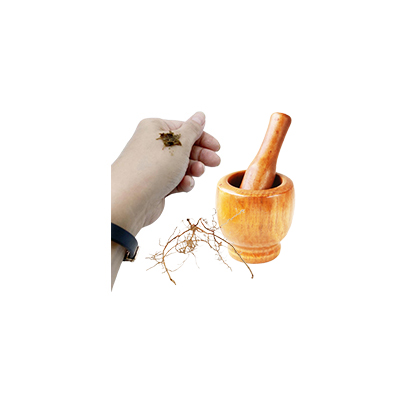
- Prepare fresh bunga angsa root and wash until clean.
- Grind until it becomes a paste.
- Apply the root paste as a poultice on the snake bite.
Reference Sources
- Royal Botanic Gardens. Plants of the World Online: Aristolochia littoralis Parodi. https://powo.science.kew.org/taxon/urn:lsid:ipni.org:names:93074-1#descriptions. 27-05-2022.
- CAB International. 2019. Aristolochia littoralis (elegant dutchman's pipe). https://www.cabi.org/isc/datasheet/112423#tosummaryOfInvasiveness. 27-05-2022.
- Flora Fauna Web. 2022. Aristolochia littoralis. 27-05-2022. https://www.nparks.gov.sg/florafaunaweb/flora/1/3/1317. 27-05-2022.
- Eko. M. 2020. Planter and Forester: Aristolochia littoralis D.Parodi, Calico, Tanaman Hias Merambat Berbunga Indah. https://www.planterandforester.com/2020/11/aristolochia-littoralis-dparodi-calico.html. 27-05-2022.
- Plantnet. Plantinvasivekruger - Aristolochiaceae - Aristolochia littoralis Parodi. http://publish.plantnet-project.org/project/plantinvasivekruger/collection/collection/synthese/details/ARPEL. 27-05-2022.
- Adelina Jiménez-Arellanes, Rosalba León-Díaz, Mariana Meckes, Lilián Yépez-Mulia. 2012. Antiprotozoal and Antimycobacterial Activities of Pure Compounds from Aristolochia elegans Rhizomes. Hindawi Publishing Corporation. Evidence-Based Complementary and Alternative Medicine. Volume 2012, Article ID 593403, 7 pages. DOI:10.1155/2012/593403.