Artemisia annua L.
Summary
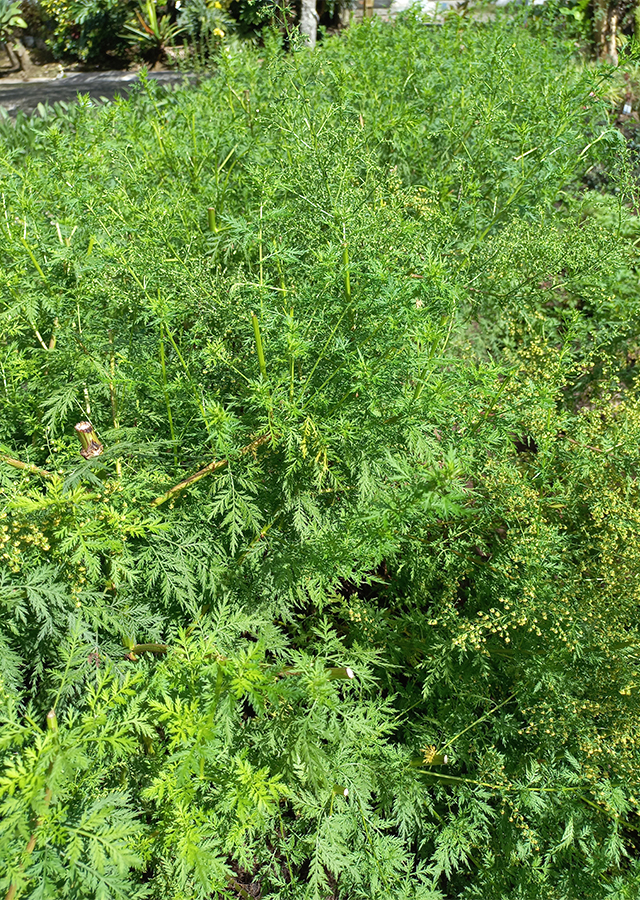
Sweet wormwood (Artemisia annua) is an aromatic annual herb 30-100 cm tall, even up to 2 meters in cultivation, from the Asteraceae family native to Eurasia through to Vietnam and Northern India. It has been used in China for over 2,000 years to treat fever and malaria, and its artemisinin content is now recommended by the WHO as a malaria treatment in more than 50 countries. Its essential oil is also used in the perfume and alcoholic beverage industries.
Agroecology
Sweet wormwood is usually found scattered on hillsides and grows well at forest edges, roadsides, wastelands, deserts, and rocky slopes. This plant grows in mid-elevation to mountainous areas at elevations between 800-2,300 m asl, and at elevations of 2,000-3,700 m asl in China. The most suitable conditions for its growth are found in humid tropical monsoon climate areas, where the average temperature during the growth phase is 17.6-28.4°C and annual rainfall is 1,150-1,350 mm, of which 600-1,000 mm of rainfall is needed during the growing season. Sweet wormwood growth favors open, sunny locations with fertile, sandy and alluvial soil conditions, well-drained, soil pH between 4.5-8.5, and resistant to moisture. This plant cannot tolerate drought or waterlogging when still young, but once the plant is established and mature, it shows adaptability and resistance to drought or waterlogging, due to its abundant and dense lateral roots.
Morphology
- Roots have a taproot with many lateral roots.
- Stem upright, ribbed, brownish green or purple-brown, cylindrical, often branched at the top, easily broken.
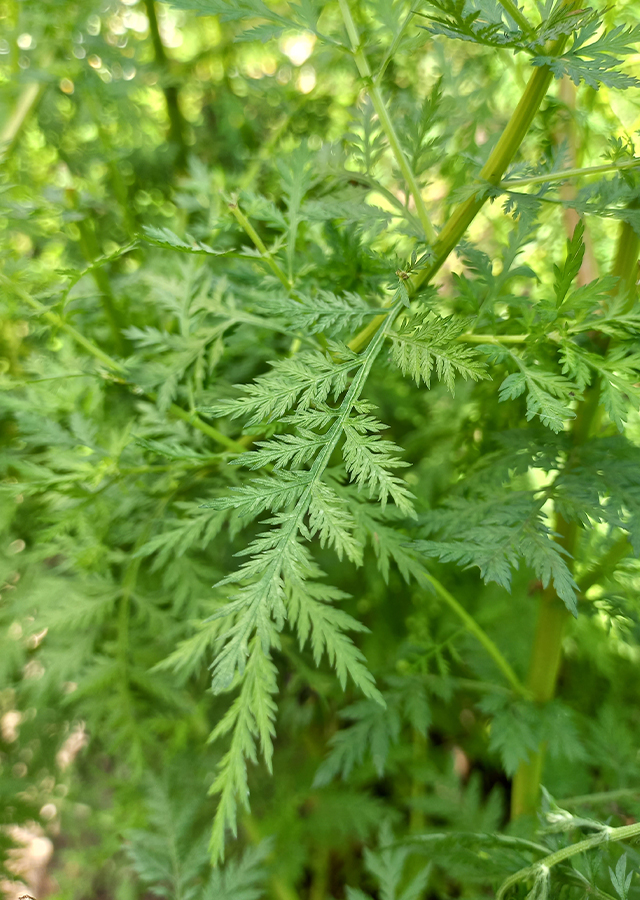
- Leaves compound, 3-pinnatisect, upper leaves 1-2-pinnatisect and smaller. Alternately arranged, dark green or brownish green, oval-oblong, tip pointed, curling and easily crumpled, hairless. Has a distinctive aromatic smell, taste slightly bitter.
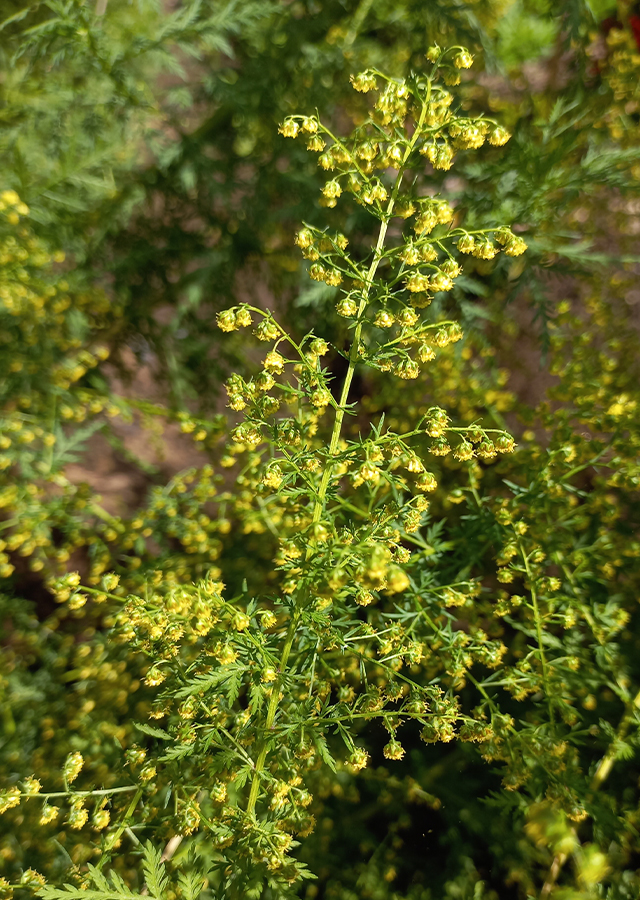
- Flowers compound, with small round flower heads (capitula), 2-2.5 mm in diameter, arranged in loose panicles. The involucre (arrangement of bracts around the flower head) consists of hairless, overlapping bracts. Outer bracts green and linear-oblong. Inner bracts glossy and oval-round. Flower head disc-shaped, consisting of outer filiform florets (female) and inner disc florets (bisexual). Central disc florets greenish or yellowish. The corolla is tube-shaped. Calyx green, with 5 notches, and a smooth corolla surrounding the receptacle where the stamens and pistil sit. Inflorescence located at the tip of the stem.
- Fruit an achene (dry simple fruit), lacking a pappus, small, thin-walled, obovoid, brownish yellow, hairless, and containing one seed.
- Seeds oblong, brownish yellow with a shiny surface marked with vertical grooves, seed endosperm creamy white.
Cultivation
Propagation is done generatively with seed. Seeds are generally sown and tended in a nursery bed. After 40-50 days old (having reached 15-20 cm), seedlings are planted in the field.
Chemical Content
Sesquiterpenoids (artemisinin, artemisinin I, artemisinin II, artemisinin III, artemisinin IV, artemisinin V, artemisic acid, artemisilactone, artemisinol, and epoxyarteannuinic acid), essential oil (camphene, β-camphene, camphene hydrate, isoartemisia ketone, 1-camphor, β-caryophyllene, β-pinene, 1,8-cineole), flavonoids, coumarins, and steroids (β-sitosterol and stigmasterol).
Benefits
Treats malaria, jaundice, reduces fever, treats colds, diarrhea, boils and abscesses, anorexia, bloating, dyspepsia, tuberculosis, headaches, nosebleeds, has analgesic and antipyretic effects, and antibacterial and anti-inflammatory activity.
Simplisia
- Prepare sweet wormwood leaves, wash clean with running water then drain.
- Sun-dry directly for several days or use an oven at 40°C until the moisture content reaches 10%.
- Store the simplicia in a clean, airtight plastic or container.
Local Names
Informasi tidak ditemukan. Butuh penelusuran lebih lanjut.
Traditional Recipes
The following recipes reflect traditional knowledge passed down through generations, not a substitute for professional medical diagnosis or advice. Consult a healthcare provider before use.
1. Boils
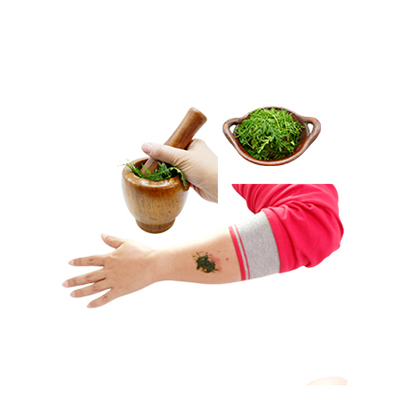
- Wash fresh sweet wormwood leaves until clean.
- Grind until it becomes a paste.
- Apply to the boil.
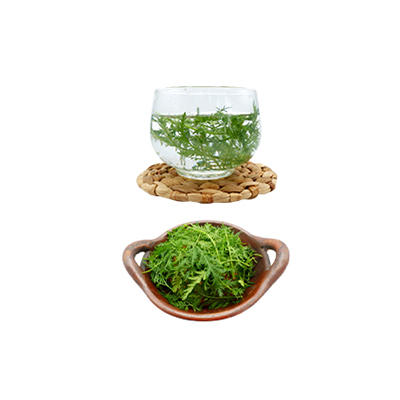
2. Fever
- Take an adequate amount of fresh sweet wormwood leaves and wash until clean.
- Soak the leaves in water for a while.
- Strain then drink to reduce fever.
Reference Sources
- Royal Botanic Gardens. 2021. Plants of the World Online: Artemisia annua L. http://powo.science.kew.org/taxon/urn:lsid:ipni.org:names:304416-2. 12-11-2021.
- PROSEA. 2016. Artemisia annua (PROSEA). https://uses.plantnet-project.org/en/Artemisia_annua_(PROSEA). 13-11-2021.
- Useful Temperate Plants Database. 2021. Artemisia annua. http://temperate.theferns.info/plant/Artemisia+annua. 13-11-2021.
- Nurdiani D. 2017. KROMATOGRAFI CAIR KINERJA TINGGI UNTUK ANALISIS ARTEMISININ DALAM SIMPLISIA DAUN ARTEMISIA ANNUA L. https://p4tkpertanian.kemdikbud.go.id/artemisinin/. 13-11-2021.
- World Health Organization. 2006. WHO monograph on good agricultural and collection practices (GACP) for Artemisia annua L. World Health Organization.